Island · Lesser Antilles · Dominica
Dominica Wildlife Checklist

Dominica is a mountainous, rainforest-covered island in the Lesser Antilles and one of the best places in the world to see sperm whales, which live year-round in the deep water off its west coast. On land it has two parrots found nowhere else, the Imperial and Red-necked Amazons, plus hummingbirds, thrashers and iguanas of the Lesser Antilles. This checklist covers 138 animals. November to April, the drier season, is best.
Tick off all 138 animals in Dominica on your phone, even offline. Launching soon. Free A4 PDF, no sign-up.
Most visitors stay around Roseau and the west coast, where whale-watching boats leave from, or near Portsmouth in the north, close to the Indian River and the Cabrits. The interior is steep volcanic mountain and rainforest, with Morne Trois Pitons National Park in the south and Morne Diablotins National Park in the north.
- Animals to find
- 138
- Where
- Dominica
- Best time
- Nov to Apr
- Sperm whales
- About 200 live in Dominica's waters
Popular animals in Dominica
-
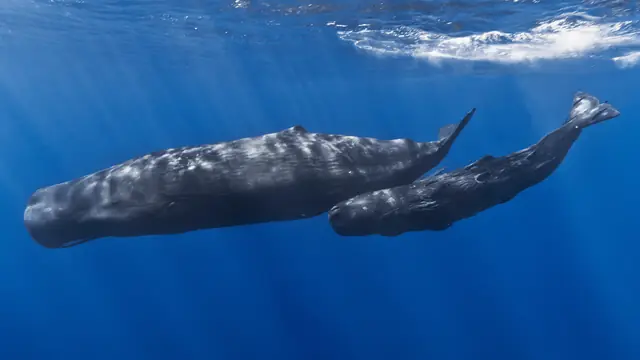
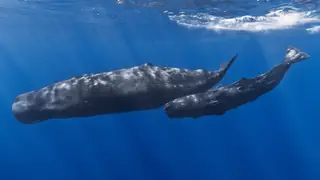
Sperm Whale
Physeter macrocephalus
Family groups of females and young live off the sheltered west coast all year, most often seen from November to March. In 2023 Dominica declared the world's first sperm whale reserve here; go with a licensed operator, who follows the local whale-watching code.
-
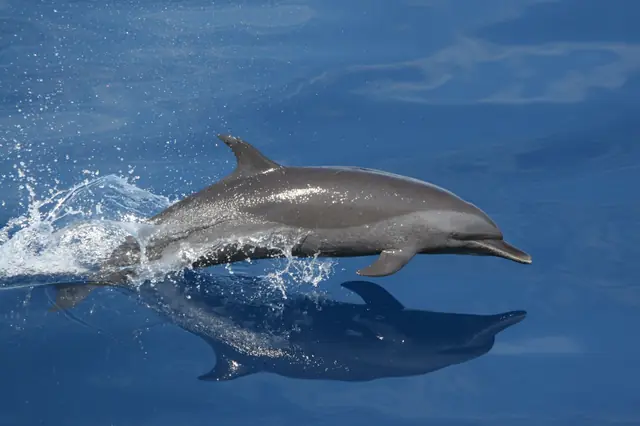
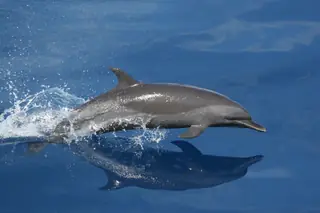
Pantropical Spotted Dolphin
Stenella attenuata
The dolphin most often met on whale-watching trips, in lively groups that sometimes ride the bow.
-
Imperial Amazon
Amazona imperialis
The Sisserou, Dominica's national bird, lives only in the island's mountain forest and is still very scarce. Scan the forest of Morne Diablotins National Park early in the morning with a licensed guide.
-
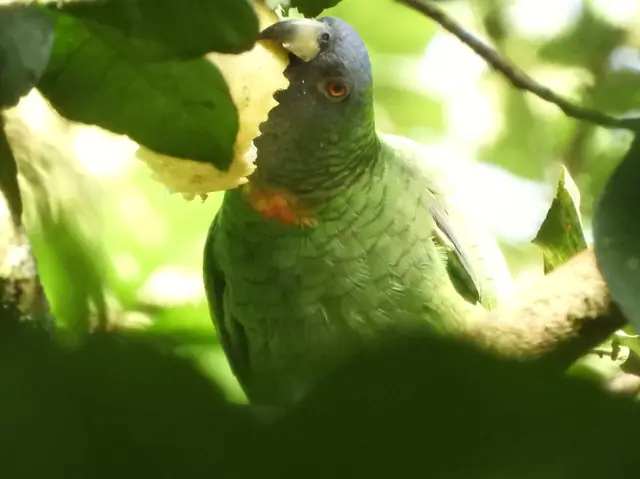
Red-necked Amazon
Amazona arausiaca
The Jaco, Dominica's other endemic parrot, is commoner and noisier. Pairs and small flocks cross forested valleys in the morning and late afternoon.
-
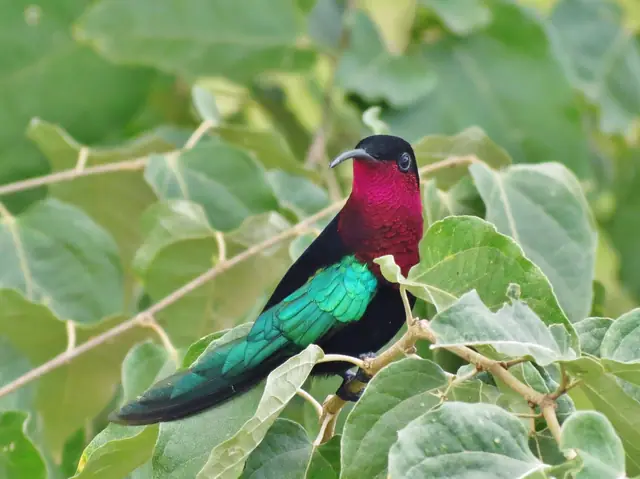
Purple-throated Carib
Eulampis jugularis
A big, dark hummingbird with a glowing red throat, feeding at heliconias and forest flowers from the hills to the mountains.
-
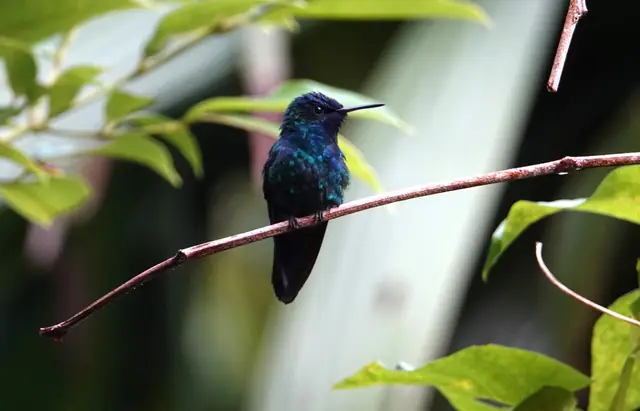
Blue-headed Hummingbird
Riccordia bicolor
Found only on Dominica and Martinique. Look in damp mountain forest and at flowering shrubs along forest edges.
-
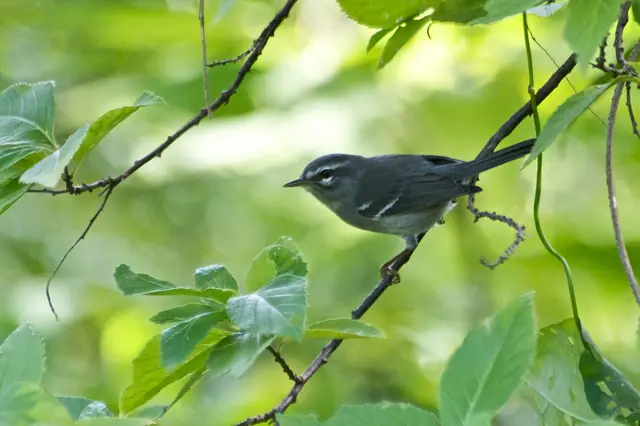
Plumbeous Warbler
Setophaga plumbea
A grey warbler found only on Dominica and Guadeloupe, moving through the forest understorey, often in pairs.
-
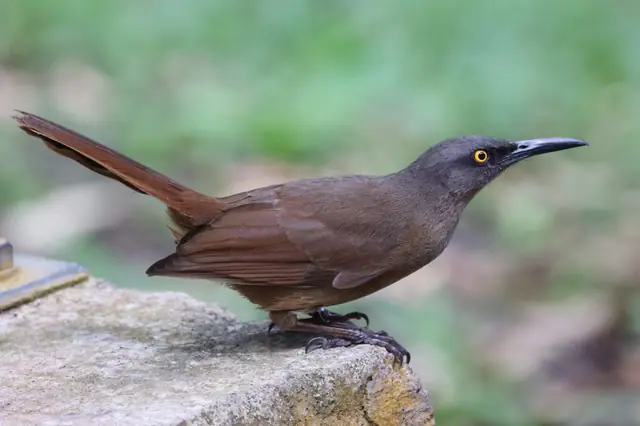
Brown Trembler
Cinclocerthia ruficauda
A long-billed Lesser Antillean bird that hops on mossy trunks in wet forest, drooping and shivering its wings.
-
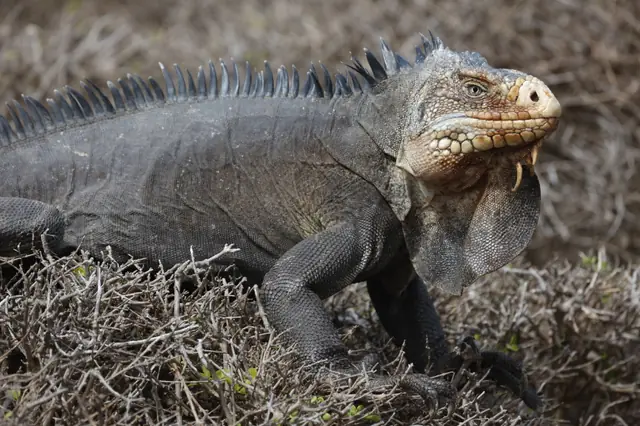
Lesser Antillean Iguana
Iguana delicatissima
Critically endangered, and Dominica holds one of its last strongholds. It basks in coastal trees in the drier west and north; watch from a distance and never handle or feed one.
-
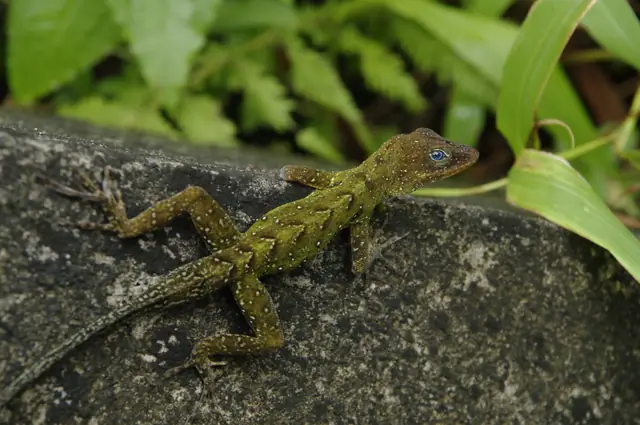
Dominican Anole
Anolis oculatus
Found only on Dominica and seen everywhere, on walls, trees and fence posts. Males flash a yellow throat fan.
-
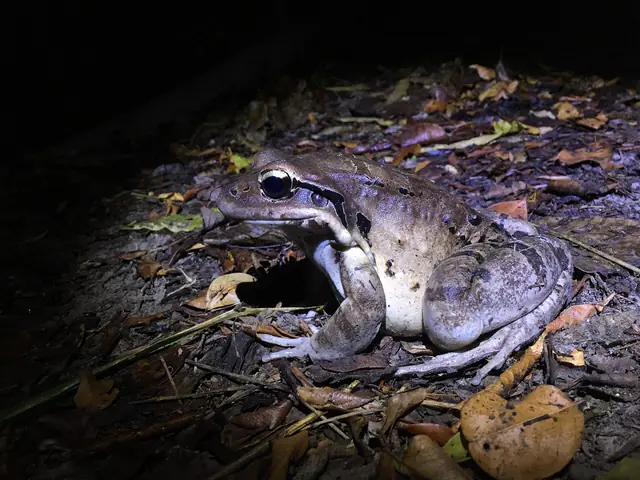
Mountain Chicken
Leptodactylus fallax
A giant frog, now one of the most endangered in the world after a fungal disease reached the island. A sighting is very unlikely; never search for or handle frogs.
All 138 animals in Dominica
Whales and dolphins 16
-
 Sperm Whale
-
 Pantropical Spotted Dolphin
-
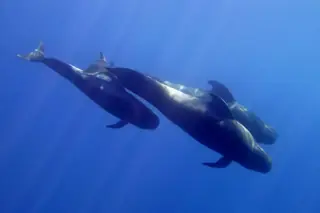 Short-finned Pilot Whale
-
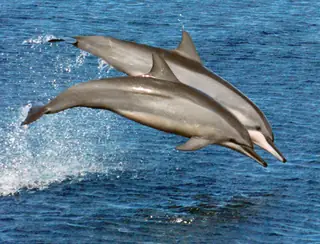 Spinner Dolphin
-
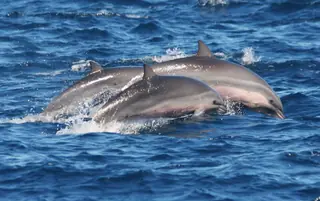 Fraser's Dolphin
-
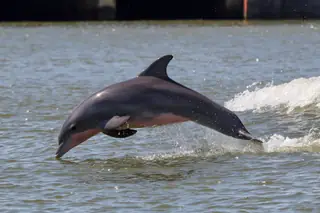 Common Bottlenose Dolphin
-
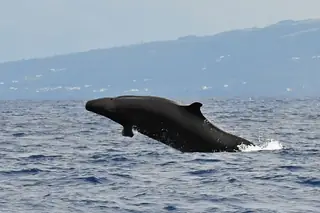 False Killer Whale
-
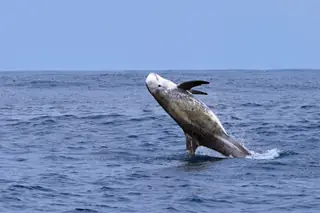 Risso's DolphinRare
-
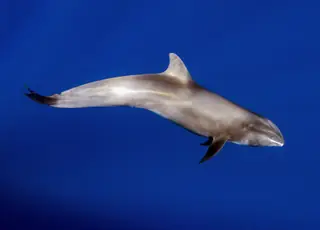 Melon-headed WhaleRare
-
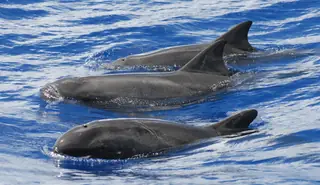 Pygmy Killer WhaleRare
-
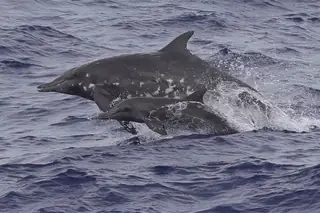 Rough-toothed DolphinRare
- Dwarf Sperm WhaleRare
-
 Humpback WhaleRare
-
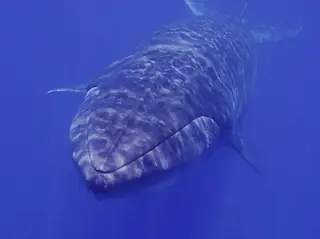 Bryde's WhaleRare
-
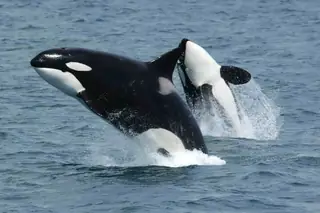 OrcaRare
-
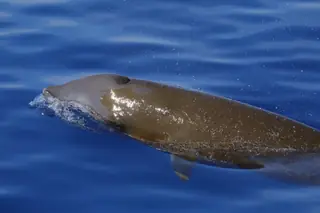 Cuvier's Beaked WhaleRare
Land mammals and bats 5
-
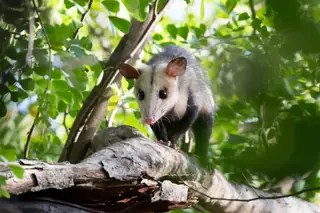 Common Opossum
-
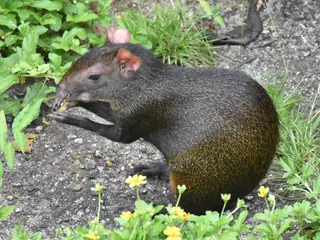 Red-rumped Agouti
-
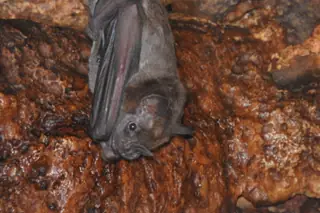 Jamaican Fruit-eating Bat
-
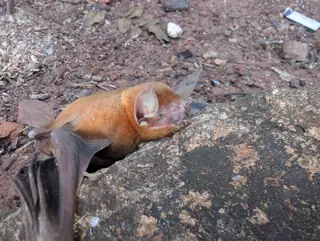 Greater Bulldog Bat
-
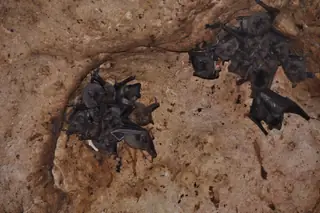 Antillean Fruit-eating BatRare
Parrots and hummingbirds 6
- Imperial AmazonRare
-
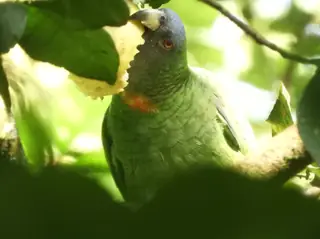 Red-necked Amazon
-
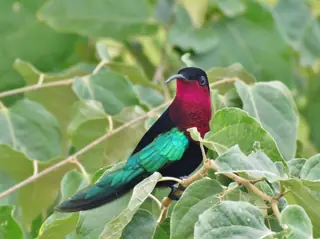 Purple-throated Carib
-
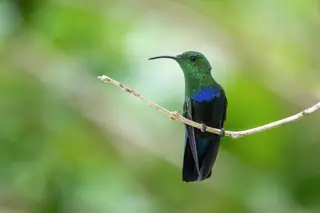 Green-throated Carib
-
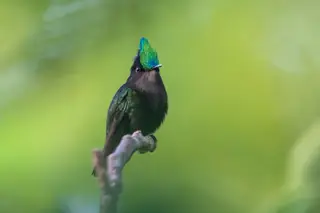 Antillean Crested Hummingbird
-
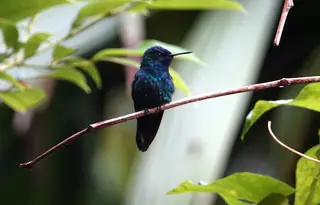 Blue-headed Hummingbird
Rainforest birds 19
-
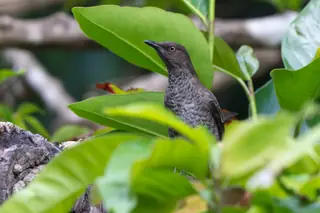 Scaly-breasted Thrasher
-
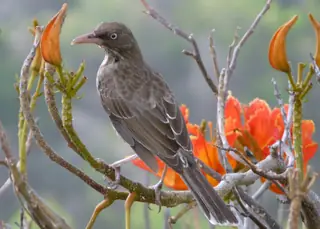 Pearly-eyed Thrasher
-
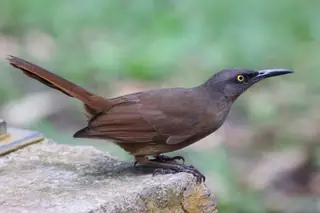 Brown Trembler
-
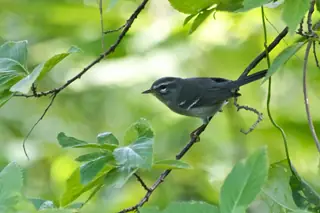 Plumbeous Warbler
-
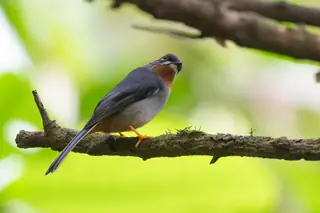 Rufous-throated Solitaire
-
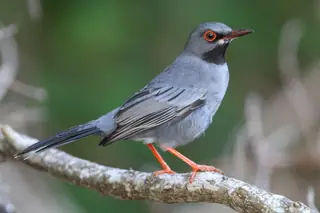 Red-legged Thrush
-
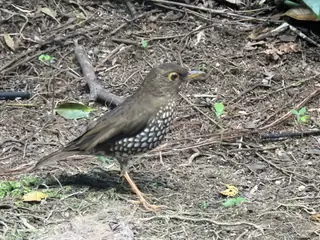 Forest ThrushRare
-
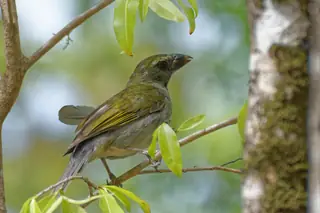 Lesser Antillean Saltator
-
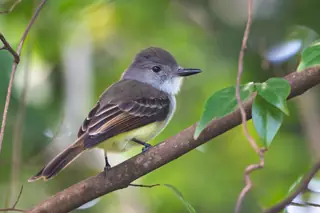 Lesser Antillean Flycatcher
-
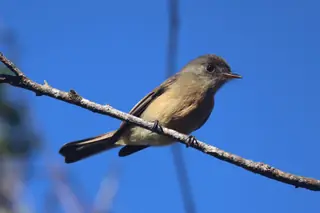 Lesser Antillean Pewee
-
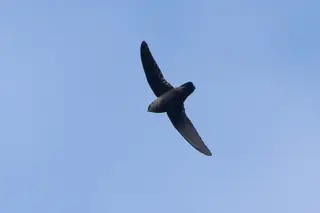 Lesser Antillean Swift
-
 American Black Swift
-
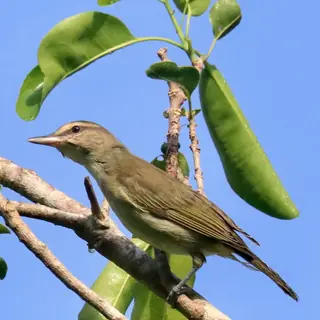 Black-whiskered Vireo
-
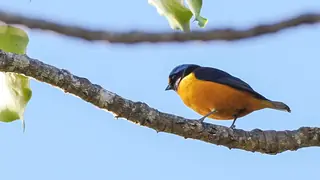 Antillean EuphoniaRare
-
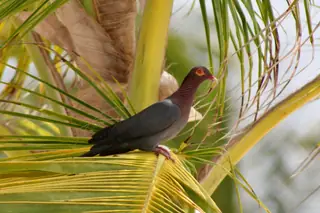 Scaly-naped Pigeon
-
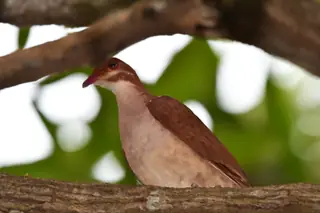 Ruddy Quail-Dove
-
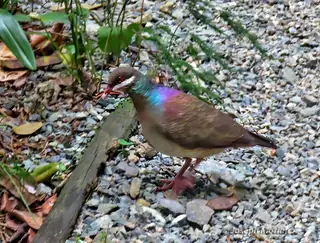 Bridled Quail-Dove
-
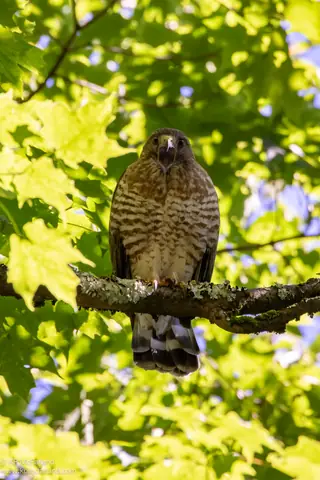 Broad-winged Hawk
-
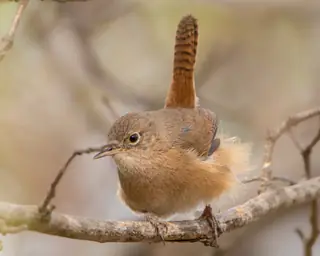 Southern House WrenRare
Garden, village and coast birds 18
-
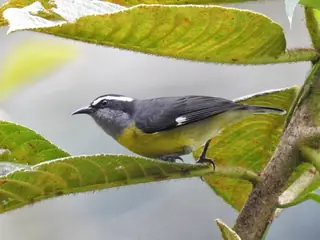 Bananaquit
-
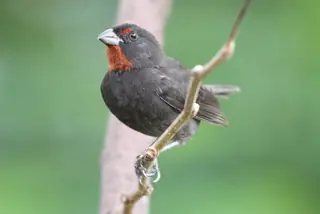 Lesser Antillean Bullfinch
-
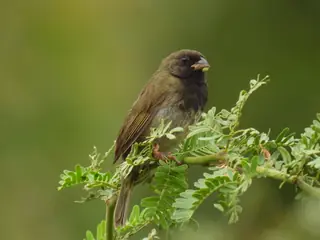 Black-faced Grassquit
-
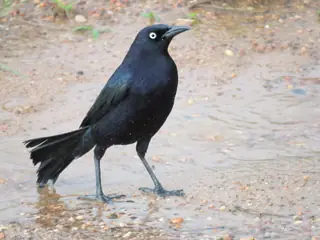 Carib Grackle
-
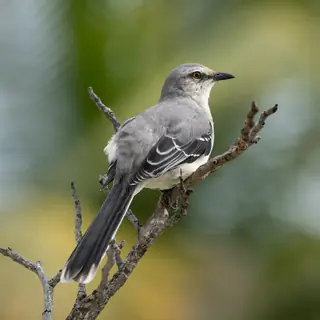 Tropical Mockingbird
-
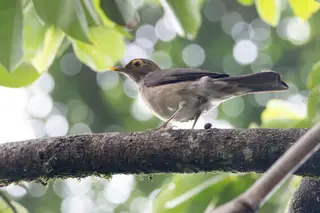 Spectacled Thrush
-
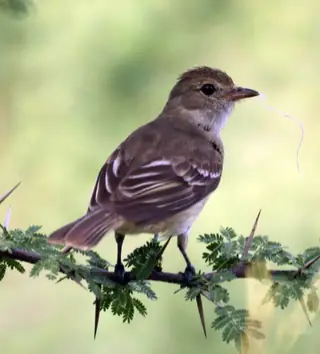 Caribbean Elaenia
-
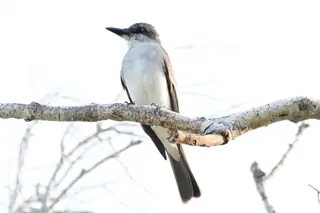 Grey Kingbird
-
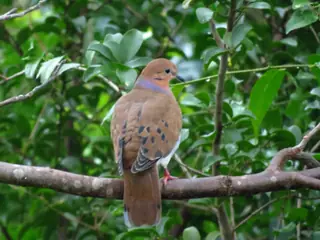 Zenaida Dove
-
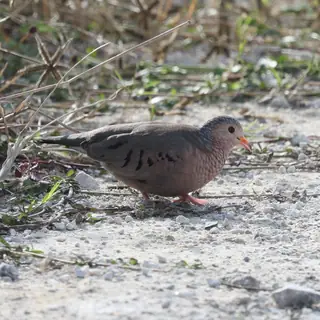 Common Ground Dove
-
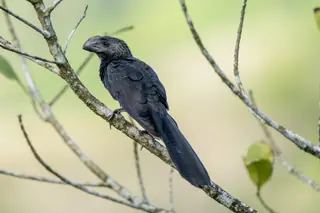 Smooth-billed Ani
-
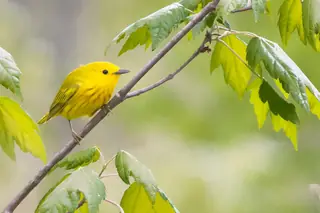 Yellow Warbler
-
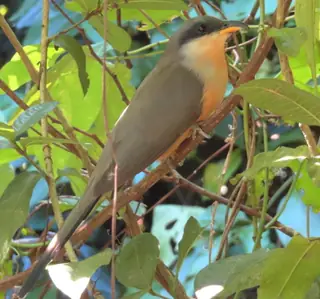 Mangrove Cuckoo
-
 Caribbean Martin
-
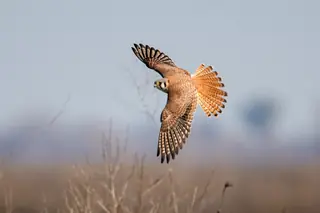 American Kestrel
-
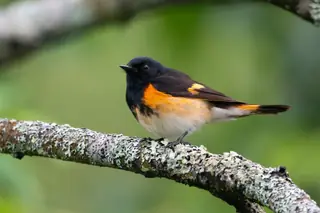 American Redstart
-
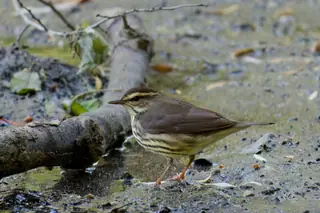 Northern Waterthrush
-
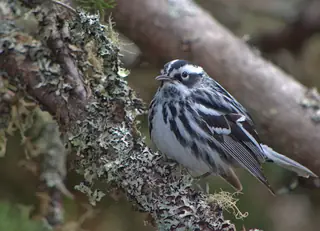 Black-and-white Warbler
Rivers, herons and seabirds 23
-
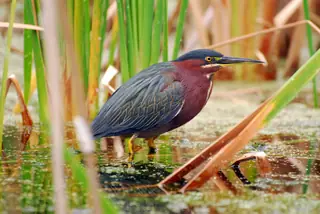 Green Heron
-
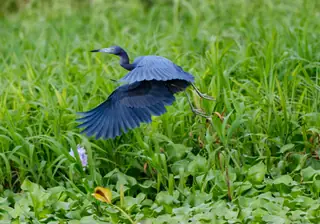 Little Blue Heron
-
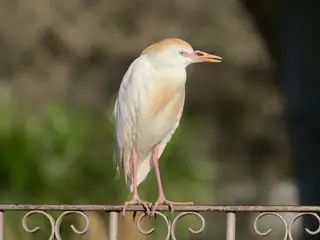 Western Cattle Egret
-
 Great Egret
-
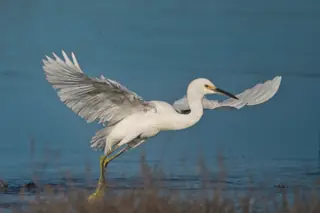 Snowy Egret
-
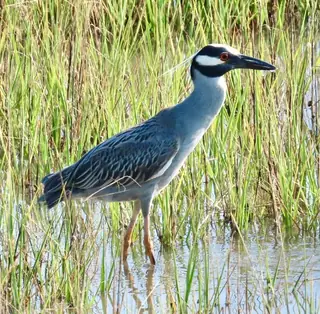 Yellow-crowned Night Heron
-
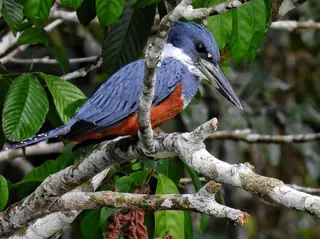 Ringed Kingfisher
-
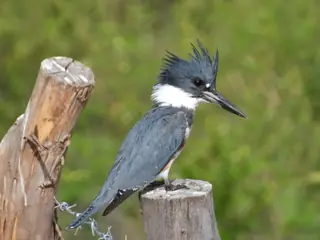 Belted Kingfisher
-
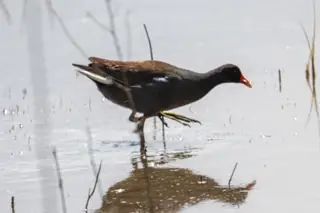 Common Gallinule
-
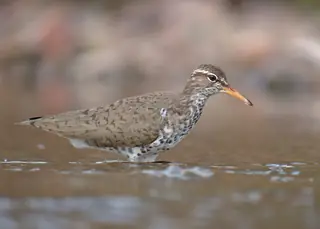 Spotted Sandpiper
-
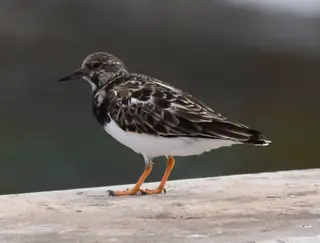 Ruddy Turnstone
-
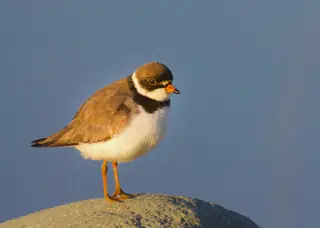 Semipalmated Plover
-
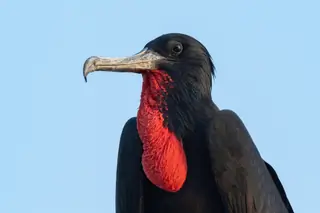 Magnificent Frigatebird
-
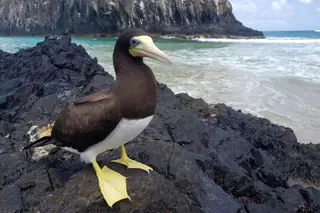 Brown Booby
-
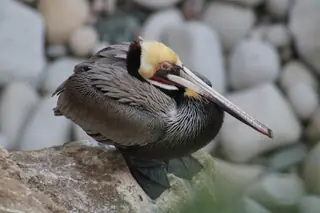 Brown Pelican
-
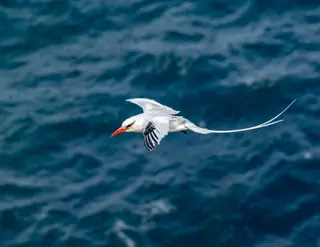 Red-billed Tropicbird
-
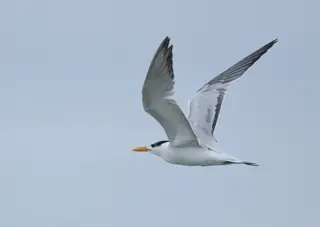 Royal Tern
-
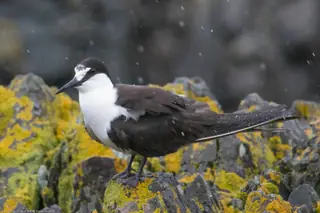 Sooty Tern
-
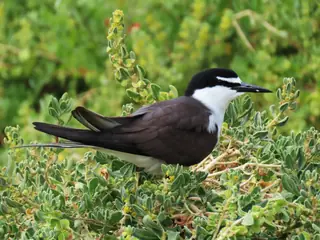 Bridled Tern
-
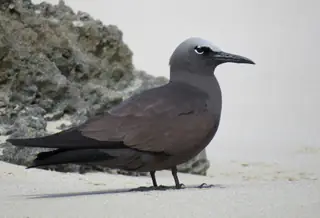 Brown Noddy
-
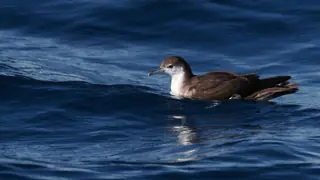 Audubon's Shearwater
-
 Osprey
-
 Peregrine FalconRare
Reptiles and amphibians 10
-
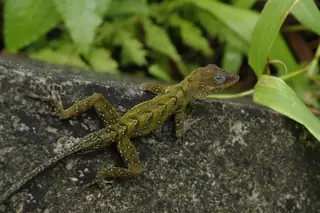 Dominican Anole
-
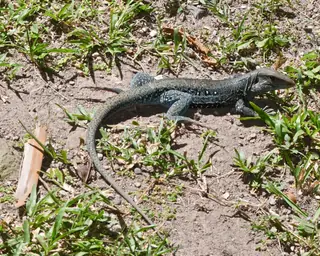 Dominican Ground Lizard
-
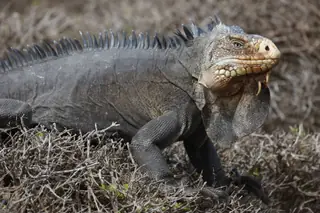 Lesser Antillean Iguana
-
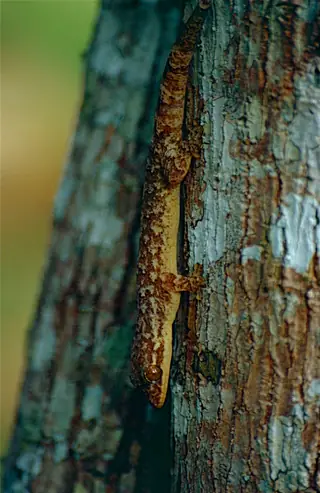 Turnip-tailed Gecko
- Dominican Clouded BoaRare
-
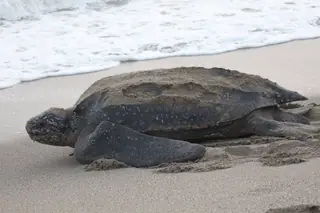 Leatherback TurtleRare
-
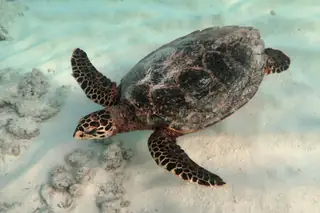 Hawksbill Sea Turtle
-
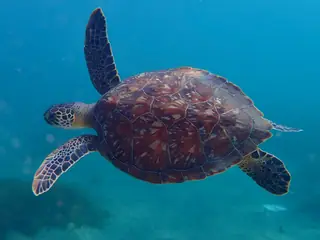 Green Sea Turtle
-
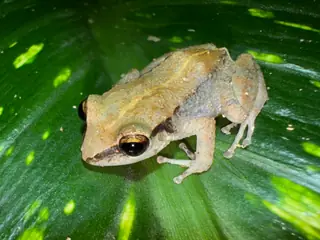 Martinique Robber Frog
-
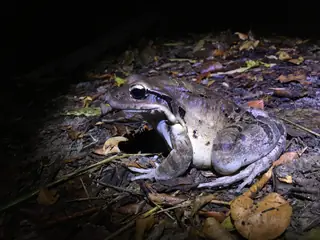 Mountain ChickenRare
Reef fish 25
-
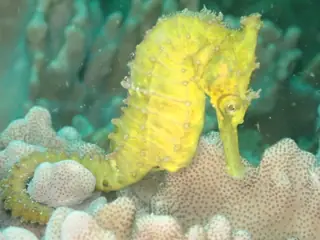 Seahorse
-
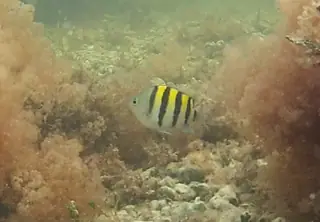 Atlantic Sergeant Major
-
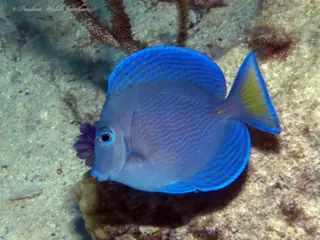 Atlantic Blue Tang
-
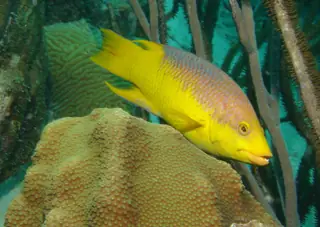 Spanish Hogfish
-
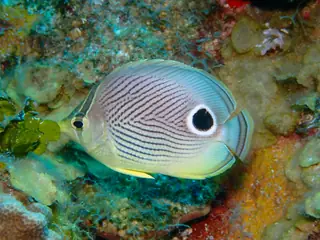 Foureye Butterflyfish
-
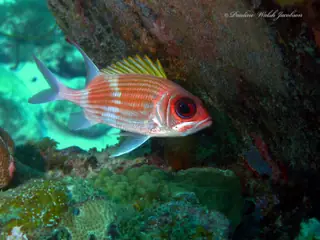 Squirrelfish
-
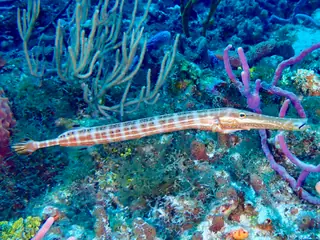 Western Atlantic Trumpetfish
-
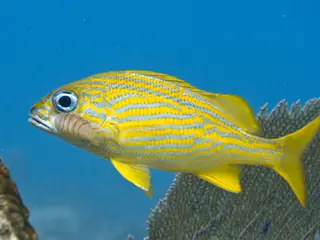 French Grunt
-
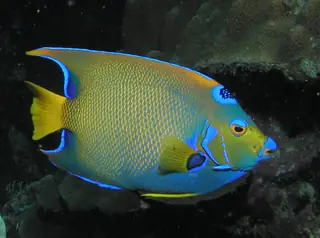 Queen Angelfish
-
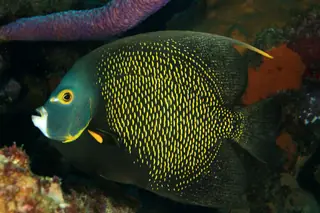 French Angelfish
-
 Blue Parrotfish
-
 Great Barracuda
-
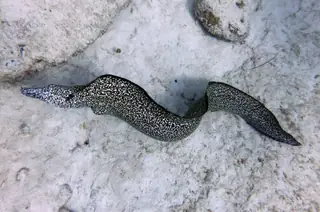 Spotted Moray
-
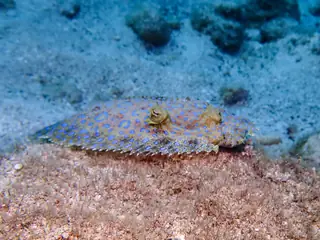 Peacock Flounder
-
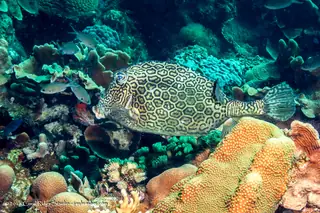 Honeycomb Cowfish
-
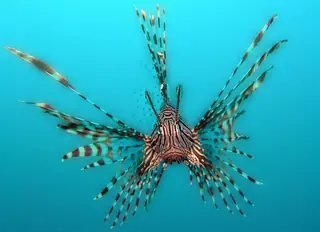 Red Lionfish
-
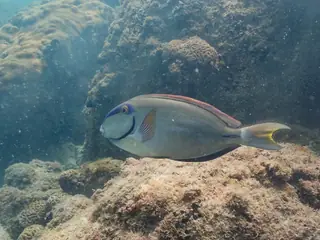 Ocean Surgeon
-
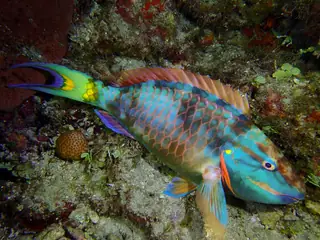 Stoplight Parrotfish
-
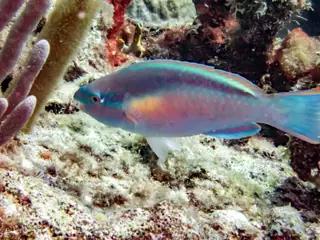 Princess Parrotfish
-
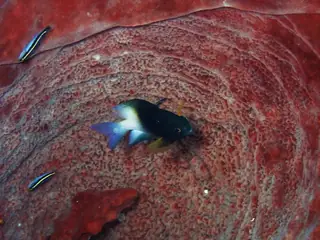 Bicolor Damselfish
-
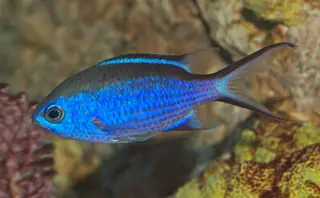 Blue Chromis
-
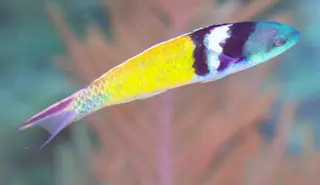 Bluehead
-
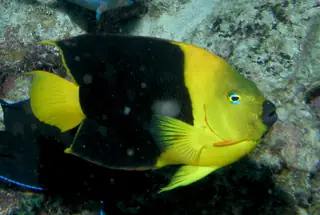 Rock Beauty
-
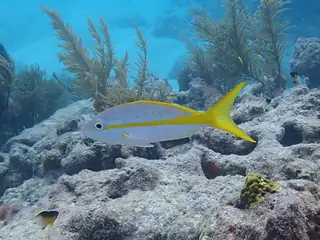 Yellowtail Snapper
-
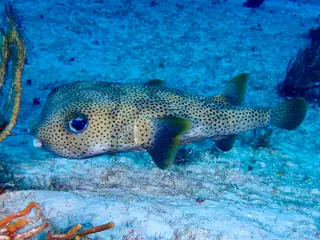 Porcupinefish
Rays, octopus and reef life 11
-
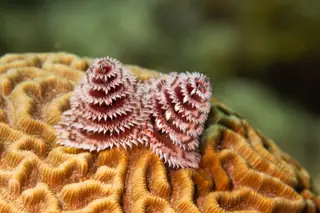 Christmas Tree Worm
-
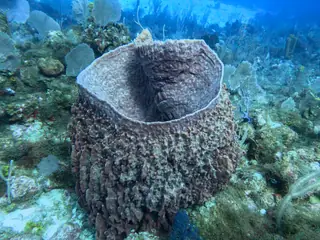 Giant Barrel Sponge
-
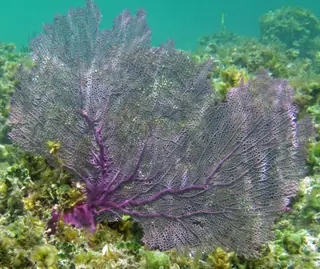 Common Sea Fan
-
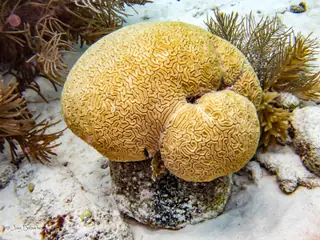 Grooved Brain Coral
-
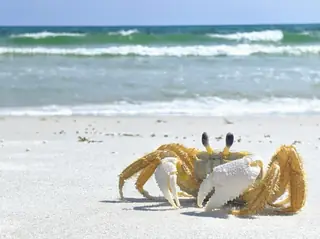 Atlantic Ghost Crab
-
 Southern Stingray
-
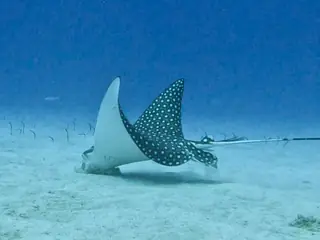 Spotted Eagle Ray
-
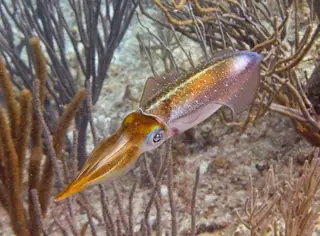 Caribbean Reef Squid
-
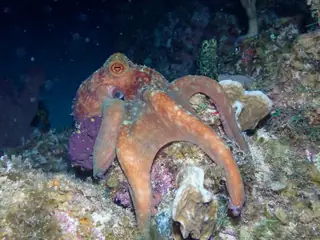 Caribbean Reef Octopus
-
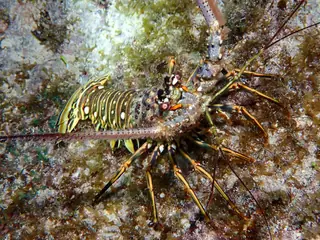 Caribbean Spiny Lobster
-
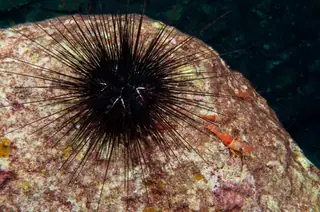 Long-spined Sea Urchin
Butterflies and insects 5
-
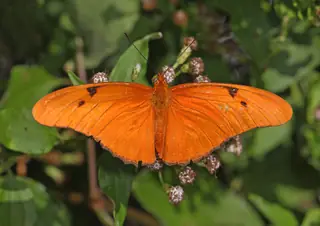 Julia
-
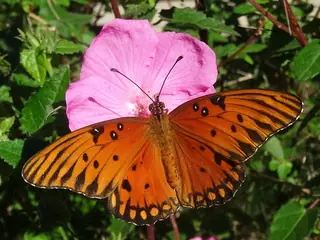 Gulf Fritillary
-
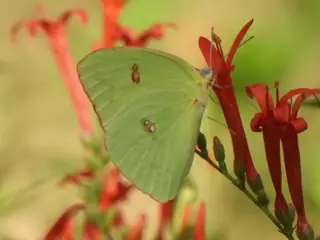 Cloudless Sulphur
-
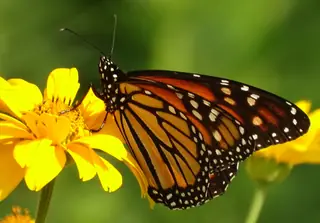 Monarch
-
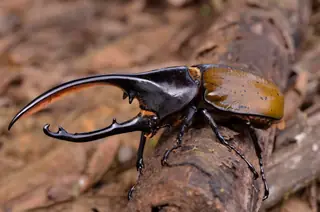 Hercules BeetleRare
Best time to see wildlife in Dominica
Sightings by month in Dominica
Most records: Oct to AugRecords from GBIF.org, adjusted for how many people record wildlife each month. 100% is the busiest month.
Dominica can be visited all year, but the drier months from December to April are the most comfortable, with calmer seas and easier forest walking. Sperm whales are present year-round, and sightings are most frequent from November to March, when many visitors come for them. Birds are resident, so the parrots, hummingbirds and thrashers can be found in any month, and spring is when many start to nest and sing most. North American warblers and shorebirds spend the winter, from October to April. Leatherback, hawksbill and green turtles nest on beaches from March to October, with leatherbacks peaking from April to June. The wet season, roughly June to November, brings heavy rain and the risk of hurricanes, though the forest is at its greenest.
- Nov to MarPeak sperm whale sightings; winter warblers and shorebirds
- Dec to AprDrier season; calmer seas, best for forest walks and parrots
- Mar to JunLeatherback turtles nesting; resident birds singing and nesting
- Jul to OctHawksbill and green turtles nesting; hot, wet and hurricane season
Tips for spotting wildlife in Dominica
- 01
Go whale watching with a licensed operator
Boats leave from the west coast and spend several hours offshore, listening for sperm whales with a hydrophone. Choose an operator licensed to work in the reserve; they follow the local whale-watching code and keep a respectful distance.
- 02
Be out early for the parrots
The Sisserou and Jaco are most active in the first hours after dawn, when they call and fly over the forest canopy. A licensed local guide knows where to watch from without disturbing them.
- 03
Take a guided river trip
Rowed boat trips up the Indian River near Portsmouth pass herons, kingfishers and crabs in the swamp forest. Rowing keeps it quiet, so the birds stay put.
- 04
Snorkel the south-west reserve
The Soufrière Scotts Head Marine Reserve has easy snorkelling over volcanic rock, sponges and reef fish. Use reef-safe sun cream and never touch, stand on or take anything.
- 05
Walk the forest after dark with a guide
Night walks bring whistling frogs, geckos, bats and the chance of a boa. Use a red or dim light and keep it off animals' eyes.
- 06
Pack for rain
Even in the drier season the mountains are wet and trails are steep and muddy. Good boots, rain gear and a dry bag for binoculars and phones make forest days far easier.

Take Dominica with you
Heading to Dominica? Keep this list on your phone and tick off the whales, parrots and hummingbirds as you see them, even out at sea or deep in the forest with no signal. Wilder is free to start.

Dominica wildlife FAQ
When is the best time to see sperm whales in Dominica?
The best time to see sperm whales in Dominica is November to March, when sightings are most frequent. The whales live off the west coast all year, so trips run in every month. About 200 sperm whales use Dominica's waters, and in 2023 the government declared the world's first sperm whale reserve along the west coast to protect them.
Can you see the Sisserou parrot in Dominica?
Yes, but it takes patience. The Imperial Amazon, or Sisserou, lives only in Dominica's mountain forest, mainly in and around Morne Diablotins National Park, and numbers are still low. The best chance is early in the morning with a licensed local guide. The Red-necked Amazon, or Jaco, is commoner and easier to see.
What animals live only in Dominica?
Animals found only on Dominica include the Imperial and Red-necked Amazons, the Dominican Anole and the Dominican Ground Lizard. The island also shares many species with only a few neighbouring islands, such as the Blue-headed Hummingbird, Plumbeous Warbler and Mountain Chicken frog. This checklist covers 138 animals in all.
Are there snakes in Dominica?
Yes, but none are dangerous to people. The Dominican Clouded Boa is the largest, a harmless and mostly nocturnal snake of forest and farmland. If you meet a snake, simply leave it be.
Is Dominica good for snorkelling and diving?
Yes, Dominica's steep volcanic coast drops into deep water close to shore. The Soufrière Scotts Head Marine Reserve in the south-west has sponges, corals, seahorses, octopus and plenty of reef fish, and warm volcanic bubbles at Champagne Reef. Snorkel and dive with licensed operators and never touch reef life.
Sources
- National Geographic Society: Dominica establishes world's first sperm whale reserve
- UNESCO World Heritage Centre: Morne Trois Pitons National Park
- Discover Dominica: Whale watching
- Sightings by month: GBIF.org
Animal photos are from the Wilder catalogue; photo credits.
Similar checklists
All North America-
 Island96animals The Azores Azores, Portugal Nine volcanic islands in the mid-Atlantic, where sperm whales and Risso's dolphins live year-round off Pico and Faial, blue and fin whales pass in spring, Cory's shearwaters wail at dusk and the rare Azores bullfinch feeds in São Miguel's laurel forest. Best time Apr to Oct
-
 Region138animals Belize Barrier Reef Belize, Stann Creek and Toledo districts, Belize The longest barrier reef in the Americas and its three atolls, where snorkellers drift over stingrays, nurse sharks, turtles and parrotfish, manatees graze the seagrass and frigatebirds and boobies wheel over the cayes. Best time Feb to May
-
 Marine park140animals Sea of Cortez: Loreto, La Paz and Cabo Pulmo Gulf coast of Baja California Sur, Mexico Blue and fin whales off Loreto, sea lions at Los Islotes, whale sharks in the Bay of La Paz and leaping mobula rays, with trevally schools on the Cabo Pulmo reef and boobies, frigatebirds and cardón desert all along the gulf coast. Best time Nov to Apr
-
 National park127animals Tortuguero National Park Limón, Costa Rica Canals and flooded rainforest on the Caribbean coast, reached only by boat or plane, where green turtles nest on the beach each summer. Best time Jul to Oct