National park · Junagadh, Gujarat · India
Gir National Park Animal Checklist

Gir is a national park and wildlife sanctuary of about 1,400 square kilometres in Gujarat, western India, and the last wild home of the Asiatic lion. Its dry teak forest, scrub and rocky hills also hold leopards, striped hyenas, chital, sambar, nilgai and mugger crocodiles, with more than 300 kinds of bird. This checklist covers 70 animals. The cool, dry months from November to March are the best time to visit, and the hot weeks that follow concentrate animals near water.
Tick off all 70 animals in Gir on your phone, even offline. Launching soon. Free A4 PDF, no sign-up.
Gir became a sanctuary in 1965, when fewer than 200 Asiatic lions survived; the 2025 count found 891 in Gujarat. Maldhari herders still live inside the forest with their cattle, alongside the lions.
- Animals to find
- 70
- Where
- India
- Best time
- Nov to Mar
- Asiatic lions
- The only wild ones left on Earth
Popular animals in Gir
-
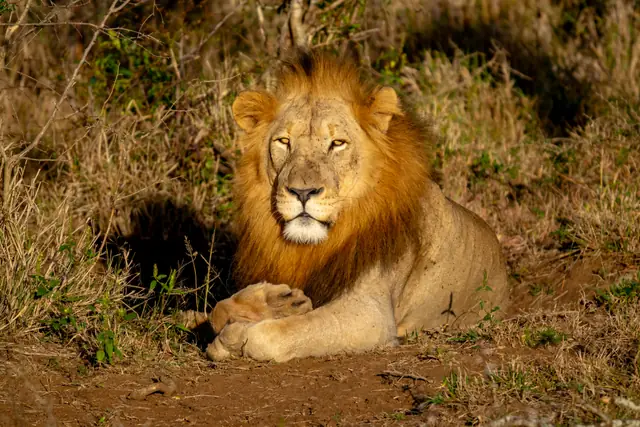
Lion
Panthera leo
The Asiatic lion is a little smaller than its African cousin, with a shorter mane that leaves the ears showing and a fold of skin along the belly. Prides are smaller too, and males often live apart from the females, joining them to mate or share a kill.
-
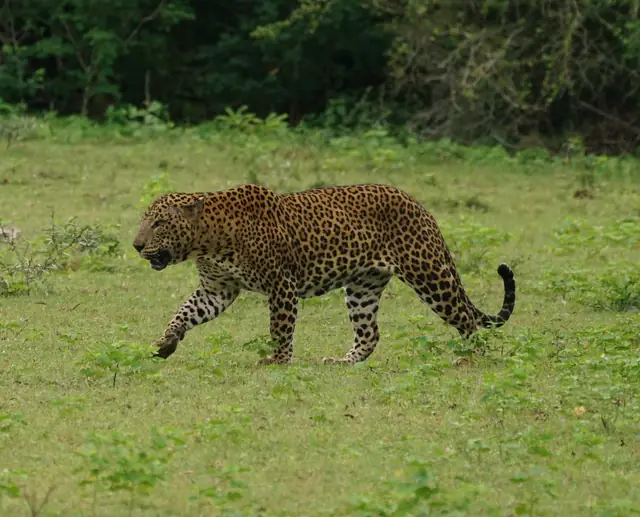
Leopard
Panthera pardus
Gir has a healthy leopard population living alongside the lions. Leopards keep to thicker cover and rocky ground, hunt mostly at night and are far shyer, so a sighting is a real prize.
-
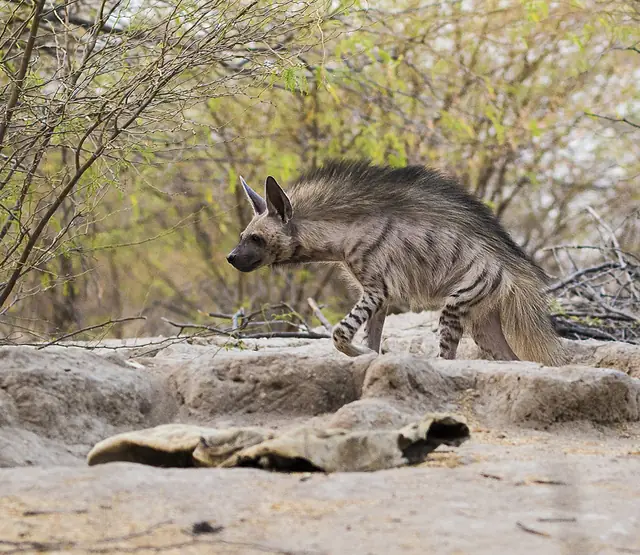
Striped Hyena
Hyaena hyaena
A shaggy, mostly solitary scavenger with a crest of hair it raises when alarmed. It is almost entirely nocturnal and seldom seen by day.
-
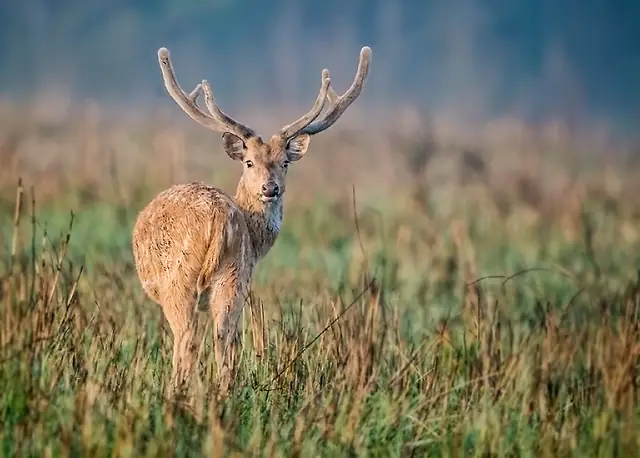
Chital (Spotted Deer)
Axis axis
The most common deer in Gir and the lions' main wild prey. Herds graze in forest clearings, and their sharp alarm calls often give away a hunting cat.
-
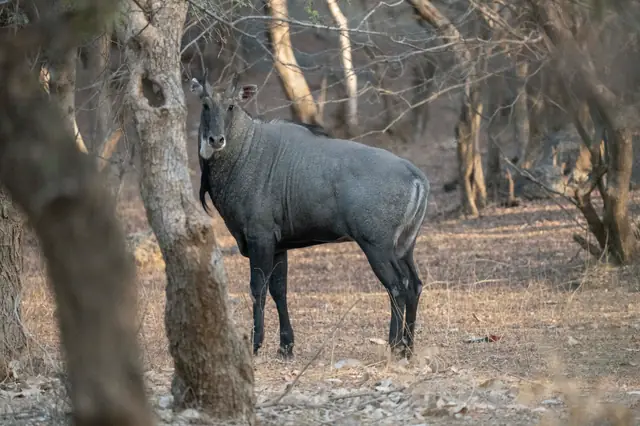
Nilgai
Boselaphus tragocamelus
Asia's largest antelope. Bulls are blue-grey with a short beard, while cows are tawny, and small groups browse in open scrub and at the forest edge.
-
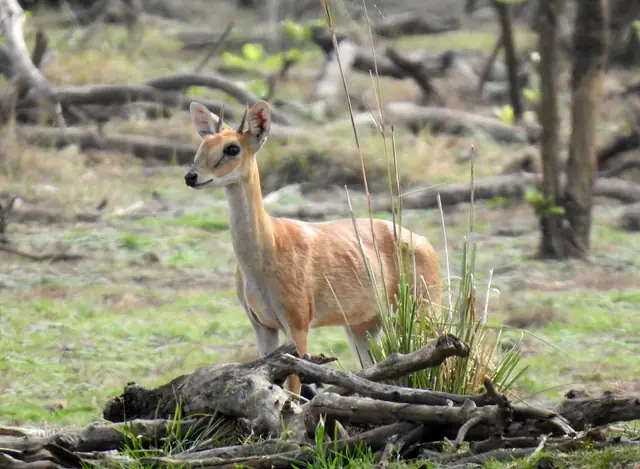
Four-horned Antelope
Tetracerus quadricornis
A small, shy antelope and the only one in the world whose males carry four horns. It lives alone or in pairs in dry, hilly forest and freezes or bolts at any disturbance.
-
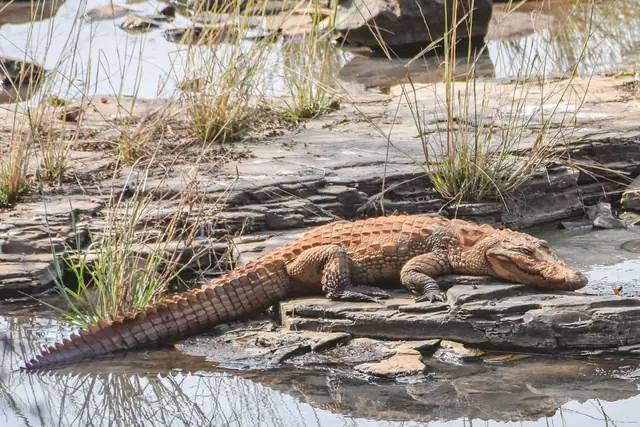
Mugger Crocodile
Crocodylus palustris
A broad-snouted freshwater crocodile that basks on banks and rocks of rivers and reservoirs. In the hot months it may dig burrows to escape the heat.
-
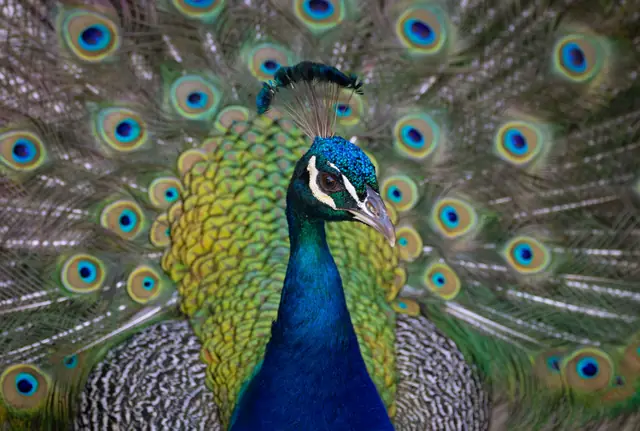
Indian Peafowl
Pavo cristatus
India's national bird is common here, feeding on the ground and roosting high in trees. Males display their trains in spring, and the loud calls carry far across the forest.
All 70 animals in Gir
Big mammals 9
-
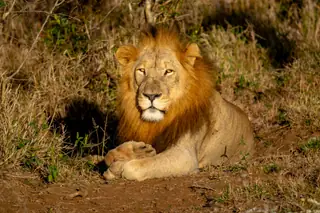 Lion
-
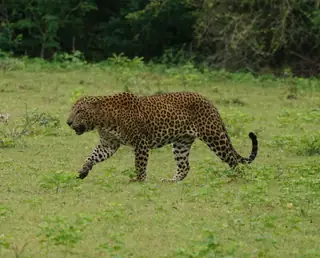 Leopard
-
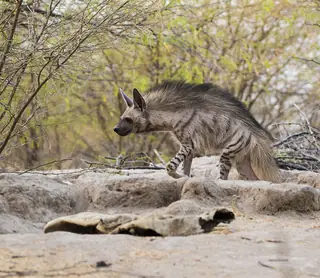 Striped HyenaRare
-
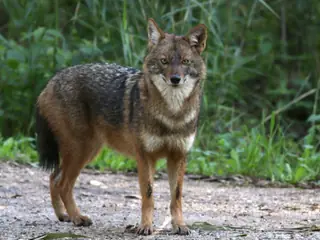 Golden Jackal
-
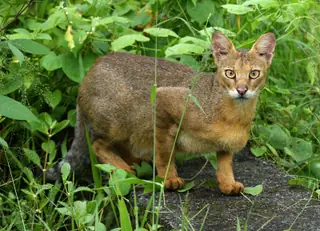 Jungle Cat
-
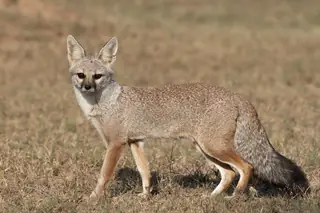 Indian FoxRare
-
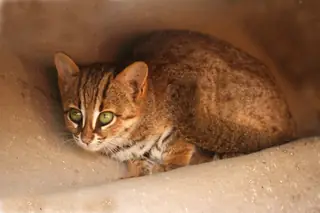 Rusty-spotted CatRare
-
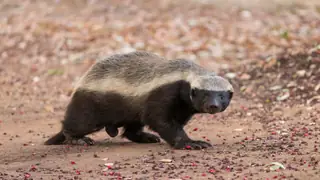 Honey BadgerRare
-
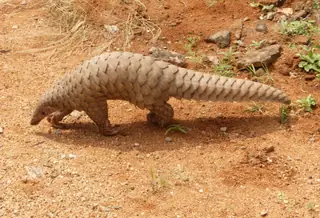 Indian PangolinRare
Deer and antelope 6
-
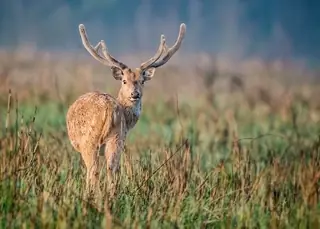 Chital (Spotted Deer)
-
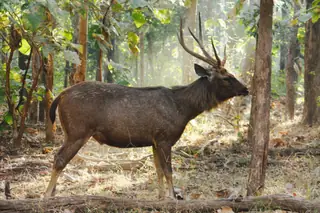 Sambar Deer
-
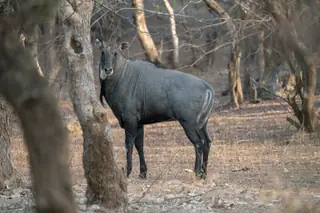 Nilgai
-
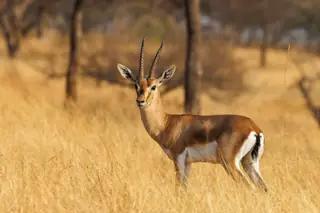 Chinkara (Indian Gazelle)
-
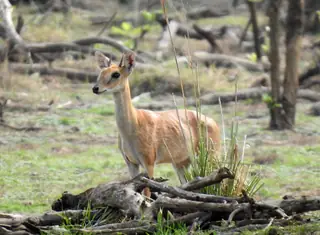 Four-horned Antelope
-
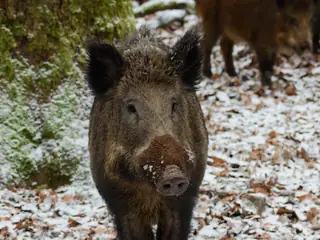 Wild Boar
Smaller mammals 7
-
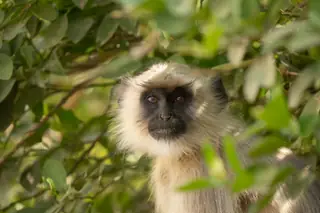 Hanuman Langur
-
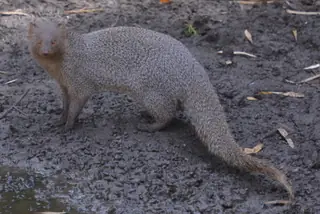 Indian Grey Mongoose
-
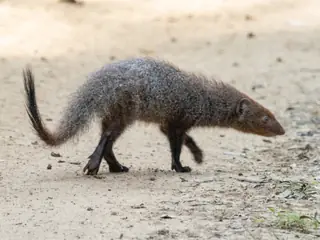 Ruddy Mongoose
-
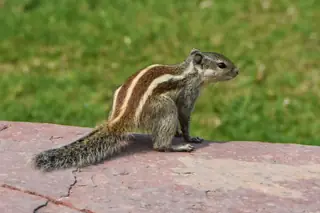 Northern Palm Squirrel
-
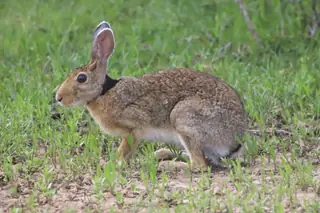 Indian Hare
-
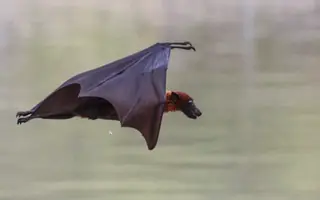 Indian Flying Fox
-
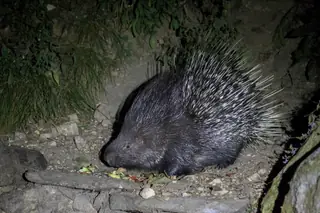 Indian Crested PorcupineRare
Birds of prey 12
-
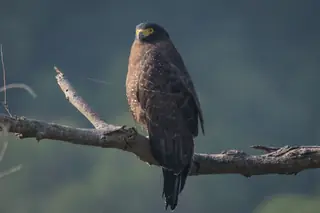 Crested Serpent Eagle
-
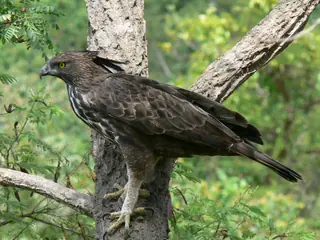 Changeable Hawk-Eagle
-
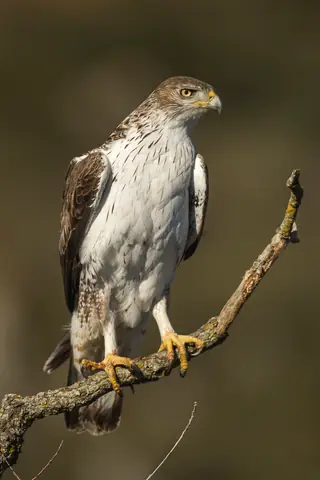 Bonelli's Eagle
-
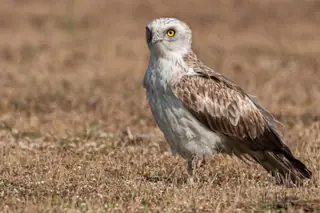 Short-toed Snake Eagle
-
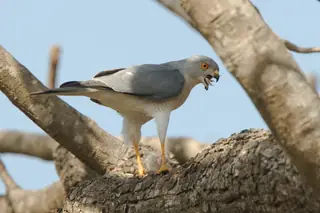 Shikra
-
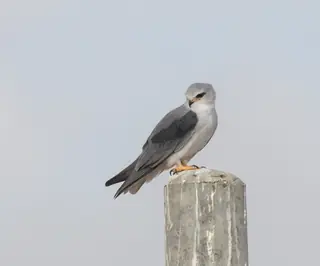 Black-winged Kite
-
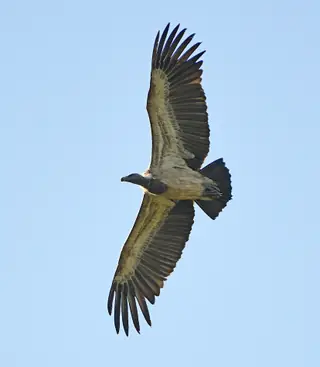 Indian Vulture
-
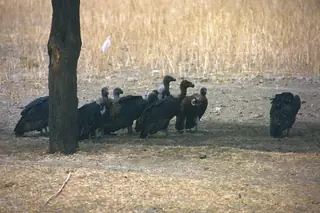 White-rumped Vulture
-
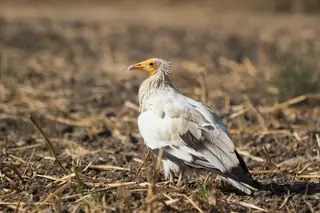 Egyptian Vulture
-
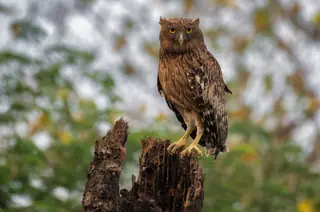 Brown Fish Owl
-
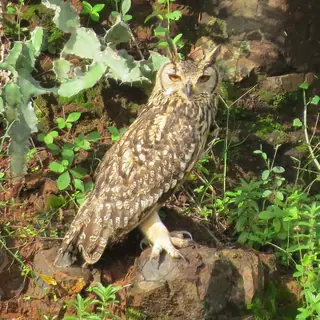 Indian Eagle-Owl
-
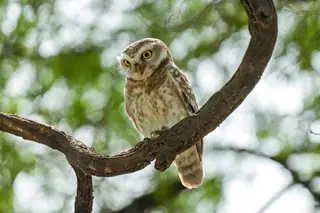 Spotted Owlet
Water birds 9
-
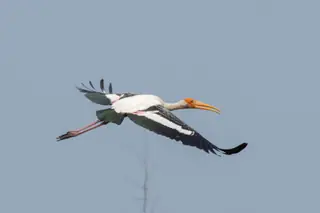 Painted Stork
-
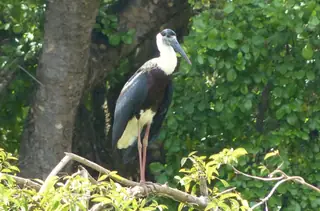 Asian Woolly-necked Stork
-
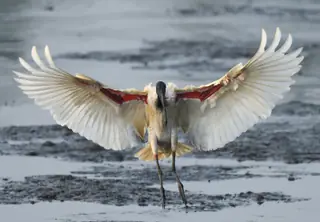 Black-headed Ibis
-
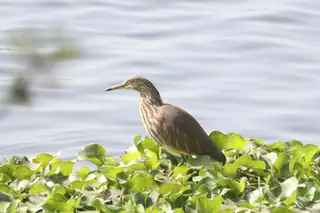 Indian Pond Heron
-
 Great Egret
-
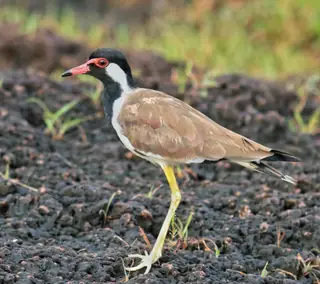 Red-wattled Lapwing
-
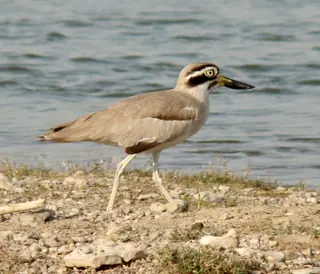 Great Stone-curlew
-
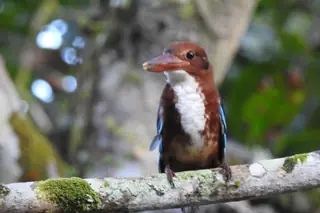 White-throated Kingfisher
-
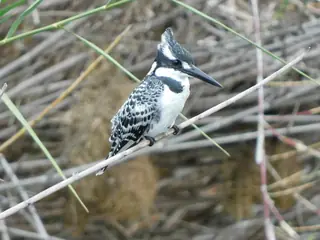 Pied Kingfisher
Forest birds 22
-
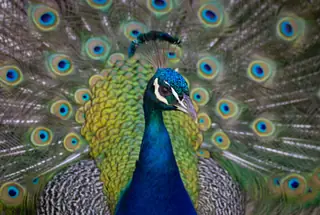 Indian Peafowl
-
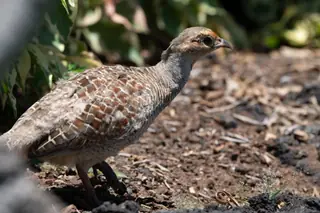 Grey Francolin
-
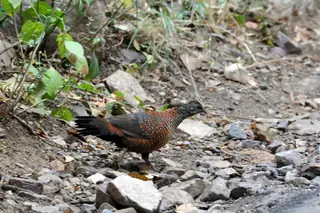 Painted Spurfowl
-
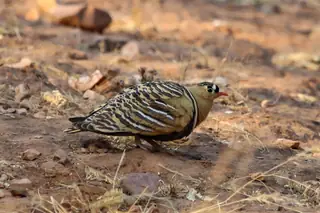 Painted Sandgrouse
-
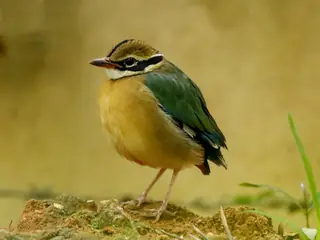 Indian Pitta
-
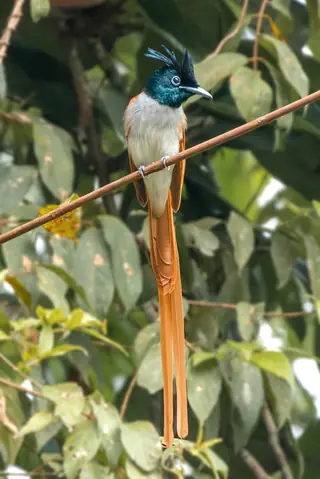 Indian Paradise Flycatcher
-
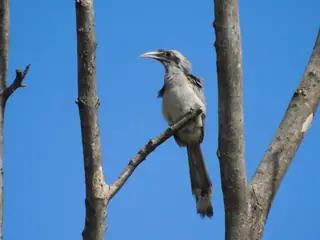 Indian Grey Hornbill
-
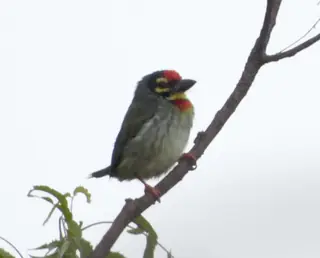 Coppersmith Barbet
-
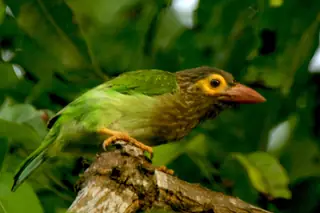 Brown-headed Barbet
-
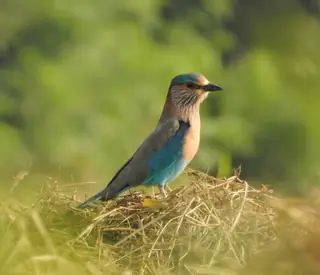 Indian Roller
-
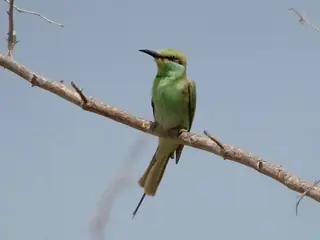 Asian Green Bee-eater
-
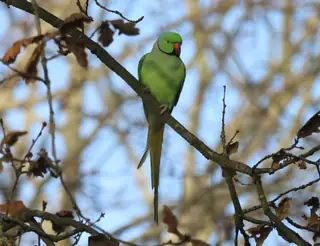 Ring-necked Parakeet
-
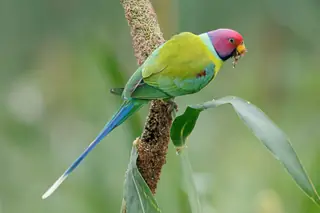 Plum-headed Parakeet
-
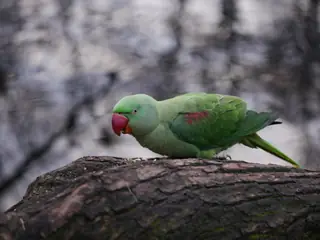 Alexandrine Parakeet
-
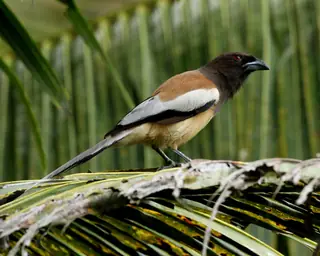 Rufous Treepie
-
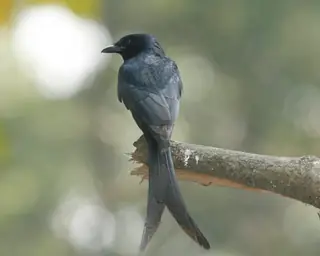 Black Drongo
-
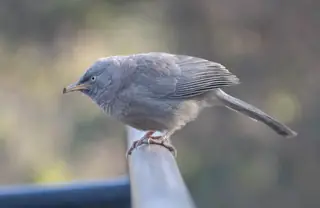 Jungle Babbler
-
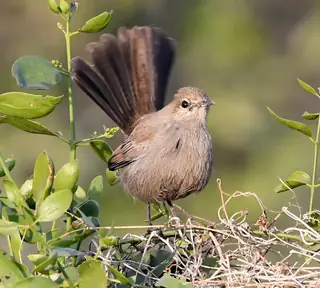 Indian Robin
-
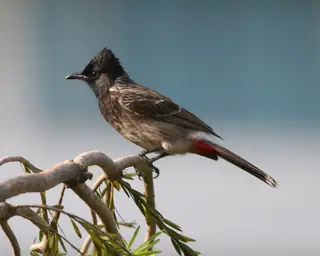 Red-vented Bulbul
-
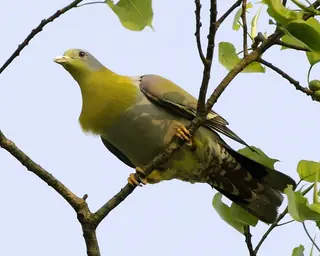 Yellow-footed Green Pigeon
-
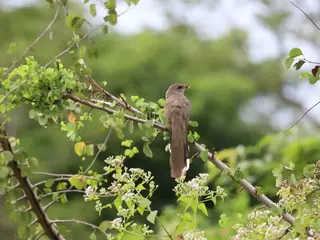 Sirkeer Malkoha
-
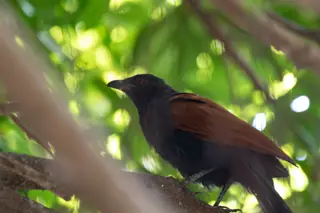 Greater Coucal
Reptiles 5
-
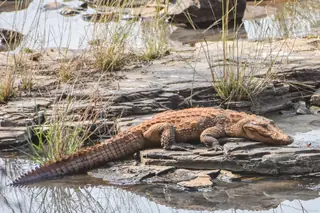 Mugger Crocodile
-
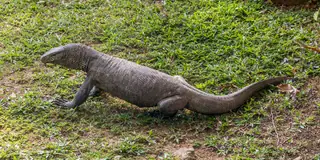 Bengal Monitor
-
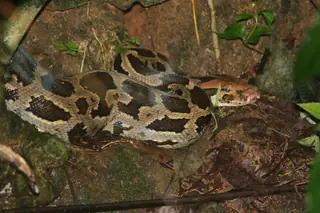 Indian Rock Python
-
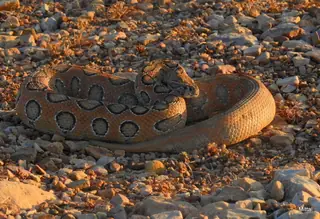 Russell's ViperRare
-
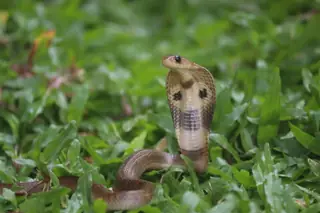 Indian CobraRare
Best time to see wildlife in Gir
Sightings by month in Gir
Most records: Nov to MayRecords from GBIF.org, adjusted for how many people record wildlife each month. 100% is the busiest month.
Gir's year turns on the monsoon. The rains arrive in June and safaris pause from mid June to mid October, while the forest turns green and many animals breed. When safaris restart the vegetation is thick and animals are spread out. From November to February the weather is cool and dry, the forest slowly opens up and wintering birds arrive. From March the teak sheds its leaves, the heat builds through April and May, and animals stay close to water, so sightings are often at their best, though midday is very hot and quiet.
- Mid Oct to NovSafaris restart; green, thick forest
- Dec to FebCool and dry; wintering birds, pleasant mornings
- Mar to MayHot, leafless forest; animals gather near water
- Mid Jun to mid OctMonsoon rains; safaris pause
Tips for spotting wildlife in Gir
- 01
Take the early safari
Lions and leopards are most active in the cool of early morning and late afternoon. By midday most animals are resting in shade.
- 02
Listen for alarm calls
Langurs barking from the trees, chital calling and peafowl shrieking are the forest's warning system. A good guide stops and waits when they hear them.
- 03
Stay seated and quiet
Keep voices low, stay in the vehicle and follow the local rules on distance. Calm watching lets animals carry on with what they are doing.
- 04
Book more than one drive
Each drive is different, and the forest rewards patience. Several drives give a far better chance of a cat and a richer list of birds.
- 05
Look beyond the lions
Gir has more than 300 kinds of bird, from paradise flycatchers to painted sandgrouse. Binoculars turn the quiet stretches between big sightings into some of the best of the trip.

Take Gir with you
Heading to Gir? Take this list on your phone and tick off lions, leopards and the forest birds from the safari jeep, even without signal. Wilder is free to start.

Gir wildlife FAQ
What animals can you see in Gir National Park?
In Gir you can see Asiatic lions, leopards, striped hyenas, golden jackals, chital, sambar, nilgai, chinkara, four-horned antelope, wild boar, langurs and mugger crocodiles, plus more than 300 kinds of bird. This checklist covers 70 animals. Chital, langurs and peafowl are almost certain; lions are likely over a few drives; leopards and hyenas take luck.
How many Asiatic lions are there?
The 2025 population count found 891 Asiatic lions in Gujarat, up from 674 in 2020. They are the only wild Asiatic lions left in the world. In the late 1960s fewer than 200 survived.
What is the best time to visit Gir?
The best time to visit Gir is from November to March, when the weather is cool and dry. March to May is very hot, but the forest thins and animals stay close to water, which can make sightings easier. Safaris pause for the monsoon from mid June to mid October.
How are Asiatic lions different from African lions?
Asiatic lions are slightly smaller than African lions. Males have shorter, sparser manes, so their ears stay visible, and both sexes have a long fold of skin along the belly. Prides are smaller, and adult males usually live apart from the females.
Sources
- Gujarat Tourism: Gir National Park
- Gujarat Forest Department: Gir Jungle Trail
- Down To Earth: Asiatic lion population in Gujarat rises from 674 to 891
- Sightings by month: GBIF.org
Animal photos are from the Wilder catalogue; photo credits.
Similar checklists
All Asia-
 National park71animals Ranthambore National Park Sawai Madhopur, Rajasthan, India Dry forest, lakes and a thousand-year-old fort, and one of the best places in India to see a wild tiger by day. Best time Oct to Jun, Mar to May for tigers
-
 National park103animals Kanha National Park Mandla and Balaghat, Madhya Pradesh, India Sal forest and wide meadows in the Maikal hills, home to tigers, dhole, gaur and the hard-ground barasingha that was saved from extinction here. Best time Oct to Jun, Mar to Jun for tigers
-
 National park105animals Bandhavgarh National Park Umaria, Madhya Pradesh, India Rocky hills, sal forest and an ancient hilltop fort, with one of the highest densities of tigers in India and a herd of wild elephants that settled here in recent years. Best time Oct to Jun, Mar to Jun for tigers
-
 National park128animals Jim Corbett National Park Nainital and Pauri Garhwal, Uttarakhand, India India's oldest national park, where sal forest and wide river grasslands below the Himalayan foothills hold tigers, elephant herds, gharials and over 550 kinds of birds. Best time Nov to Jun