National park · Nakhon Ratchasima, Isan · Thailand
Khao Yai National Park Wildlife Checklist

Khao Yai National Park, three hours from Bangkok, is Thailand's oldest national park and one of the best places in Asia to see wild elephants, great hornbills and gibbons. Sambar, muntjac, macaques and Siamese firebacks are easy to see. This checklist covers 120 animals. November to April is the cooler, drier season.
Tick off all 120 animals in Khao Yai on your phone, even offline. Launching soon. Free A4 PDF, no sign-up.
Founded in 1962, Khao Yai covers about 2,166 square kilometres of forest and grassland on a plateau in the Dong Phayayen-Khao Yai Forest Complex, a World Heritage Site. Most visitors enter from the north near Pak Chong and explore by car, on guided forest walks and on the park's night drive.
- Animals to find
- 120
- Where
- Thailand
- Best time
- Nov to Apr
- Founded
- 1962, Thailand's first national park
Popular animals in Khao Yai
-
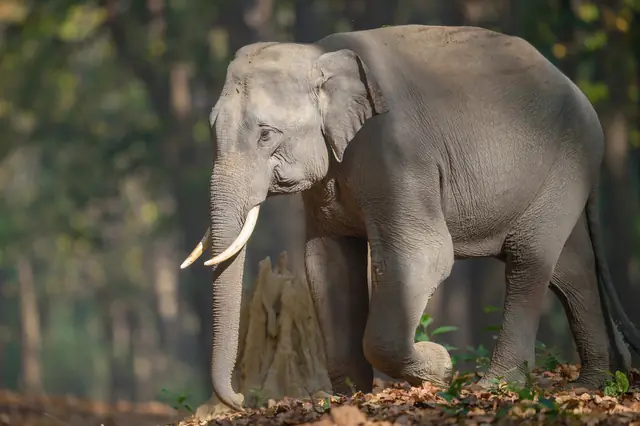
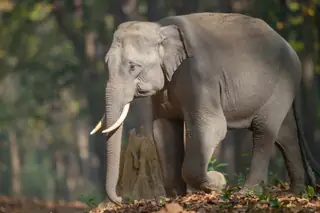
Asian Elephant
Elephas maximus
A few hundred wild elephants live in the park, and herds often cross or walk along the roads, especially at dusk. Stop well back, keep the engine running and never get out.
-
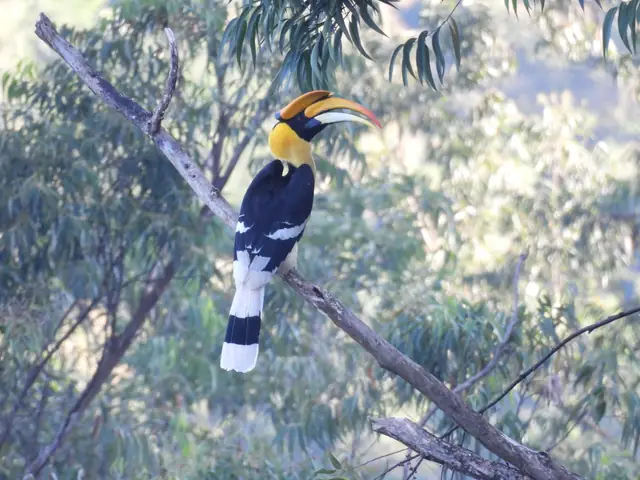
Great Hornbill
Buceros bicornis
Khao Yai is one of the best places in Asia to see this huge hornbill, feeding in fruiting figs. Listen for its whooshing wingbeats.
-
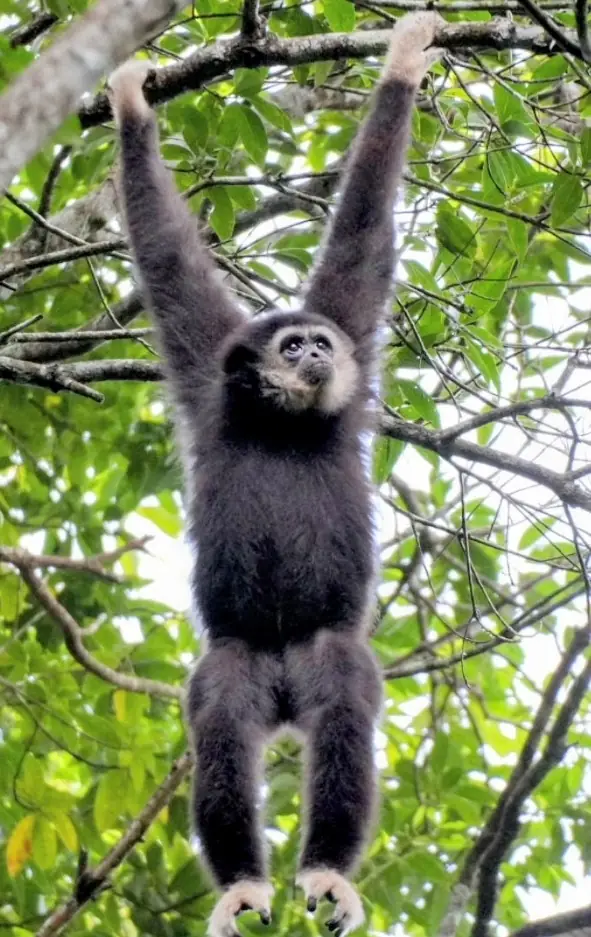
Lar Gibbon
Hylobates lar
Family groups sing loud, whooping songs soon after dawn. A guided forest walk gives the best chance of quiet views.
-
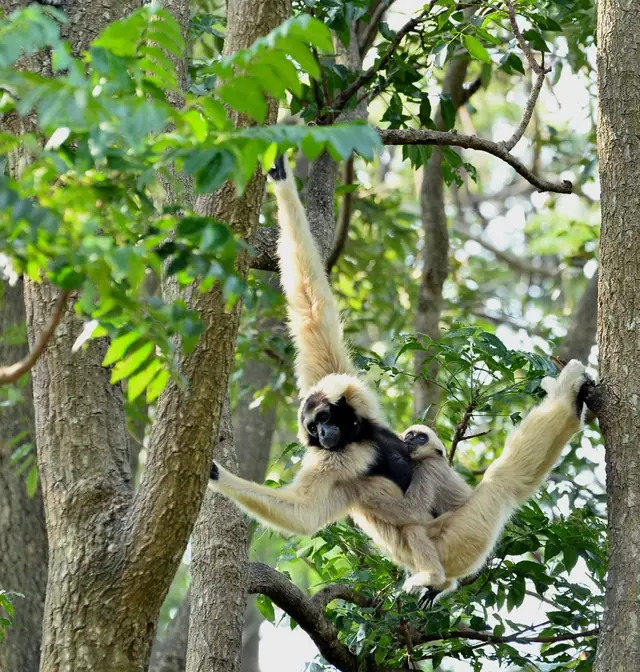
Pileated Gibbon
Hylobates pileatus
Khao Yai is where its range meets the lar gibbon's.
-
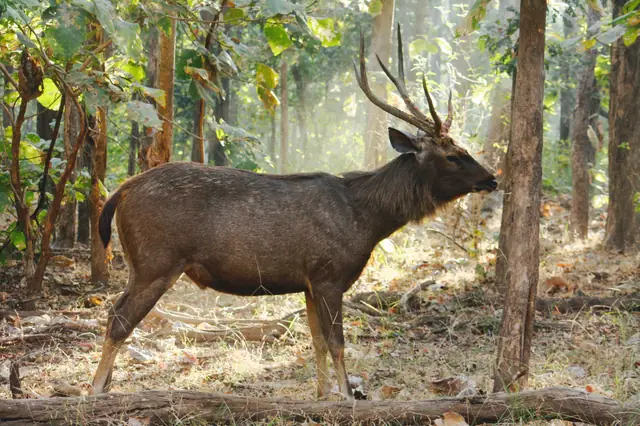
Sambar Deer
Rusa unicolor
Big, dark deer grazing the open grassland near the park headquarters, most often at dusk.
-
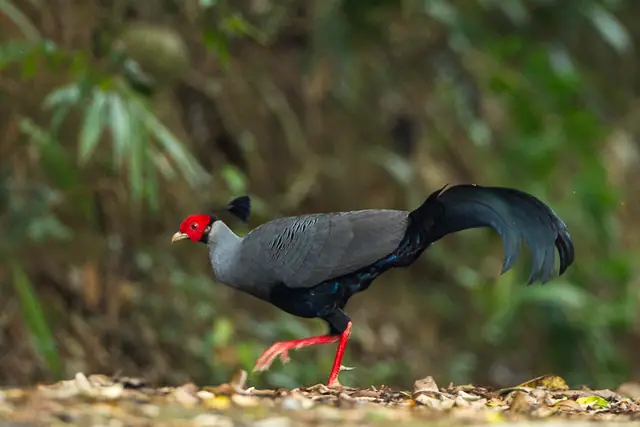
Siamese Fireback
Lophura diardi
Thailand's national bird. Pairs walk the roadsides and forest edges early in the morning, the males glossy blue-grey with a red face.
-
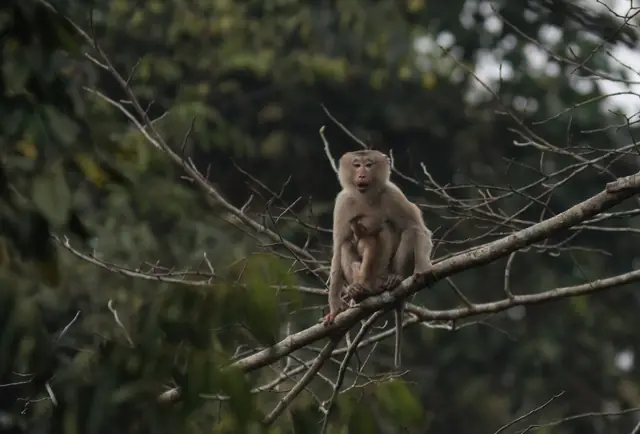
Northern Pig-tailed Macaque
Macaca leonina
Troops sit along the roads. Never feed them, and keep food out of sight.
-
Wrinkle-lipped Free-tailed Bat
Mops plicatus
Millions stream out of a cave just outside the park's north gate every evening. Watch from well back, without lights.
All 120 animals in Khao Yai
Big mammals 12
-
 Asian Elephant
-
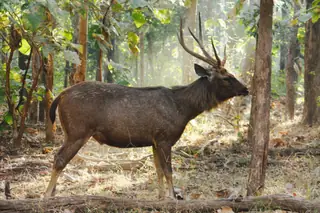 Sambar Deer
-
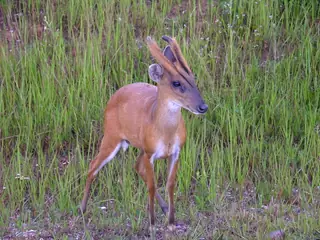 Northern Red Muntjac
-
 Wild Boar
-
 Golden Jackal
-
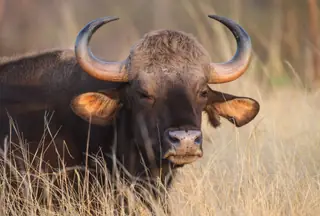 GaurRare
-
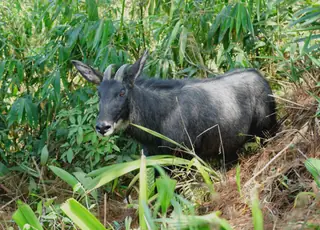 Mainland SerowRare
-
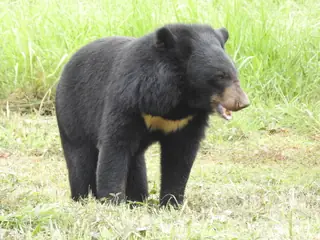 Asiatic Black BearRare
-
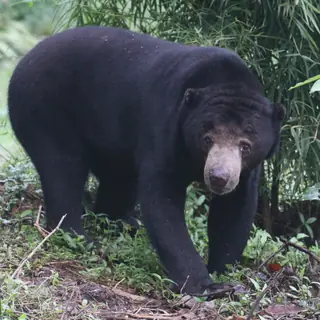 Sun BearRare
-
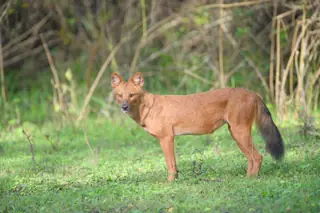 DholeRare
-
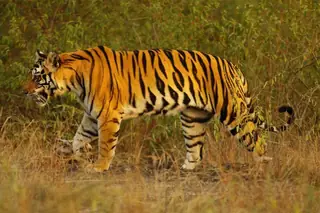 TigerRare
-
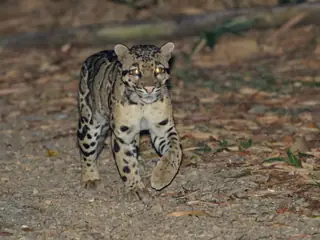 Mainland Clouded LeopardRare
Apes and monkeys 5
-
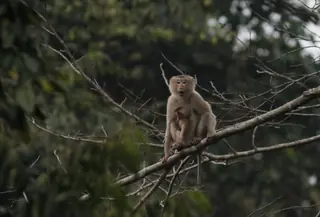 Northern Pig-tailed Macaque
-
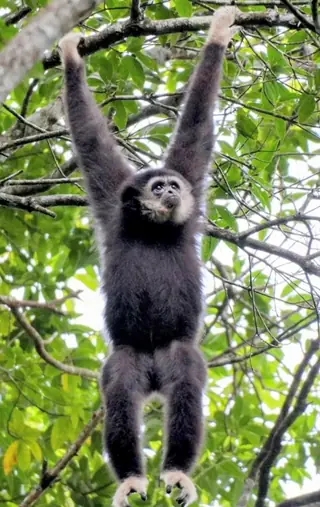 Lar Gibbon
-
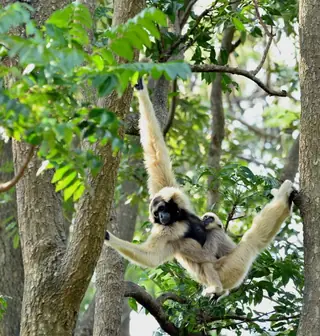 Pileated Gibbon
-
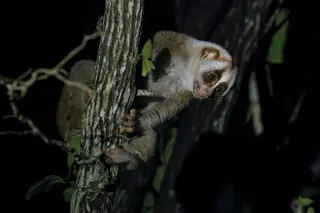 Bengal Slow LorisRare
-
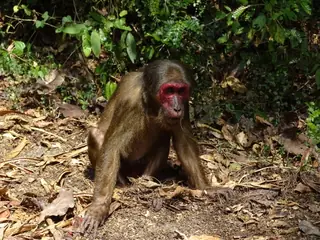 Stump-tailed MacaqueRare
Smaller mammals 16
-
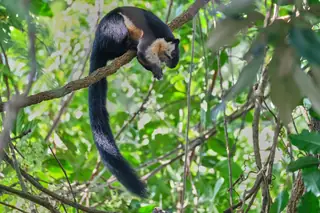 Black Giant Squirrel
-
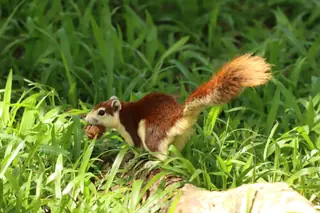 Variable Squirrel
-
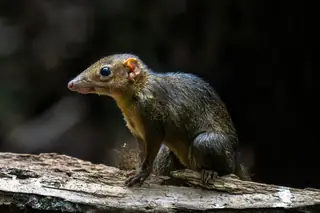 Northern Treeshrew
- Wrinkle-lipped Free-tailed Bat
-
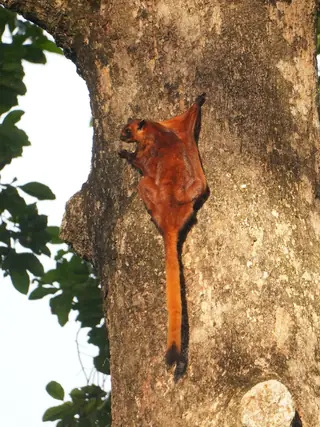 Red Giant Flying Squirrel
-
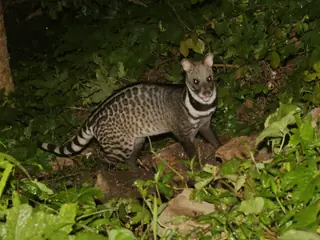 Large Indian Civet
-
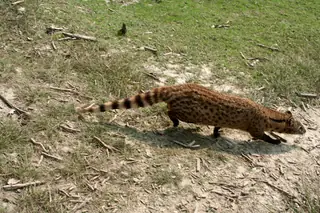 Small Indian Civet
-
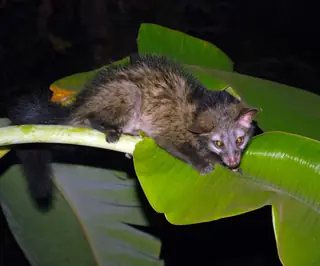 Common Palm Civet
-
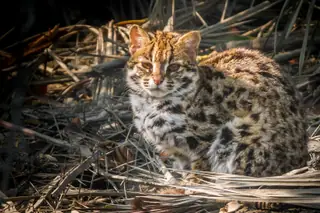 Leopard Cat
-
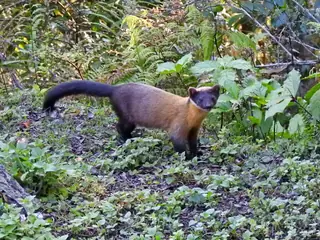 Yellow-throated Marten
-
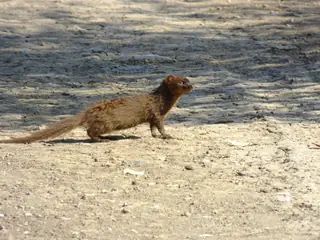 Javan Mongoose
-
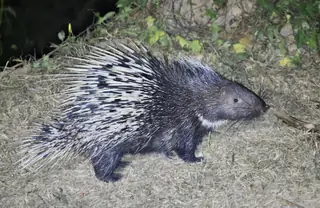 Malayan Porcupine
-
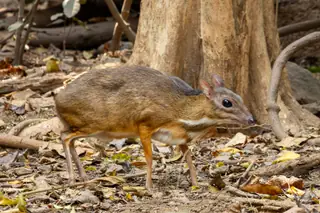 Lesser Mouse-deer
-
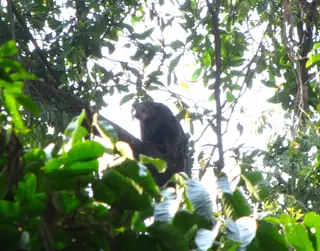 BinturongRare
-
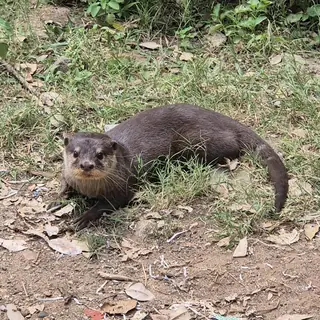 Asian Small-clawed OtterRare
-
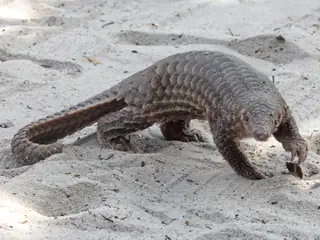 Sunda PangolinRare
Hornbills 4
-
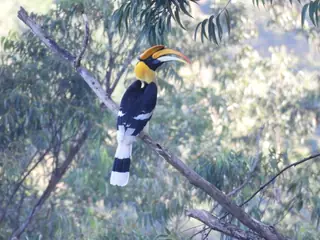 Great Hornbill
-
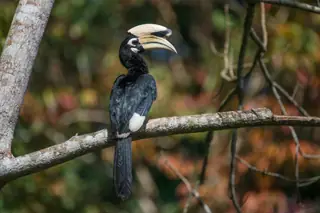 Oriental Pied Hornbill
-
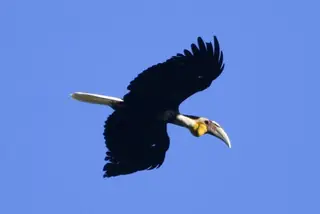 Wreathed Hornbill
-
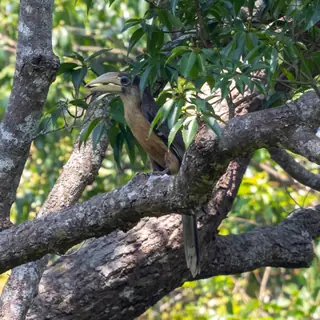 Austen's Brown Hornbill
Birds of prey and owls 10
-
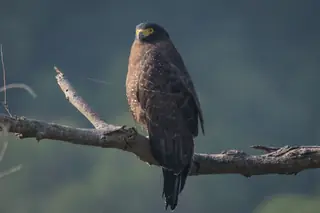 Crested Serpent Eagle
-
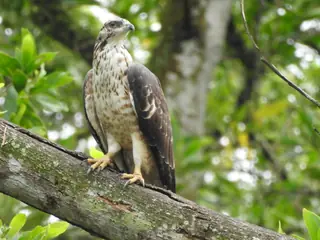 Oriental Honey Buzzard
-
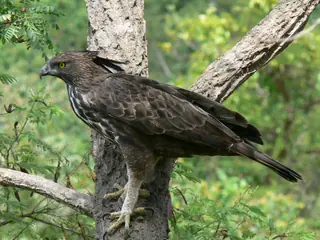 Changeable Hawk-Eagle
-
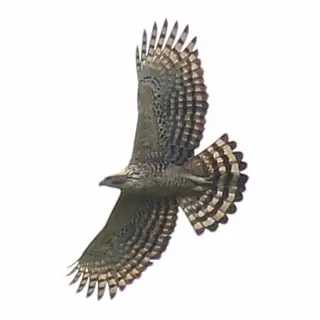 Mountain Hawk-Eagle
-
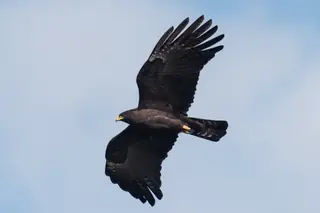 Black Eagle
-
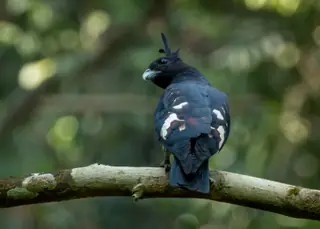 Black Baza
-
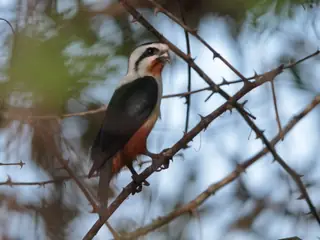 Collared Falconet
-
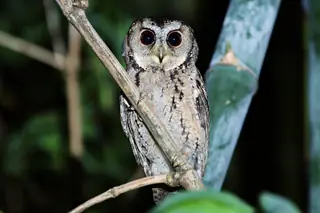 Collared Scops Owl
-
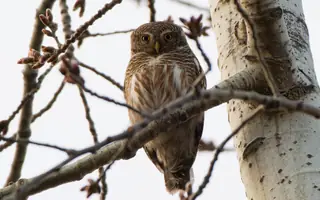 Asian Barred Owlet
-
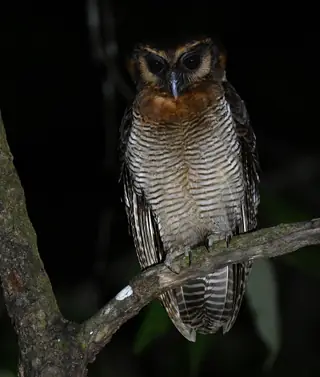 Brown Wood OwlRare
Forest birds 45
-
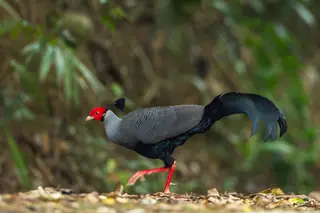 Siamese Fireback
-
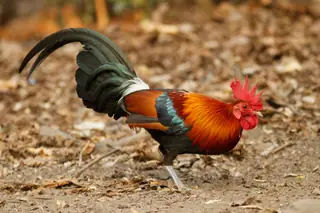 Red Junglefowl
-
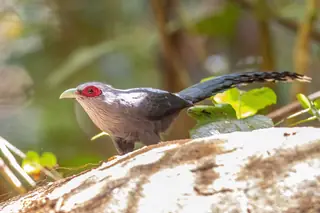 Green-billed Malkoha
-
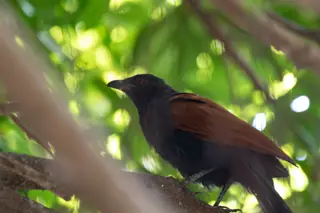 Greater Coucal
-
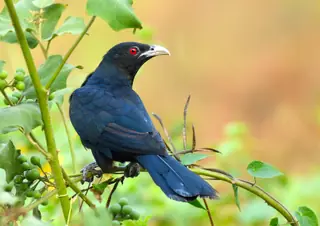 Asian Koel
-
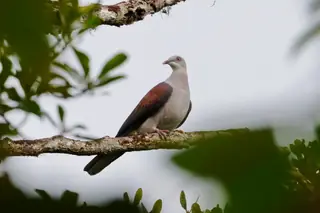 Mountain Imperial Pigeon
-
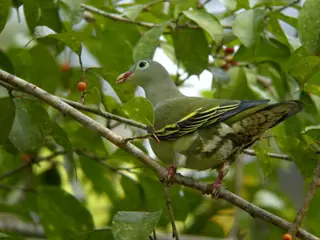 Thick-billed Green Pigeon
-
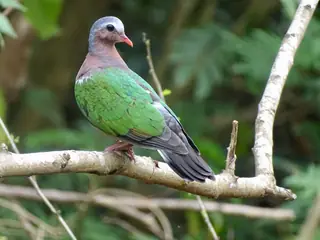 Common Emerald Dove
-
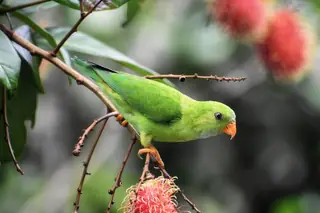 Vernal Hanging Parrot
-
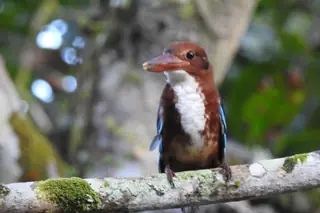 White-throated Kingfisher
-
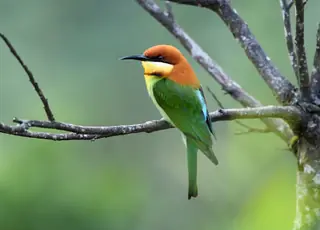 Chestnut-headed Bee-eater
-
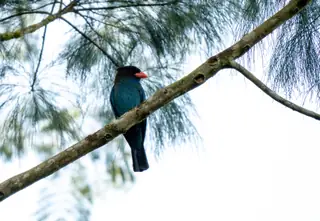 Oriental Dollarbird
-
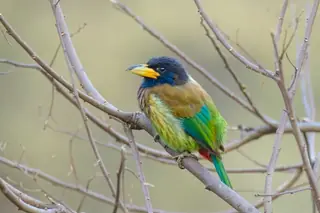 Great Barbet
-
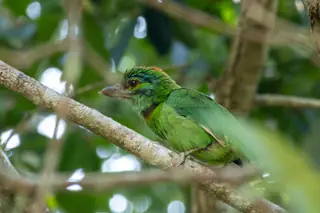 Moustached Barbet
-
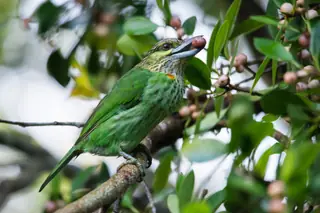 Green-eared Barbet
-
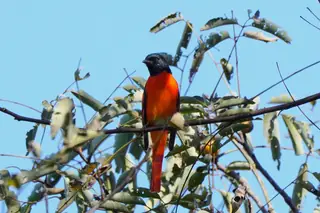 Scarlet Minivet
-
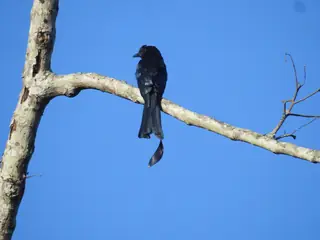 Greater Racquet-tailed Drongo
-
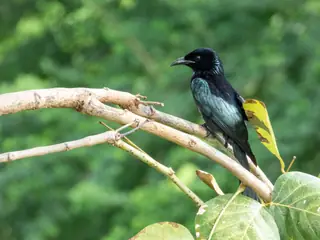 Hair-crested Drongo
-
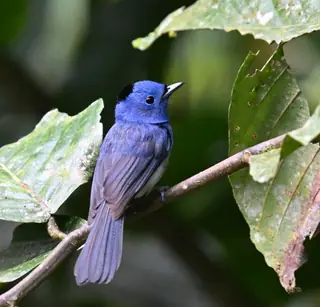 Black-naped Monarch
-
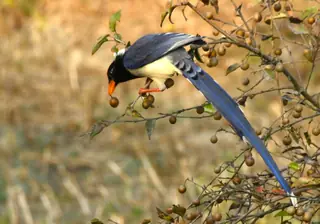 Red-billed Blue Magpie
-
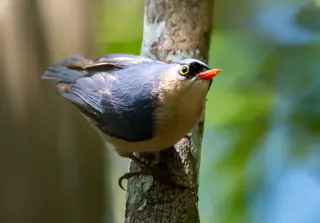 Velvet-fronted Nuthatch
-
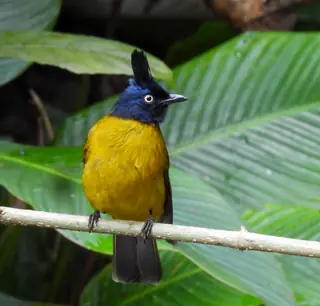 Black-crested Bulbul
-
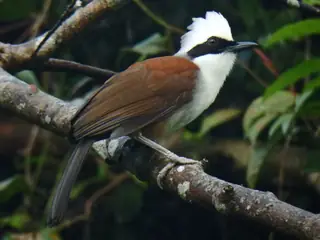 White-crested Laughingthrush
-
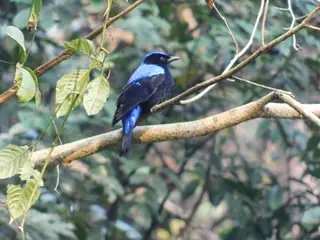 Asian Fairy-bluebird
-
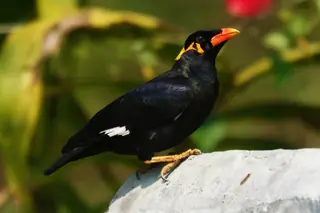 Common Hill Myna
-
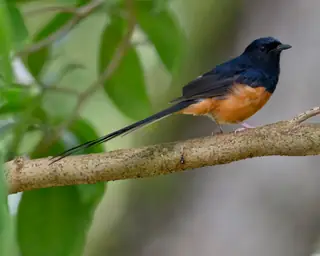 White-rumped Shama
-
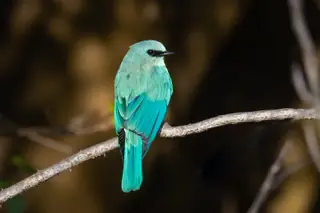 Verditer Flycatcher
-
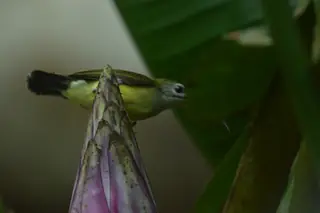 Little Spiderhunter
-
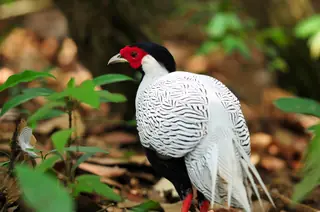 Silver Pheasant
-
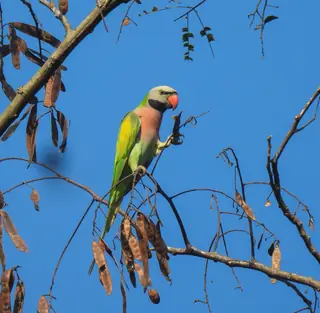 Red-breasted Parakeet
-
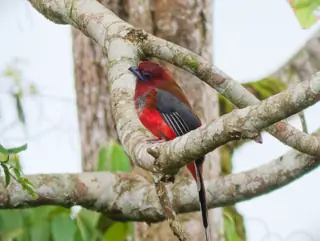 Red-headed Trogon
-
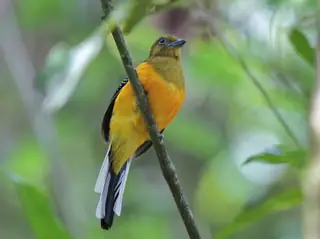 Orange-breasted Trogon
-
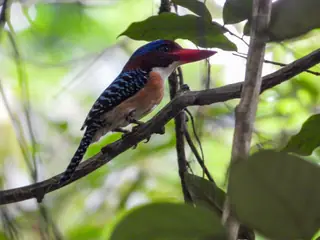 Banded Kingfisher
-
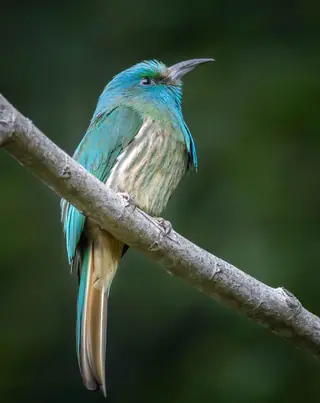 Blue-bearded Bee-eater
-
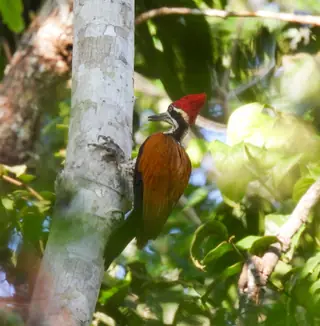 Greater Flameback
-
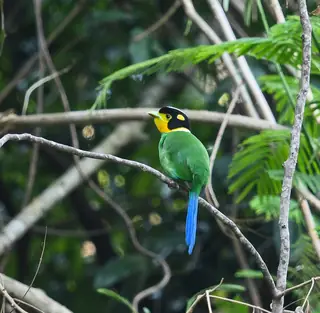 Long-tailed Broadbill
-
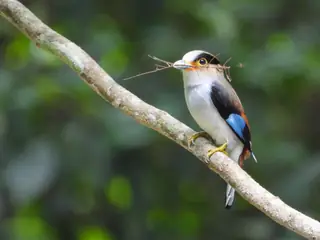 Silver-breasted Broadbill
-
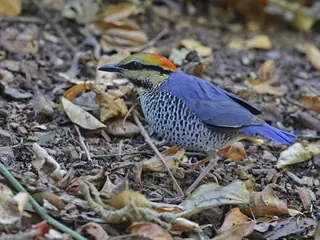 Blue Pitta
-
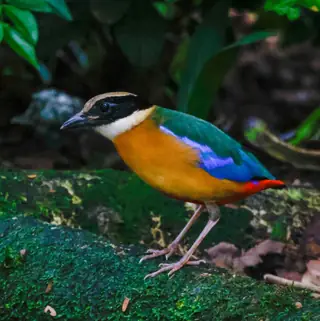 Blue-winged Pitta
-
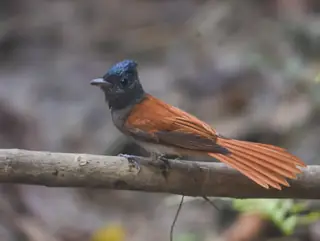 Blyth's Paradise Flycatcher
-
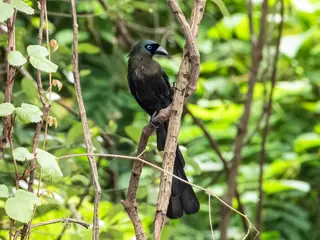 Racquet-tailed Treepie
-
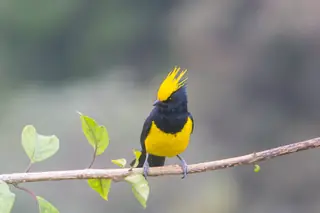 Sultan Tit
-
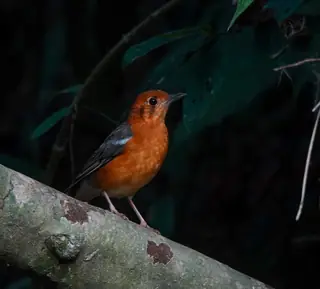 Orange-headed Thrush
-
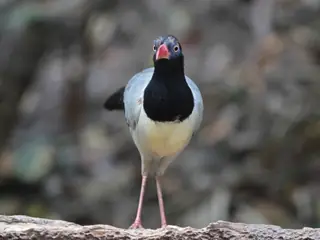 Coral-billed Ground CuckooRare
-
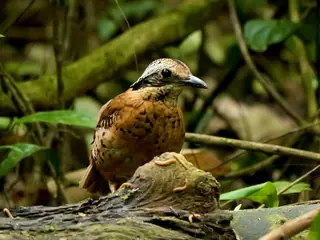 Eared PittaRare
Reptiles and amphibians 23
-
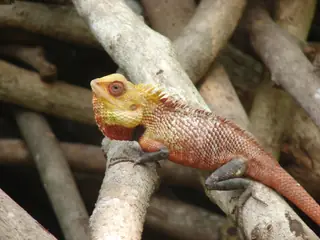 Oriental Garden Lizard
-
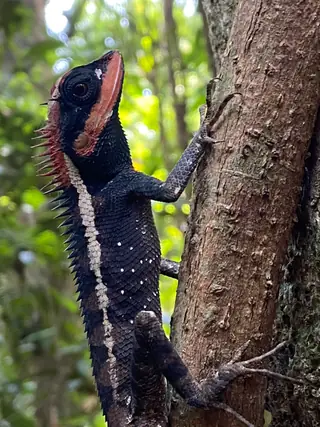 Forest Crested Lizard
- Tokay Gecko
-
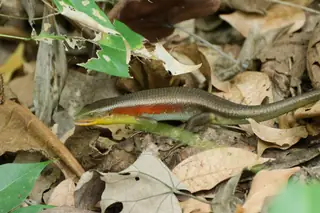 Common Sun Skink
-
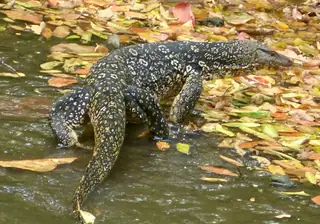 Asian Water Monitor
-
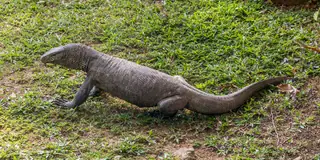 Bengal Monitor
-
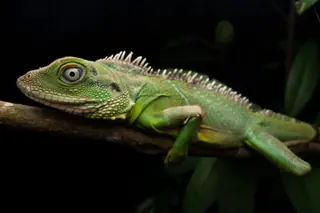 Chinese Water Dragon
-
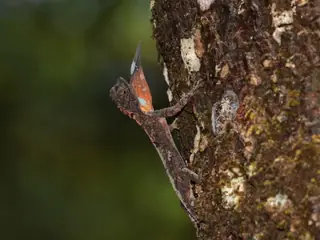 Spotted Flying Dragon
-
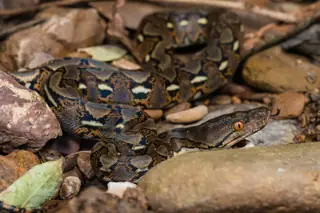 Reticulated Python
-
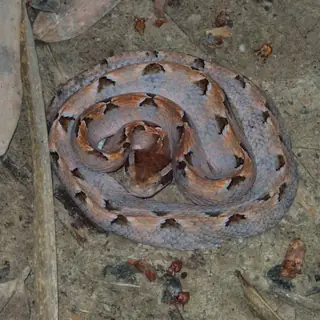 Malayan Pit Viper
-
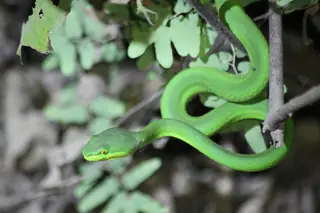 White-lipped Pit Viper
-
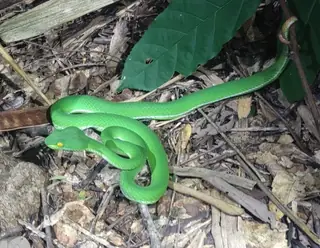 Big-eyed Pit Viper
-
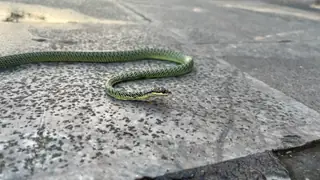 Golden Tree Snake
-
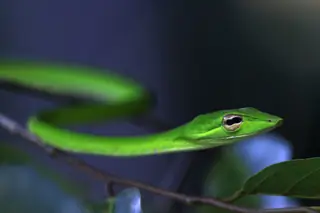 Oriental Whip Snake
-
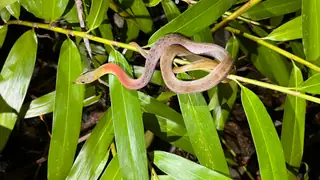 Siamese Red-necked Keelback
-
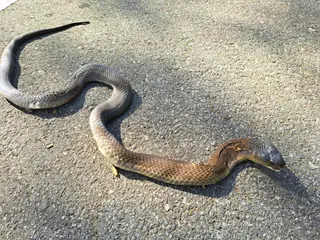 Monocled Cobra
-
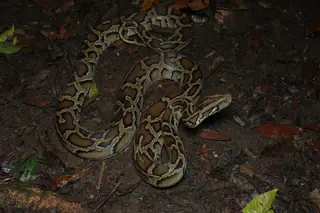 Burmese PythonRare
-
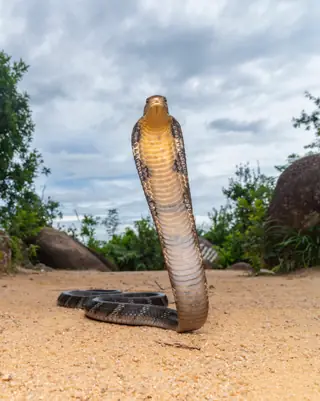 King CobraRare
-
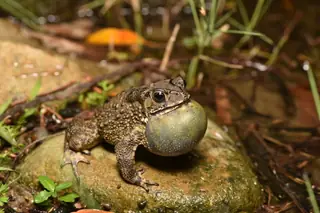 Asian Common Toad
-
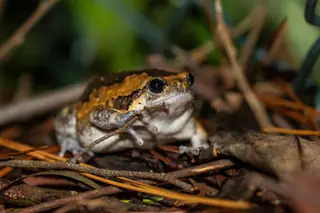 Banded Bullfrog
-
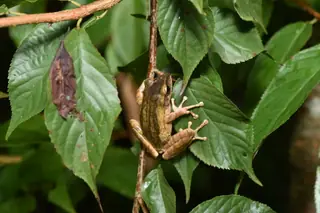 Four-lined Tree Frog
- Mortensen's Frog
-
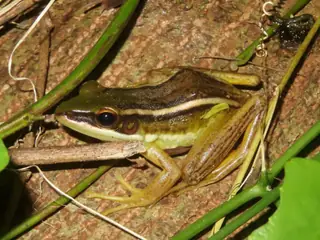 Green Paddy Frog
Butterflies 5
-
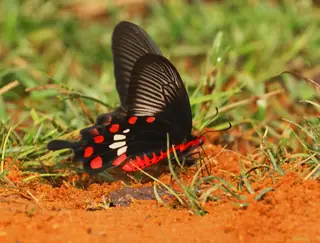 Common Rose
-
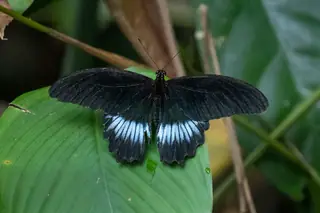 Great Mormon
-
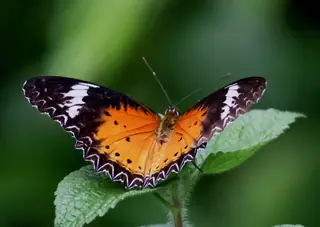 Leopard Lacewing
-
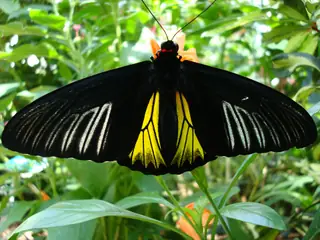 Common Birdwing
-
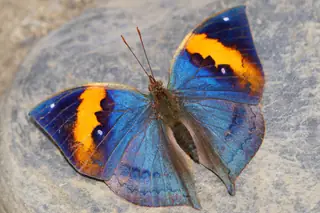 Orange Oakleaf
Best time to see wildlife in Khao Yai
Sightings by month in Khao Yai
Most records: Mar to Jul, JanRecords from GBIF.org, adjusted for how many people record wildlife each month. 100% is the busiest month.
Khao Yai's cool, dry season runs from about November to February, with clear mornings, chilly nights on the plateau and the busiest weekends. March and April are hot and dry; fruiting trees draw hornbills, and great hornbills nest from about February to May. The rainy season, roughly May to October, brings afternoon storms, leeches and full waterfalls, and the forest is at its greenest; elephants are seen all year. Weekends and Thai holidays bring heavy traffic, so visit midweek for quieter roads. The park is open from 6 am to 6 pm for day visitors.
- Nov to FebCool and dry; best weather, busy weekends
- Feb to MayHornbill nesting; hot by April
- May to OctRainy; green forest, leeches, full waterfalls
Tips for spotting wildlife in Khao Yai
- 01
Follow the park's elephant rules
If you meet elephants on the road, stop well back, keep the engine running, use no horn or flash, and wait until they leave the road. Never stop beside them for photos.
- 02
Find a fruiting fig
Hornbills, barbets, green pigeons and gibbons all gather in fruiting fig trees. A guide will know which trees are fruiting; watch quietly from a distance.
- 03
Be out at first and last light
Gibbons sing and hornbills fly in the early morning, while deer and elephants come out onto grassland in the late afternoon. Midday is quiet.
- 04
Book the night drive
The park's night drive often finds sambar, muntjac, civets and porcupines. Keep the spotlight moving and off animals' eyes.
- 05
Do not feed the macaques
Feeding is banned and makes macaques aggressive. Keep car windows up near troops and food out of sight.

Take Khao Yai with you
Driving through Khao Yai? Take this list on your phone and tick off elephants, hornbills and gibbons as you go, offline. Wilder is free to start.

Khao Yai wildlife FAQ
What animals can you see in Khao Yai National Park?
Wild elephants, sambar, muntjac, pig-tailed macaques, lar gibbons, great and oriental pied hornbills and Siamese firebacks are all regular in Khao Yai. Night drives add civets and porcupines. Gaur, bears, dholes and tigers live in the park but are rarely seen. This checklist covers 120 animals.
Will I see wild elephants in Khao Yai?
Often, though not guaranteed. A few hundred elephants live in the park and many visitors see them near the roads, especially at dusk. Follow the park's rules: stop well back, keep the engine running and never get out of the car.
Can you visit Khao Yai as a day trip from Bangkok?
Yes, it is about three hours' drive, but a day trip is rushed. Stay at least one night near Pak Chong or in the park so you are out at dawn and dusk, the best times for hornbills, gibbons and elephants.
Are there tigers in Khao Yai?
A small number of tigers live in Khao Yai and the wider forest complex, but they are very rarely seen. Visitors are far more likely to see elephants, gibbons and hornbills.
Sources
- Khao Yai National Park: Visitor safety and regulations
- Rough Guides: Khao Yai's wildlife
- UNESCO World Heritage: Dong Phayayen-Khao Yai Forest Complex
- Sightings by month: GBIF.org
Animal photos are from the Wilder catalogue; photo credits.
Similar checklists
All Asia-
 National park118animals Khao Sok National Park Surat Thani, Thailand Limestone peaks, old rainforest and the drowned valleys of Cheow Lan Lake in southern Thailand, with gibbons in the forest and hornbills and langurs seen from raft houses and longtail boats. Best time Jan to Apr
-
 National park115animals Cat Tien National Park Dong Nai, Vietnam Southern Vietnam's great lowland forest on the Dong Nai River, about three hours from Ho Chi Minh City, with singing gibbons, black-shanked doucs and a park-run night drive. Best time Dec to Apr
-
 National park124animals Taman Negara Pahang, Kelantan and Terengganu, Malaysia Malaysia's great national park: ancient lowland rainforest along the Tembeling and Tahan rivers, with a canopy walkway, overnight hides, hornbills and the chance of a tapir. Best time Mar to Sept
-
 Reserve123animals Danum Valley Conservation Area Lahad Datu, Sabah, Borneo, Malaysia Untouched lowland rainforest in eastern Sabah, with wild orangutans, gibbons, all eight of Borneo's hornbills and some of Asia's best night drives. Best time Mar to Oct