National park · Sofala · Mozambique
Gorongosa National Park Animal Checklist

Gorongosa National Park in central Mozambique is Africa's best-known wildlife recovery story: almost emptied by war, it has been restored since the 2000s and now holds tens of thousands of waterbuck, growing herds of buffalo and elephant, lions and reintroduced wild dogs. This checklist covers 141 animals. The dry season, May to November, is best.
Tick off all 141 animals in Gorongosa on your phone, even offline. Launching soon. Free A4 PDF, no sign-up.
The park covers about 4,000 square kilometres at the southern end of the Great Rift Valley, with Lake Urema and its floodplain at the centre and Mount Gorongosa rising to the west. Chitengo, the main camp, runs guided drives and walks.
- Animals to find
- 141
- Where
- Mozambique
- Best time
- May to Nov
- Rewilding
- Lions and wild dogs back after the war
Popular animals in Gorongosa
-
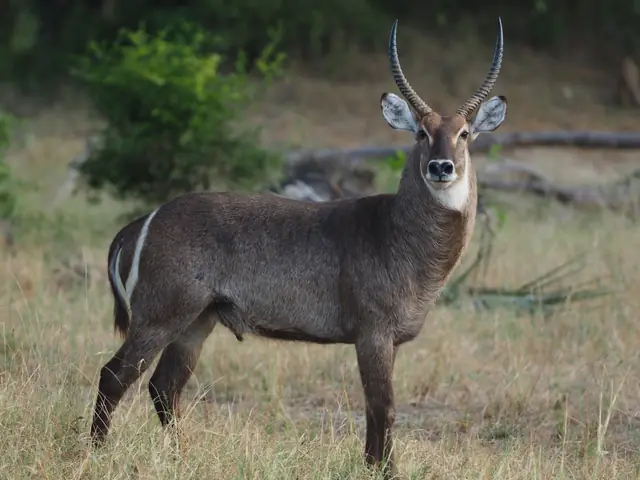
Waterbuck
Kobus ellipsiprymnus
The animal of the floodplain, in herds that stretch to the horizon. Gorongosa now has one of the largest populations anywhere.
-
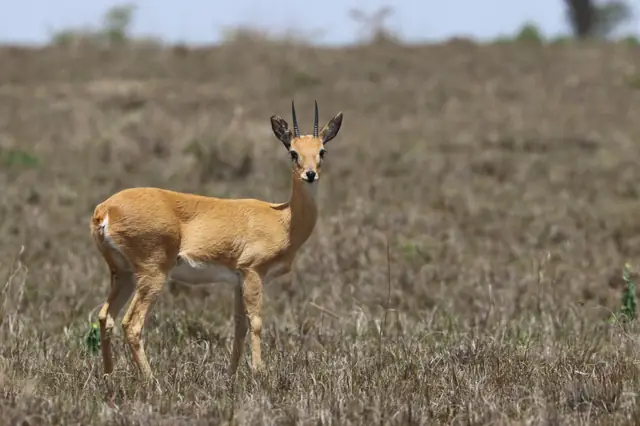
Oribi
Ourebia ourebi
A small, neat antelope of the short grass, usually in pairs. Watch for the black spot below the ear.
-
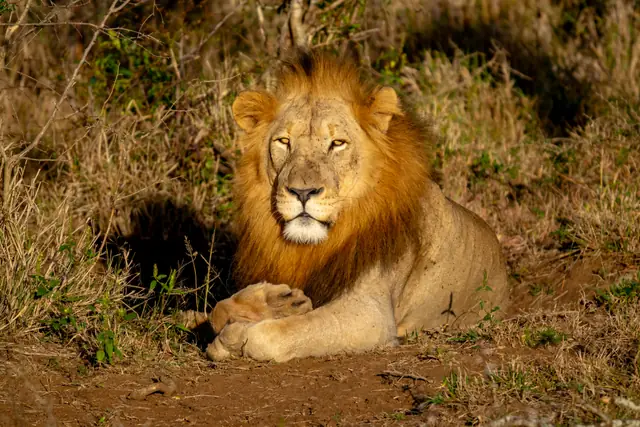
Lion
Panthera leo
Prides rest in the open grassland early and late in the day. Snaring is still a threat, so please don't share lion locations or post geotagged photos.
-
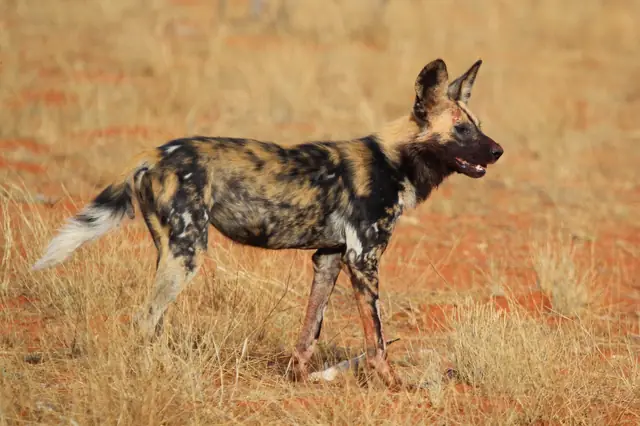
African Wild Dog
Lycaon pictus
Reintroduced from 2018 and now breeding. Packs are most active at dawn and dusk; let your guide keep well back and follow the park's distance rules.
-
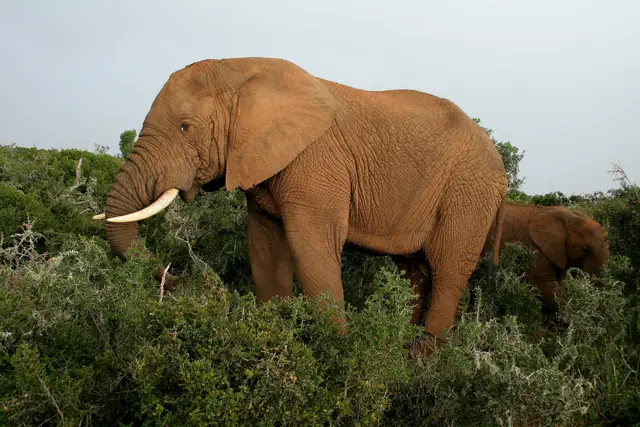
African Savanna Elephant
Loxodonta africana
Herds are recovering after the war years and can still be nervous of vehicles. Give them space and never block their path.
-
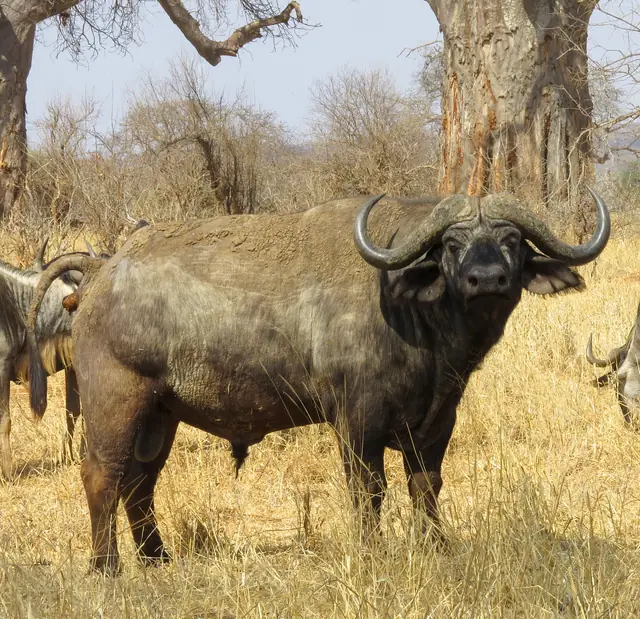
Cape Buffalo
Syncerus caffer
Large herds graze the floodplain grassland as the dry season goes on, often with cattle egrets and oxpeckers in tow.
-
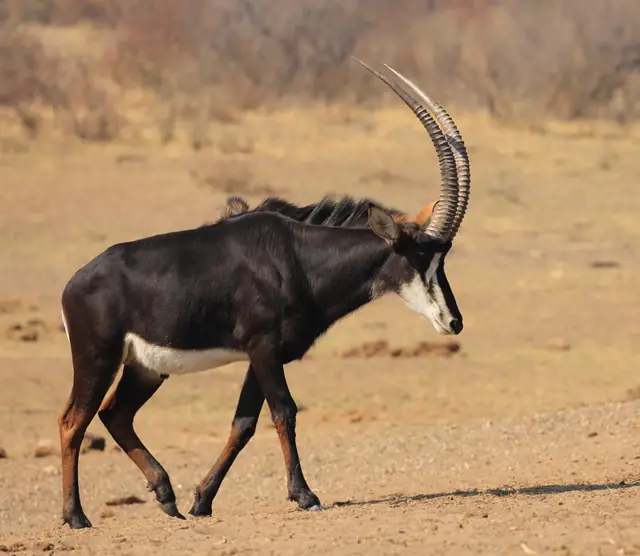
Sable Antelope
Hippotragus niger
Glossy black bulls with swept-back horns. Look in miombo woodland and at its edges, coming out onto the grass in the dry season.
-
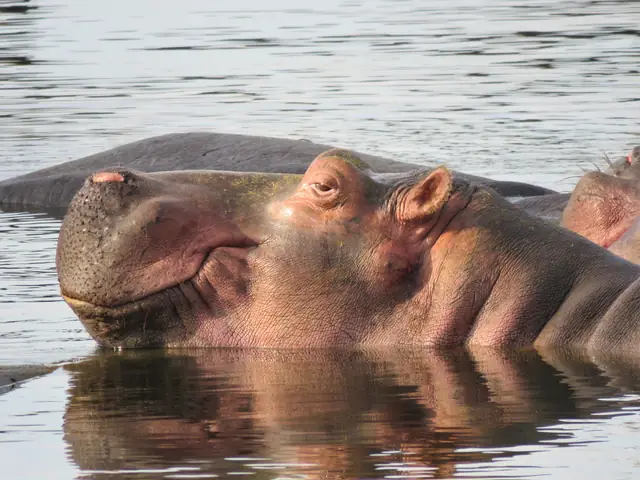
Common Hippopotamus
Hippopotamus amphibius
In Lake Urema and the river pools, hauling out onto the banks at dusk to graze.
-
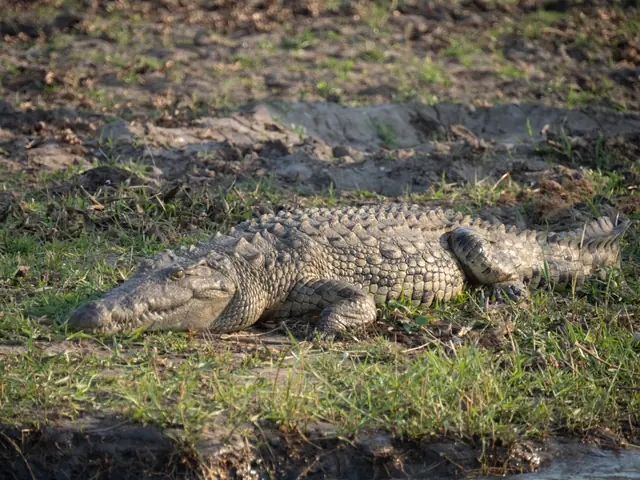
Nile Crocodile
Crocodylus niloticus
Large numbers bask along the lake shore and rivers. Keep well away from the water's edge.
-
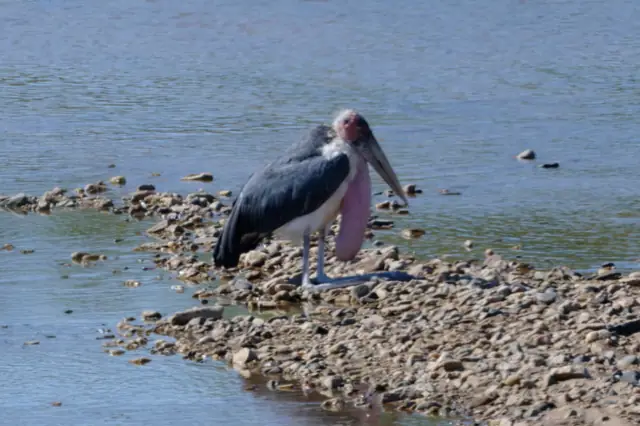
Marabou Stork
Leptoptilos crumenifer
Gathers in hundreds around the shrinking pools of Lake Urema late in the dry season, with pelicans and yellow-billed storks.
-
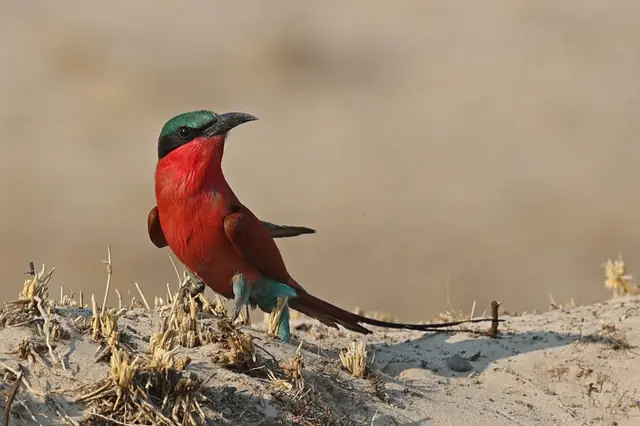
Southern Carmine Bee-eater
Merops nubicoides
Arrives from about September and hawks insects low over the floodplain, a flash of pink against the grass.
-
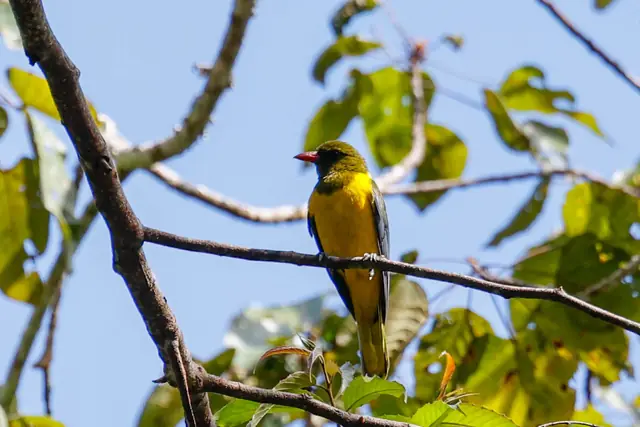
Green-headed Oriole
Oriolus chlorocephalus
An isolated population lives in the montane forest of Mount Gorongosa, far from the rest of its range. It is reached on guided walks with community guides.
All 141 animals in Gorongosa
Predators 11
-
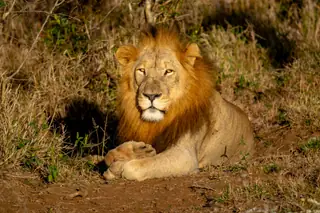 Lion
-
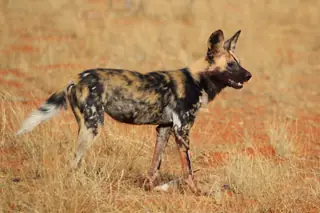 African Wild Dog
-
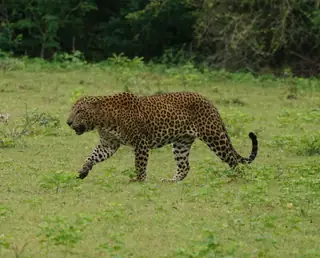 LeopardRare
-
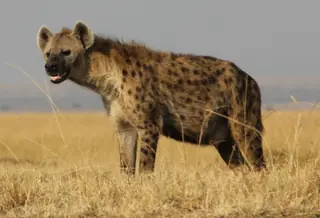 Spotted HyenaRare
-
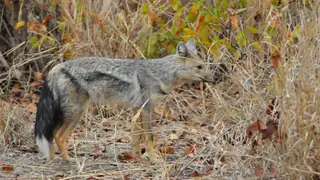 Side-striped Jackal
-
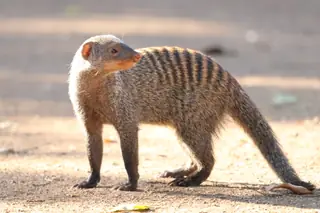 Banded Mongoose
-
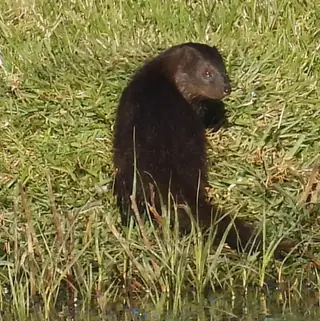 Marsh Mongoose
-
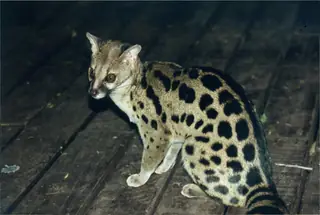 Rusty-spotted Genet
-
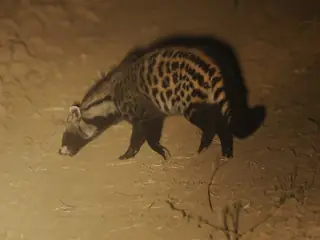 African Civet
-
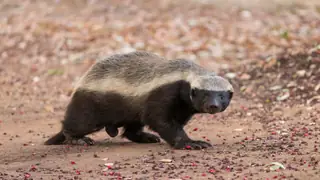 Honey BadgerRare
-
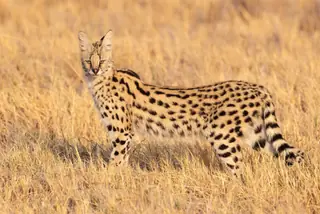 ServalRare
Elephants, buffalo and big grazers 5
-
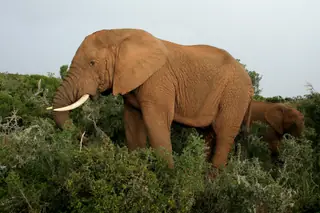 African Savanna Elephant
-
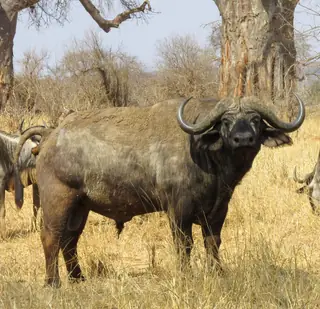 Cape Buffalo
-
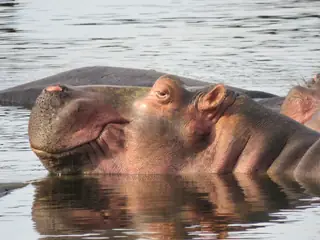 Common Hippopotamus
-
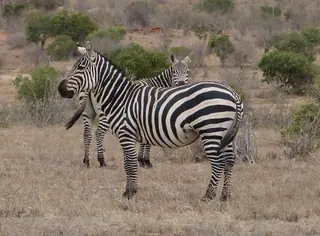 Plains Zebra
-
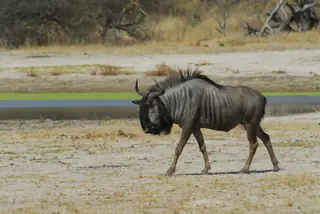 Blue Wildebeest
Antelope and pigs 14
-
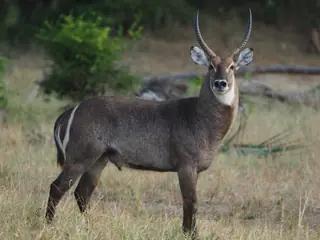 Waterbuck
-
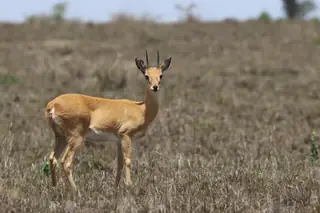 Oribi
-
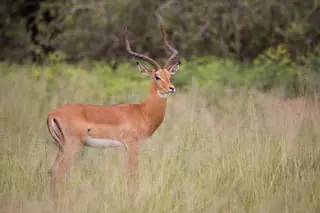 Impala
-
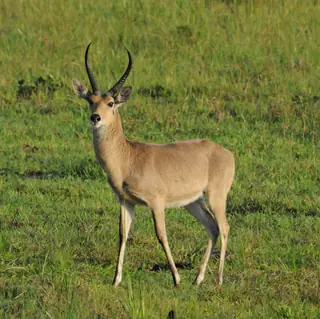 Southern Reedbuck
-
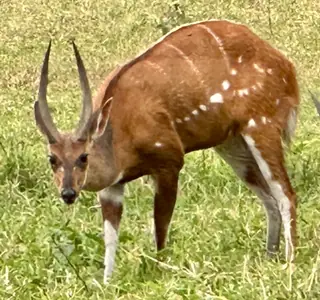 Bushbuck
-
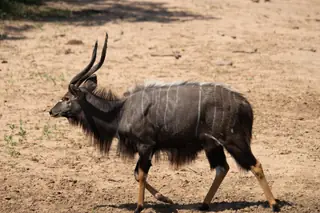 Nyala
-
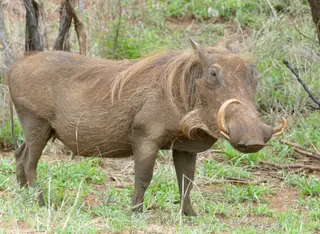 Common Warthog
-
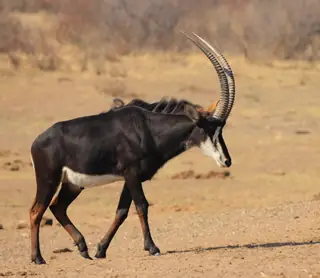 Sable Antelope
-
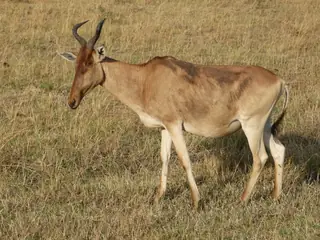 Hartebeest
-
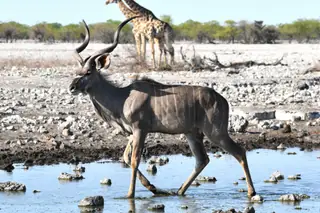 Greater Kudu
-
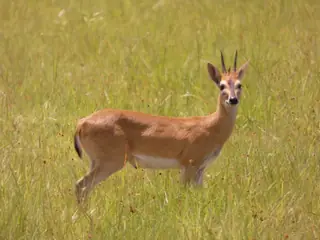 Common Duiker
-
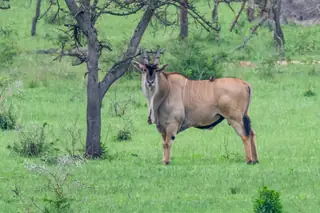 Common ElandRare
-
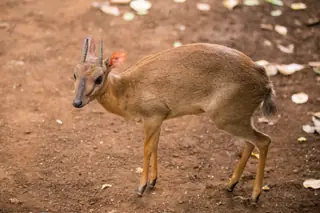 SuniRare
-
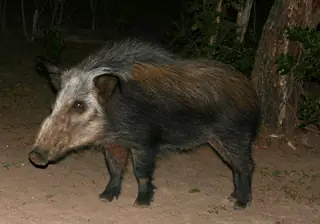 BushpigRare
Primates and small mammals 7
-
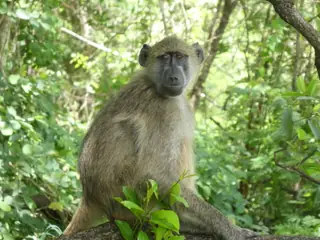 Chacma Baboon
-
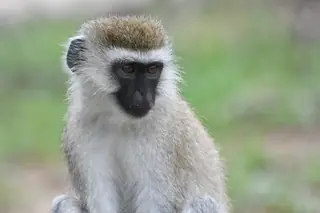 Vervet Monkey
-
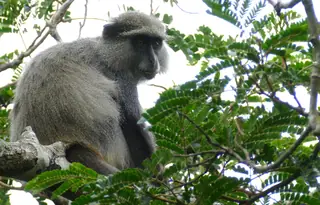 Sykes's MonkeyRare
-
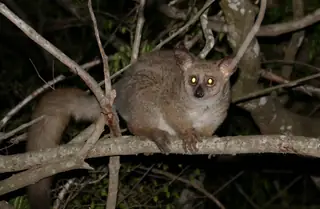 Thick-tailed Bushbaby
-
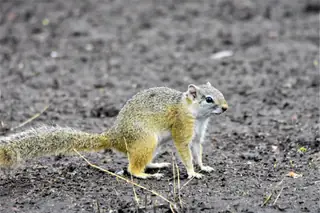 Tree Squirrel
-
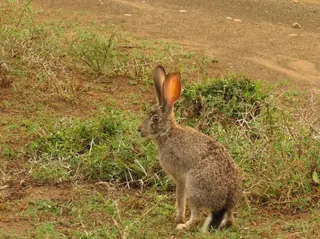 Scrub Hare
-
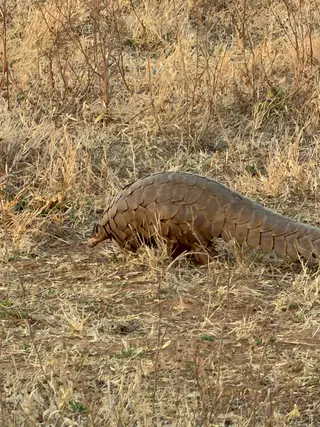 Ground PangolinRare
Storks, pelicans and big waterbirds 12
-
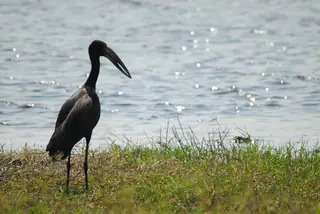 African Openbill
-
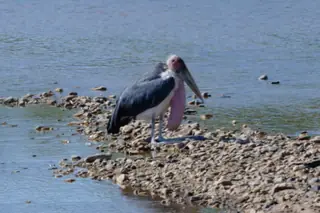 Marabou Stork
-
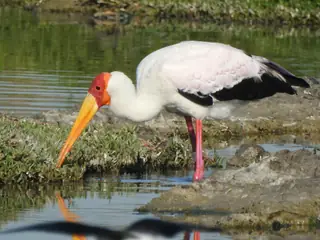 Yellow-billed Stork
-
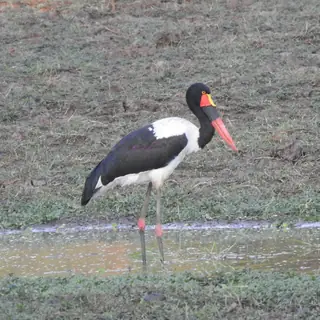 Saddle-billed Stork
-
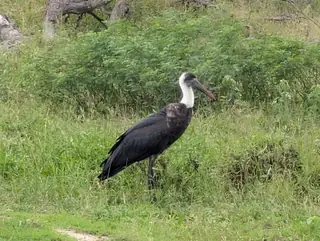 African Woolly-necked Stork
-
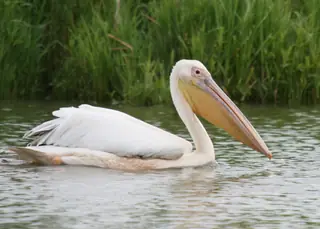 Great White Pelican
-
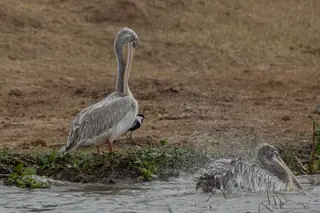 Pink-backed Pelican
-
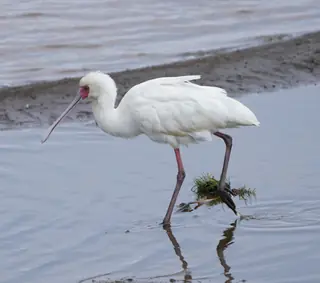 African Spoonbill
-
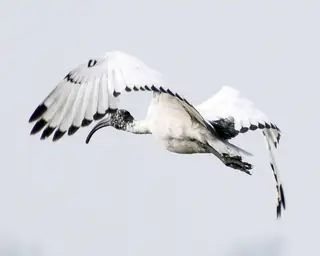 African Sacred Ibis
-
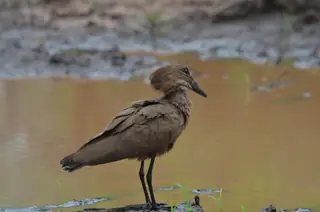 Hamerkop
-
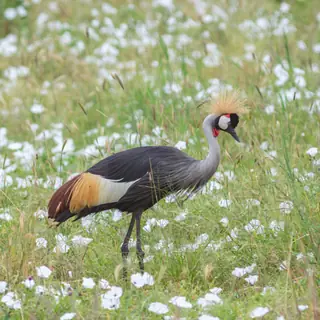 Grey Crowned Crane
-
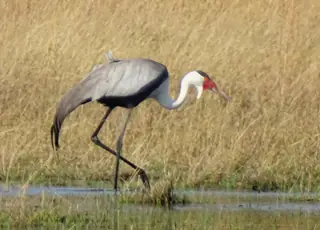 Wattled Crane
Herons, ducks, waders and kingfishers 22
-
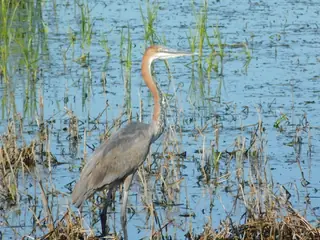 Goliath Heron
-
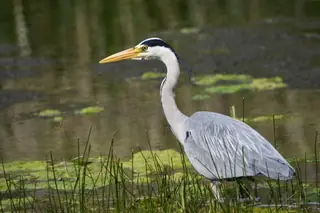 Grey Heron
-
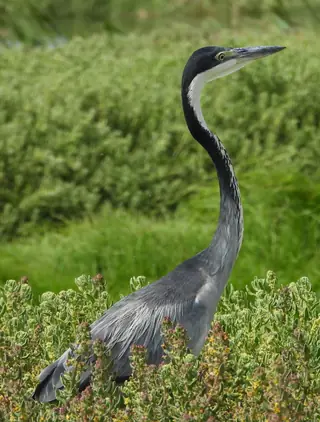 Black-headed Heron
-
 Great Egret
-
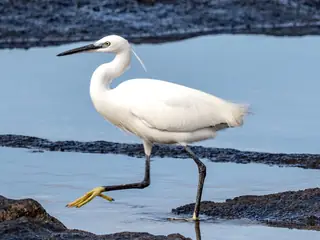 Little Egret
-
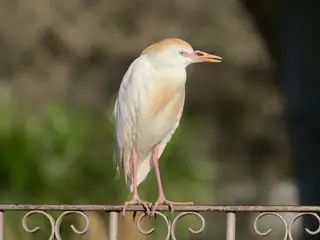 Western Cattle Egret
-
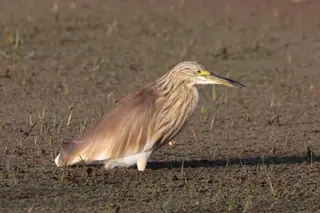 Squacco Heron
-
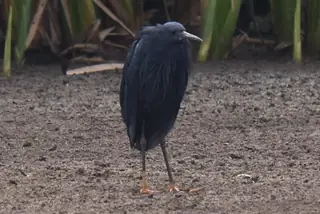 Black Heron
-
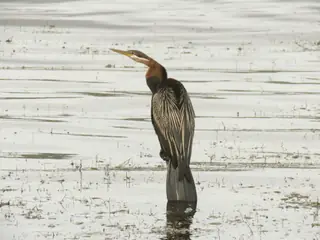 African Darter
-
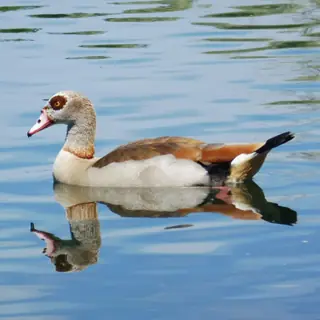 Egyptian Goose
-
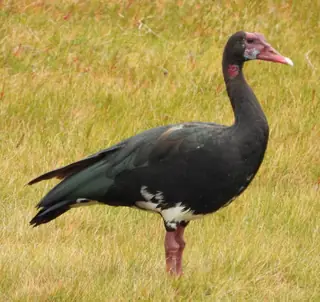 Spur-winged Goose
-
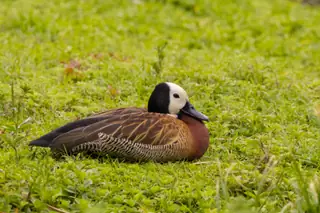 White-faced Whistling Duck
-
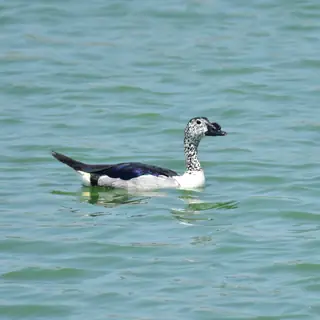 Knob-billed Duck
-
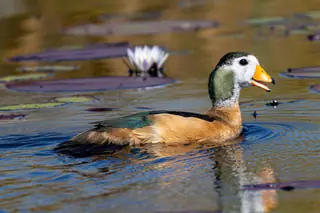 African Pygmy Goose
-
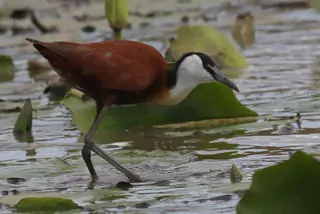 African Jacana
-
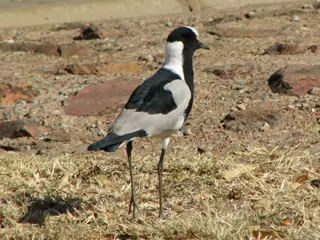 Blacksmith Lapwing
-
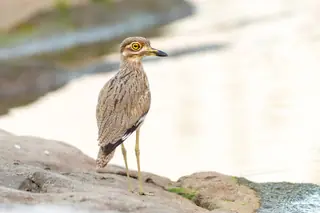 Water Thick-knee
-
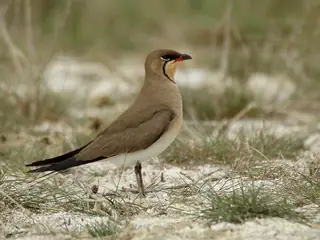 Collared Pratincole
-
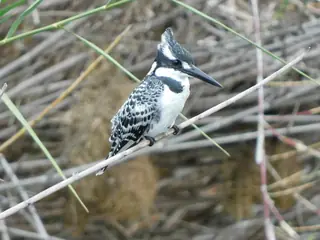 Pied Kingfisher
-
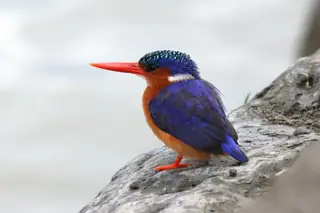 Malachite Kingfisher
-
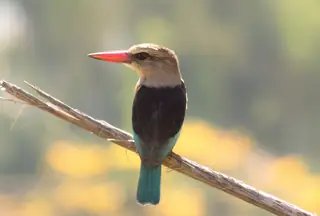 Brown-hooded Kingfisher
-
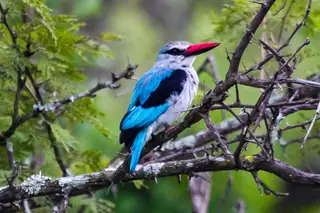 Woodland Kingfisher
Birds of prey and owls 15
-
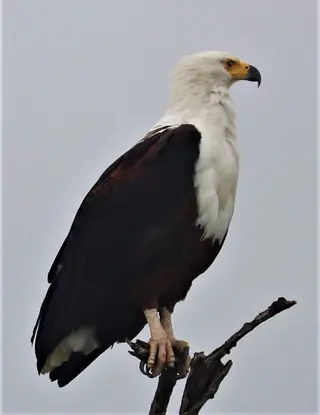 African Fish Eagle
-
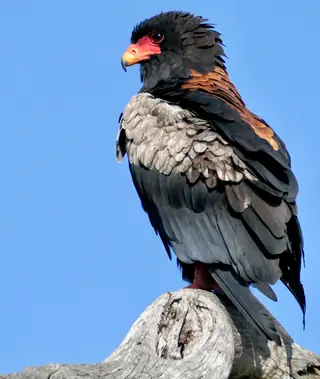 Bateleur
-
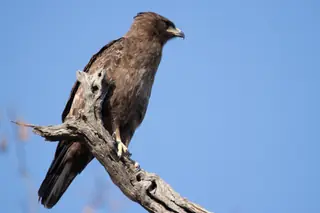 Wahlberg's Eagle
-
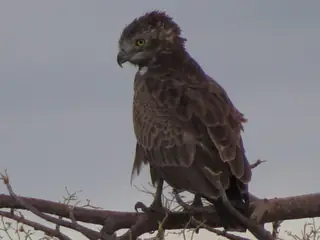 Brown Snake Eagle
-
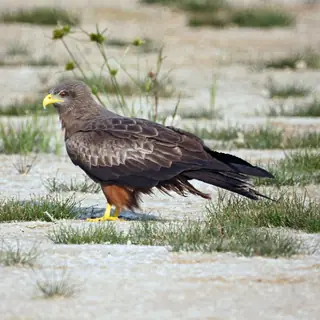 Yellow-billed Kite
-
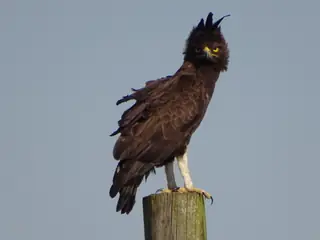 Long-crested Eagle
-
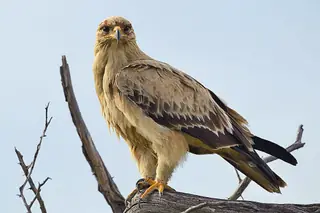 Tawny Eagle
-
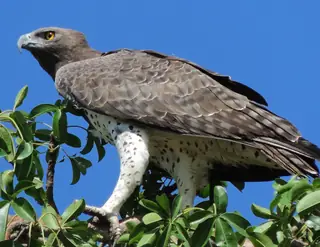 Martial Eagle
-
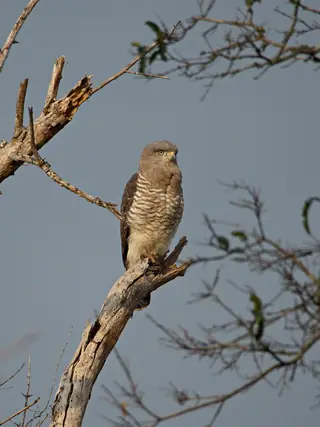 Southern Banded Snake EagleRare
-
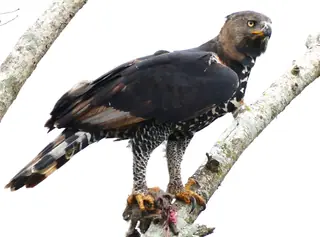 African Crowned EagleRare
-
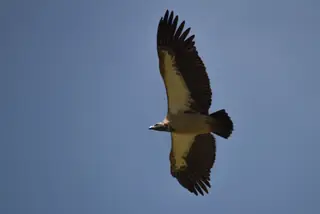 White-backed Vulture
-
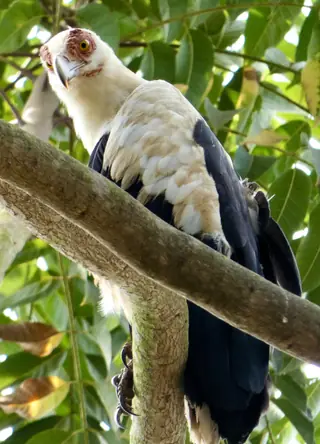 Palm-nut Vulture
-
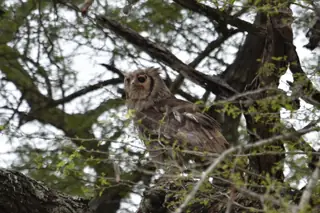 Verreaux's Eagle-Owl
-
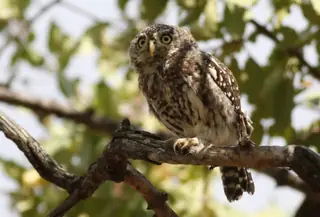 Pearl-spotted Owlet
-
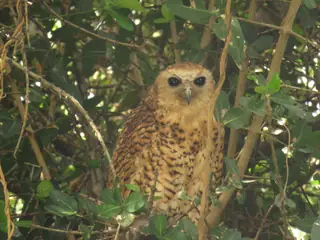 Pel's Fishing OwlRare
Hornbills, rollers and bee-eaters 12
-
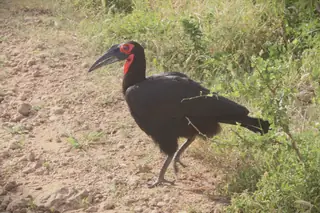 Southern Ground Hornbill
-
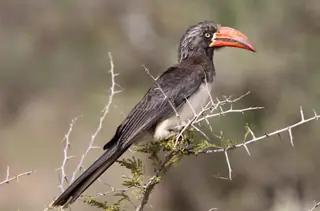 Crowned Hornbill
-
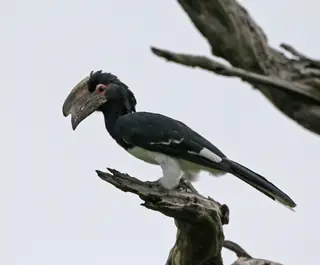 Trumpeter Hornbill
-
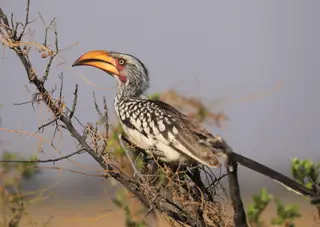 Southern Yellow-billed Hornbill
-
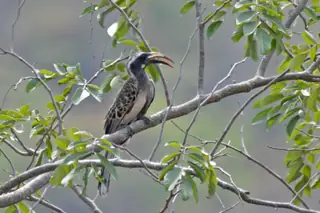 African Grey Hornbill
-
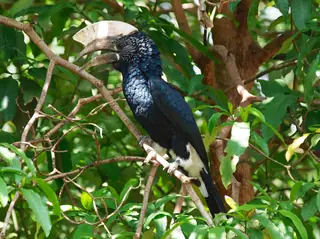 Silvery-cheeked HornbillRare
-
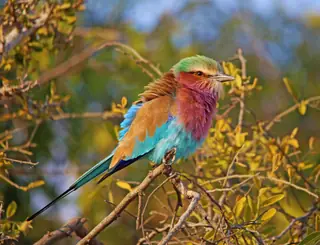 Lilac-breasted Roller
-
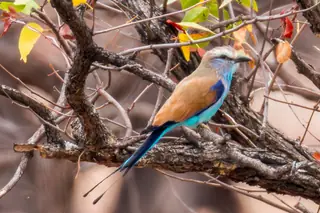 Racket-tailed Roller
-
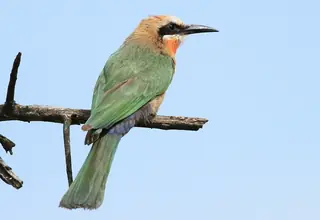 White-fronted Bee-eater
-
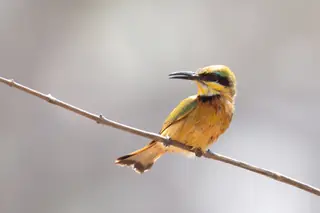 Little Bee-eater
-
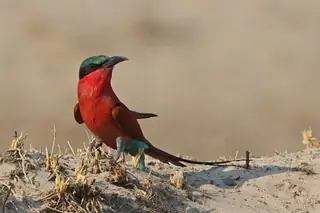 Southern Carmine Bee-eater
-
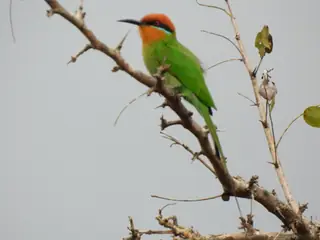 Böhm's Bee-eater
Woodland and savanna birds 31
-
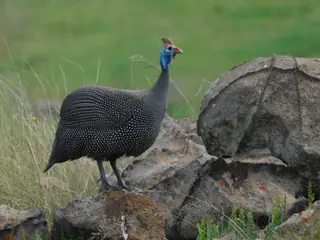 Helmeted Guineafowl
-
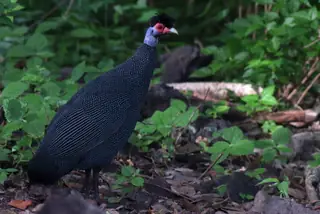 Crested Guineafowl
-
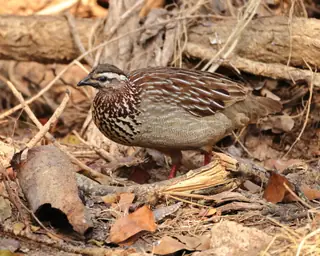 Crested Francolin
-
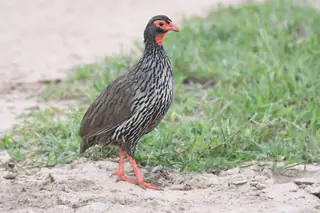 Red-necked Spurfowl
-
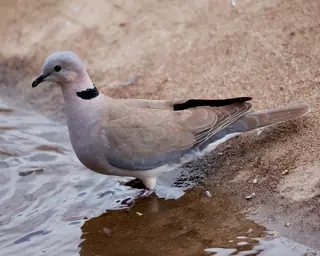 Ring-necked Dove
-
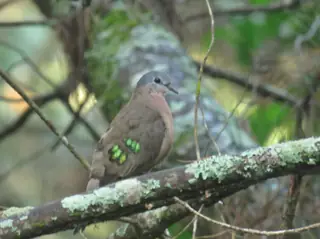 Emerald-spotted Wood Dove
-
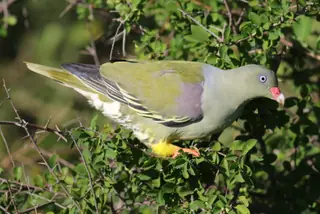 African Green Pigeon
-
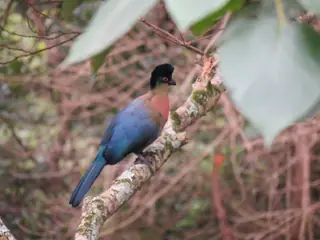 Purple-crested Turaco
-
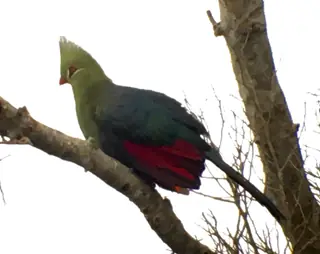 Livingstone's Turaco
-
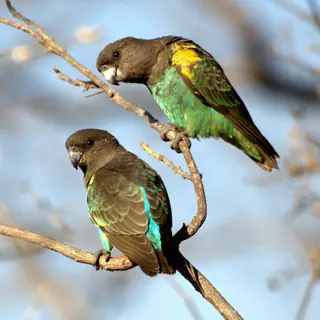 Meyer's Parrot
-
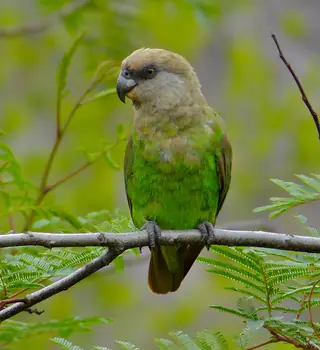 Brown-headed Parrot
-
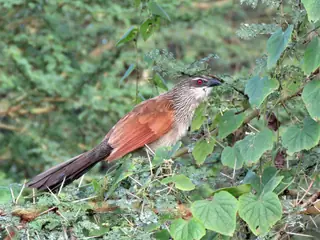 White-browed Coucal
-
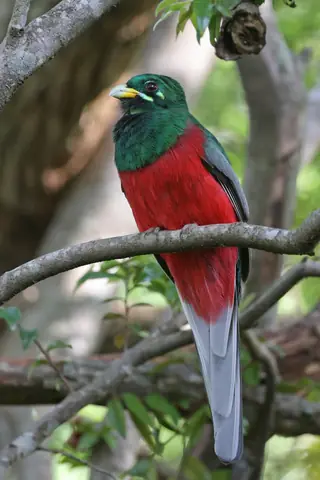 Narina Trogon
-
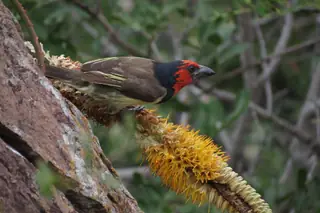 Black-collared Barbet
-
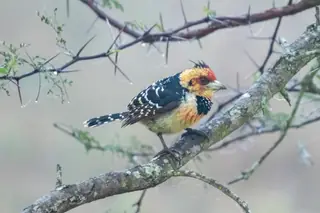 Crested Barbet
-
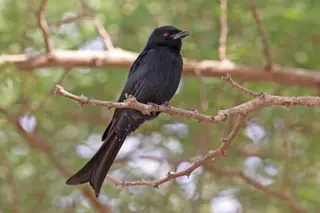 Fork-tailed Drongo
-
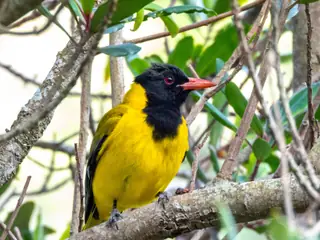 Black-headed Oriole
-
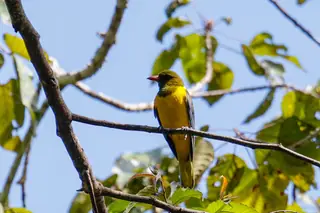 Green-headed OrioleRare
-
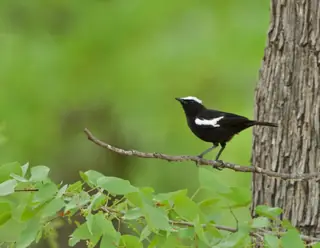 Arnot's Chat
-
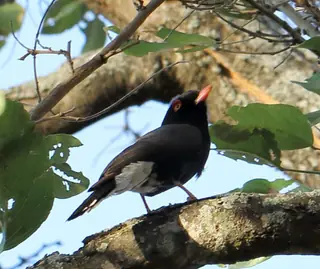 Retz's Helmetshrike
-
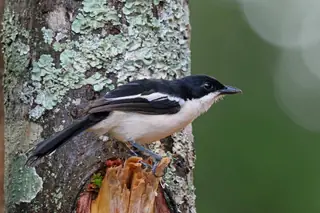 Tropical Boubou
-
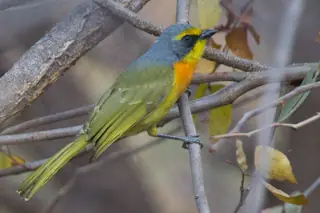 Orange-breasted Bushshrike
-
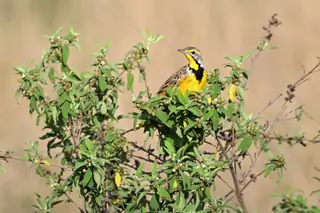 Yellow-throated Longclaw
-
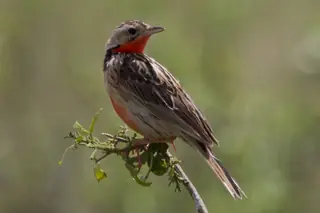 Rosy-throated Longclaw
-
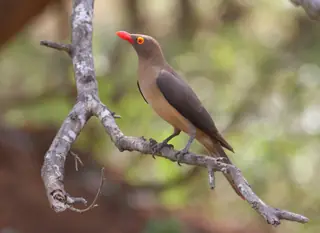 Red-billed Oxpecker
-
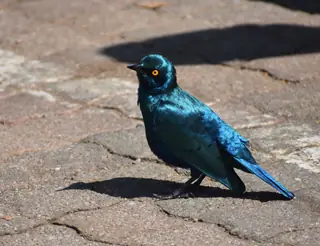 Greater Blue-eared Starling
-
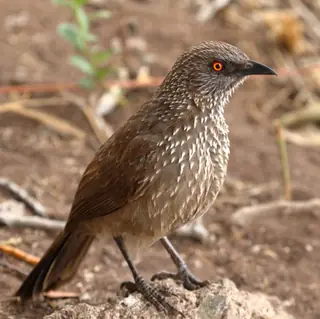 Arrow-marked Babbler
-
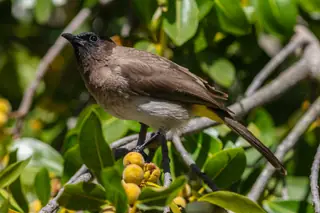 Dark-capped Bulbul
-
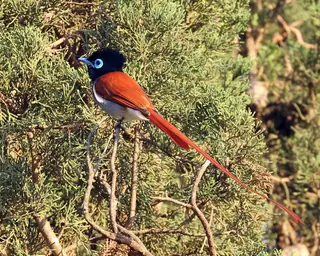 African Paradise Flycatcher
-
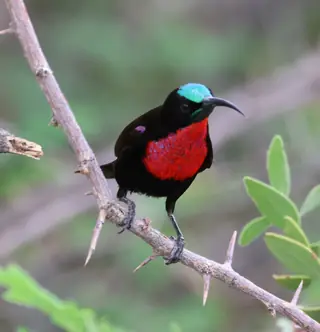 Scarlet-chested Sunbird
-
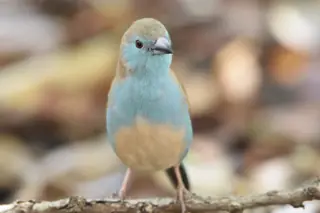 Blue-breasted Cordon-bleu
Reptiles, amphibians and butterflies 12
-
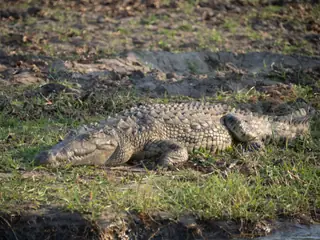 Nile Crocodile
-
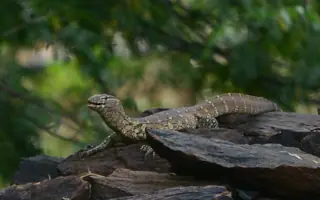 Nile Monitor
-
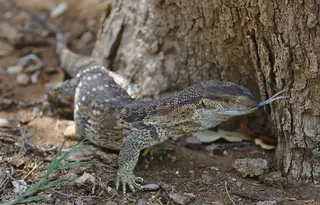 Rock Monitor
-
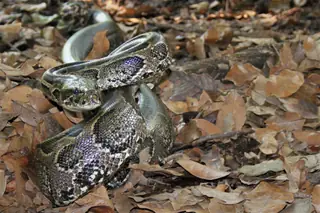 African Rock PythonRare
-
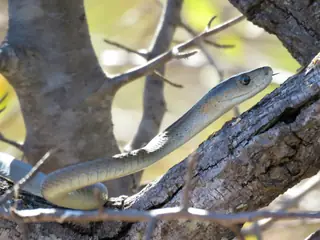 Black MambaRare
-
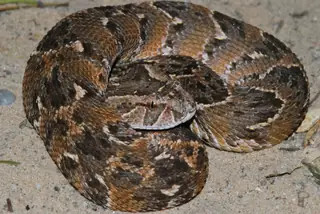 Puff AdderRare
-
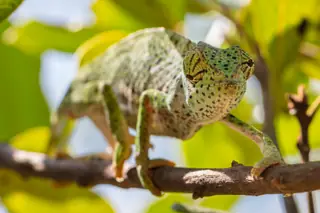 Flap-necked Chameleon
-
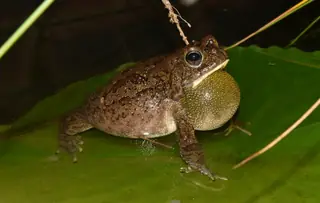 Guttural Toad
-
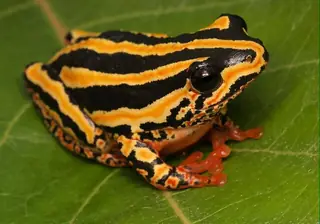 Painted Reed Frog
-
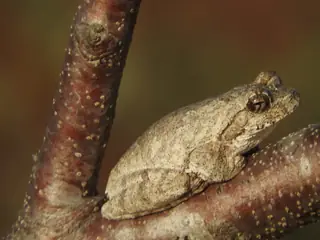 Southern Foam Nest Frog
-
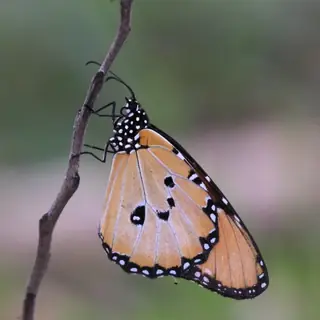 Plain Tiger
-
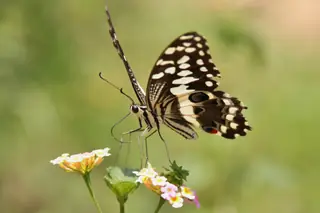 Citrus Swallowtail
Best time to see wildlife in Gorongosa
Sightings by month in Gorongosa
Most records: Aug to Oct, May to JunRecords from GBIF.org, adjusted for how many people record wildlife each month. 100% is the busiest month.
Gorongosa is a dry-season park. From about May the rains have ended and the floodplain begins to drain; by July and August the grass is short and animals gather on the open plains, making them far easier to see. Days are warm and nights cool. September to November is hot and the best time for game, as Lake Urema shrinks and waterbirds crowd its edges; carmine bee-eaters arrive and woodland kingfishers follow in November. The rains usually begin in November or December and peak from January to March, when the floodplain floods, much of the road network closes and the park largely shuts to visitors. April is a shoulder month: lush and good for birds, but with long grass and some tracks still wet. Gorongosa is in a malaria area all year.
- Jan to MarPeak rains; floodplain under water, roads and much of the park closed
- Apr to MayRains ending; green, tall grass, tracks reopening
- Jun to AugCool and dry; grass shortens, game moves onto the floodplain
- Sep to NovHot; the best game viewing, waterbirds crowd the shrinking lake
- DecFirst storms; migrant birds arrive, roads begin to close
Tips for spotting wildlife in Gorongosa
- 01
Take the park's guided drives
Morning and sunset drives with Gorongosa's own guides cover the floodplain tracks and your fees go back into the park. Let your guide keep a respectful distance and keep each stop short.
- 02
Go out after dark
Guided night drives are the time for genets, civets, bushbabies and side-striped jackals. Keep the spotlight moving and off the animals' eyes.
- 03
Sit by the lake late in the season
From September, Lake Urema draws hippos, crocodiles, pelicans, storks and herons into a small area. Stay in the vehicle and away from the water's edge.
- 04
Walk the mountain with community guides
Mount Gorongosa's rainforest has birds found nowhere else in the park, such as Livingstone's turaco and green-headed oriole. Walks are run with local community guides and need booking ahead.
- 05
Book before you go
Accommodation and activities should be booked in advance, and a 4x4 is needed for self-driving. Check road conditions in April and November, at the edges of the rains.

Take Gorongosa with you
Heading to Gorongosa? Take this list on your phone and tick off waterbuck, sable and storks on the floodplain, even with no signal. Wilder is free to start.

Gorongosa wildlife FAQ
What animals can you see in Gorongosa National Park?
You can see waterbuck, oribi, sable, buffalo, elephants, lions, wild dogs, hippos and Nile crocodiles in Gorongosa, plus a huge variety of waterbirds, storks and bee-eaters. Leopards and hyenas have been reintroduced but are still rarely seen. This checklist covers 141 animals.
Are there lions in Gorongosa?
Yes, Gorongosa has a healthy and growing lion population. Researchers found perhaps 30 to 40 lions in 2012 and had documented at least 146 by 2019. They live mainly on the open grassland and are most often seen on guided drives early and late in the day. Snaring remains a threat, so don't share locations.
When is the best time to visit Gorongosa?
The best time to visit Gorongosa is the dry season, May to November, with the best game viewing from about August to November. Animals gather on the drying floodplain and around the shrinking lake. From about January to March heavy rains flood the plains and much of the park is closed to visitors.
Can you see the Big Five in Gorongosa?
No, Gorongosa has four of the Big Five: elephant, buffalo, lion and leopard. There are no rhinos. Leopards were reintroduced from 2020 and are still shy and rarely seen, mostly on night drives. Gorongosa's strengths are its recovering plains game, lions and outstanding wetland birds rather than a Big Five tick list.
Why is Gorongosa famous?
Gorongosa is famous for its recovery. Civil war and poaching wiped out most of its large animals by the 1990s, and since 2008 the park has been run as a partnership between Mozambique's government and the Carr Foundation, known as the Gorongosa Project. Animals have been reintroduced and numbers have climbed back, with over 110,000 large animals counted from the air in 2024.
Sources
- Gorongosa National Park
- Gorongosa National Park: carnivore recovery
- ANAC (Mozambique National Administration of Conservation Areas): Gorongosa National Park
- Club of Mozambique: Gorongosa aerial survey counts over 110,000 large animals
- Sightings by month: GBIF.org
Animal photos are from the Wilder catalogue; photo credits.
Similar checklists
All Africa-
 National park117animals Mana Pools Mashonaland West, Zimbabwe Floodplain woodland on the Zambezi, where guided walking is allowed: elephants reaching for winterthorn pods, wild dogs, lions and buffalo under the albida trees, and hippos and crocodiles in the river. Best time Jun to Oct
-
 National park131animals Lower Zambezi National Park Lusaka Province, Zambia Elephants wading between river islands below a wall of escarpment, with canoe trips past hippos and some of the best tigerfish water in Zambia. Best time Jun to Oct
-
 Safari110animals Kruger National Park Limpopo and Mpumalanga, South Africa Africa's classic safari: the Big Five, wild dogs on the move, and some of the best birdwatching on the continent. Takes in the private reserves along its western edge, such as Sabi Sand and Timbavati. Best time May to Sept
-
 Safari81animals South Luangwa National Park Eastern and Muchinga provinces, Zambia The home of the walking safari, famous for leopards on night drives and a river crowded with hippos. Best time May to Oct