Region · Central and north coast, British Columbia · Canada
Great Bear Rainforest Animal Checklist

The Great Bear Rainforest is a vast temperate rainforest of fjords, islands and old-growth forest on British Columbia's central and north coast, home to 26 First Nations. It is the home of the spirit bear, a white-coated black bear, along with grizzlies, coastal wolves, humpback whales, orcas and sea lions. This checklist covers 88 animals. Late August to October, when salmon return to the rivers, is the classic time for bears.
Tick off all 88 animals in the Great Bear Rainforest on your phone, even offline. Launching soon. Free A4 PDF, no sign-up.
Most wildlife here is seen from boats and with local guides, many of them from the First Nations whose territories these are. The British Columbia checklist covers the whole province.
- Animals to find
- 88
- Where
- Canada
- Best time
- May to Jun, late Aug to Oct
- Forest protected from logging
- About 85%
Popular animals in the Great Bear Rainforest
-
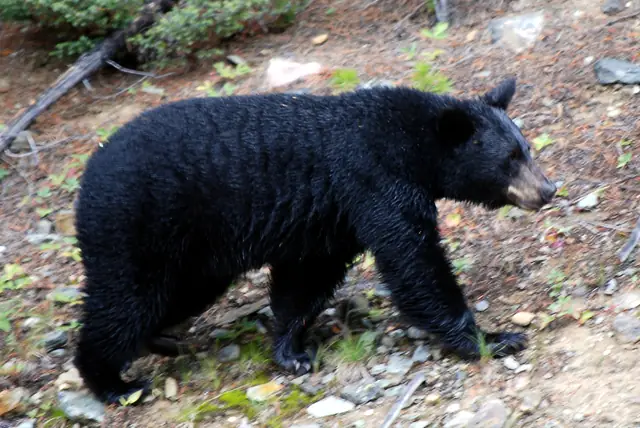
Black Bear
Ursus americanus
The most common bear on the coast. A rare recessive gene gives some a white or cream coat: these are spirit bears, or Kermode bears, the official mammal of British Columbia.
-
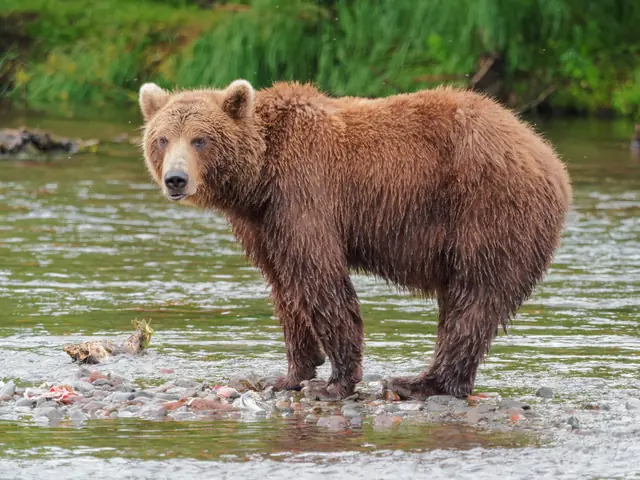
Grizzly Bear
Ursus arctos
Grazes sedges in spring and fishes for spawning salmon in autumn, putting on fat for winter.
-
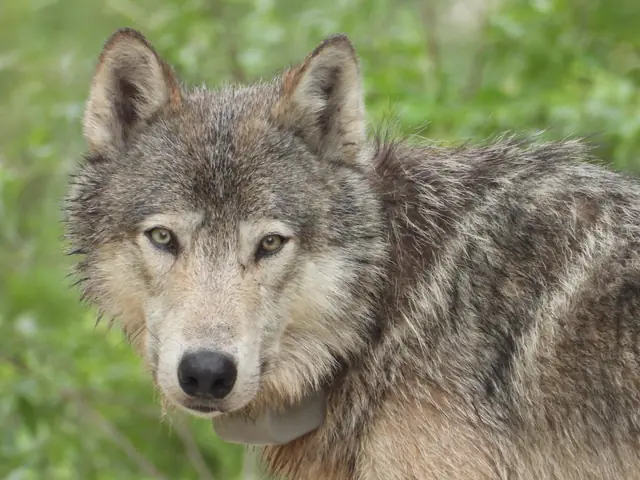
Grey Wolf
Canis lupus
Coastal wolves are smaller than inland wolves and genetically distinct. They swim between islands and eat seals, salmon and food from the shore.
-
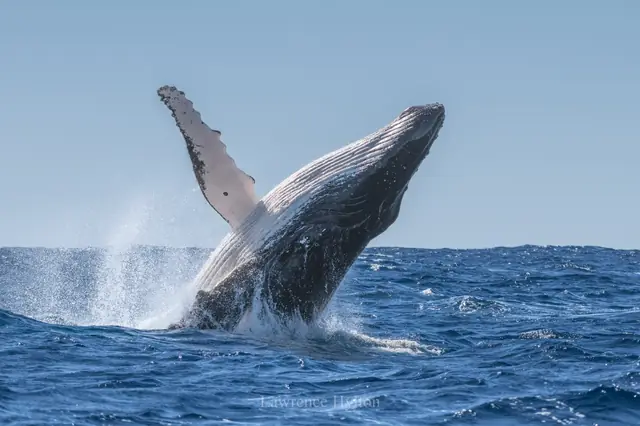
Humpback Whale
Megaptera novaeangliae
Feeds in the sheltered channels from spring to autumn, sometimes working together to trap fish in nets of bubbles.
-
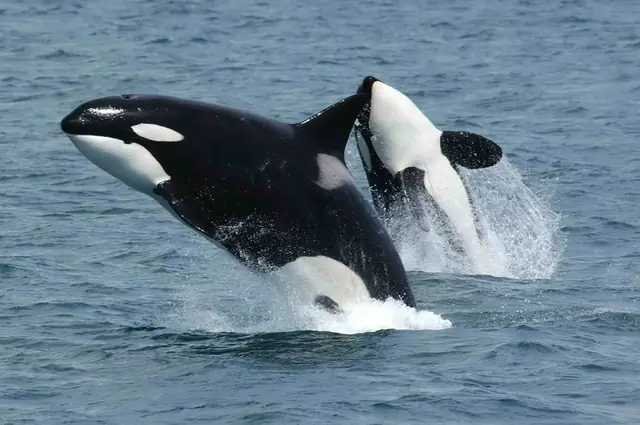
Orca
Orcinus orca
Travels the coast in close family groups. Some hunt fish and others hunt seals and porpoises.
-
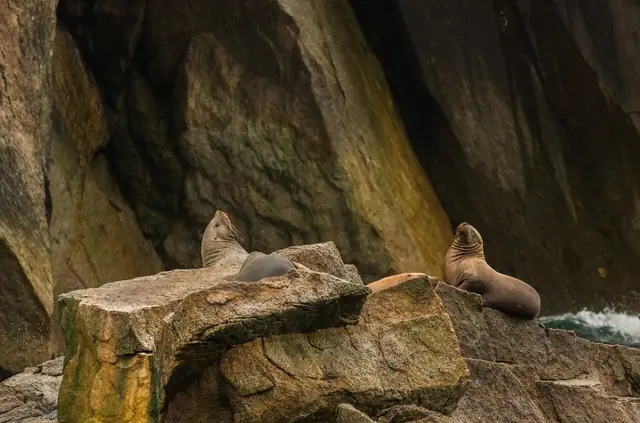
Steller Sea Lion
Eumetopias jubatus
The largest sea lion, hauling out in noisy groups on exposed rocks. Males are much bigger than females.
-
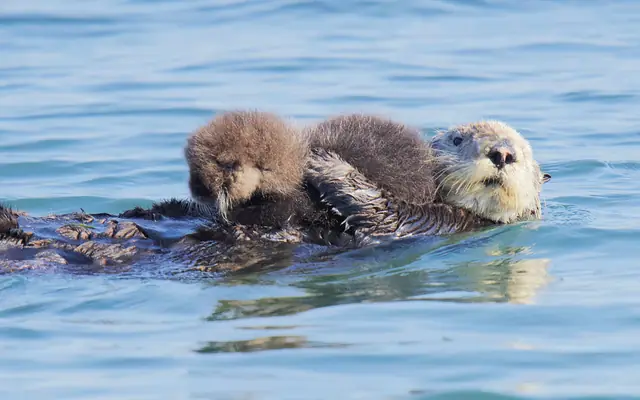
Sea Otter
Enhydra lutris
Back on this coast after being hunted out for fur. It floats on its back in kelp beds, eating urchins and crabs.
-
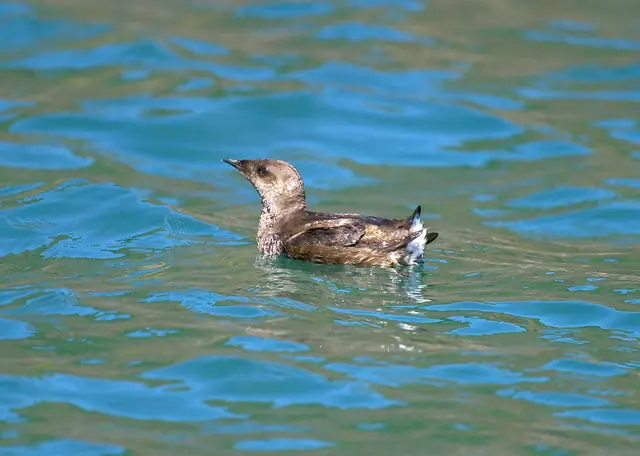
Marbled Murrelet
Brachyramphus marmoratus
A small seabird that feeds at sea but nests high in old-growth trees, often far inland, one reason the old forest matters.
All 88 animals in the Great Bear Rainforest
Bears and land mammals 15
-
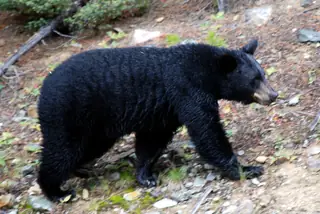 Black Bear
- Spirit Bear
-
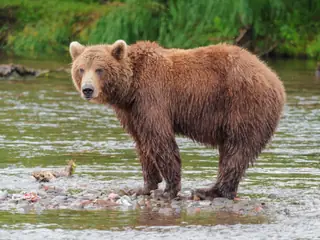 Grizzly Bear
-
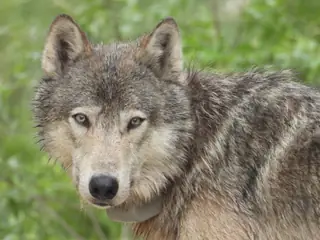 Grey Wolf
-
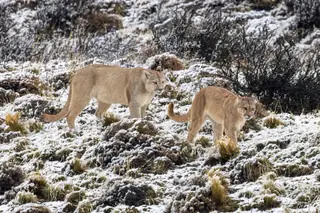 Cougar (Mountain Lion)Rare
-
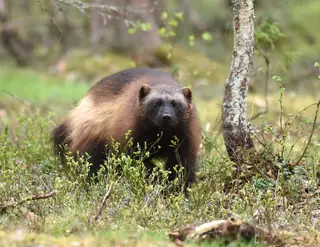 WolverineRare
-
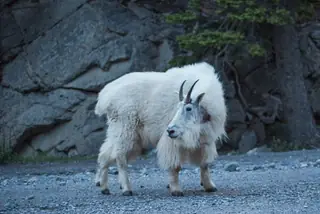 Mountain Goat
-
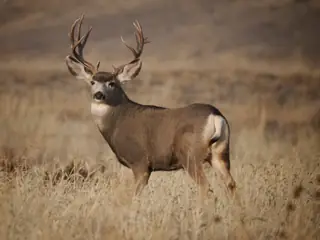 Black-tailed Deer
-
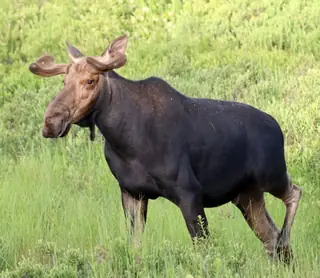 MooseRare
-
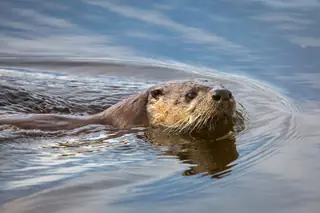 River Otter
-
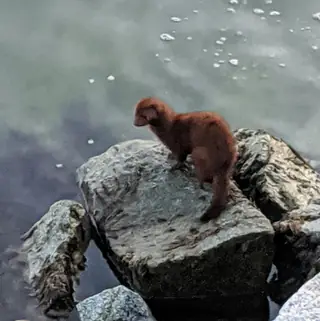 American Mink
-
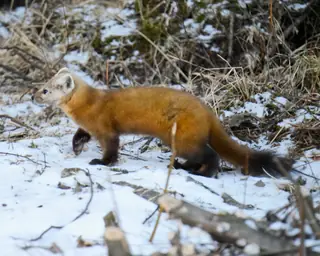 American Marten
-
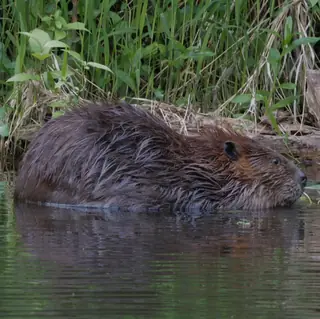 North American Beaver
-
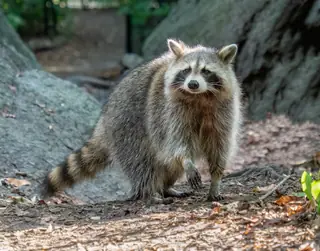 Raccoon
-
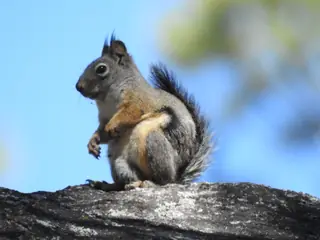 Douglas Squirrel
Whales and sea mammals 11
-
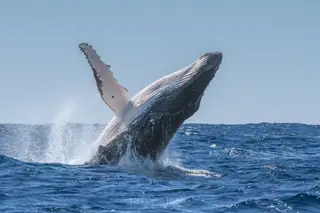 Humpback Whale
-
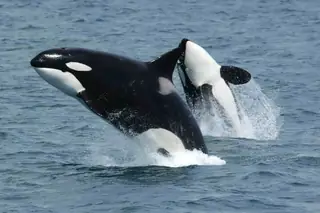 Orca
-
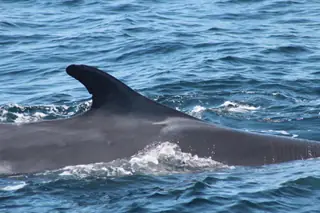 Fin WhaleRare
-
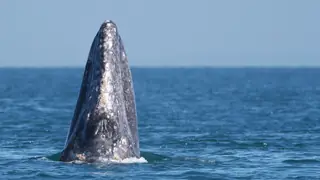 Grey WhaleRare
-
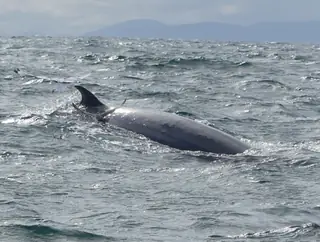 Minke WhaleRare
-
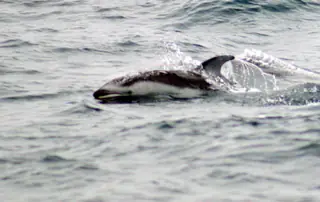 Pacific White-sided Dolphin
-
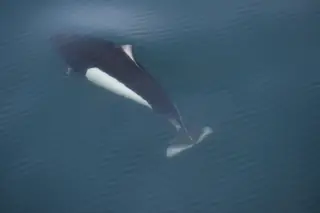 Dall's Porpoise
-
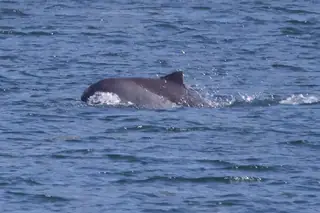 Harbour Porpoise
-
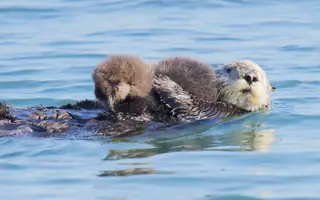 Sea Otter
-
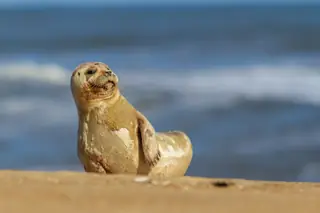 Harbour Seal
-
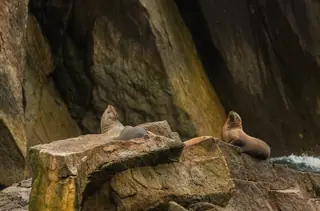 Steller Sea Lion
Birds of prey 8
-
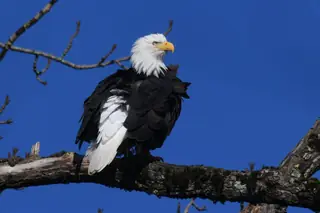 Bald Eagle
-
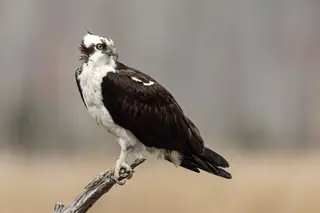 Osprey
-
 Peregrine Falcon
-
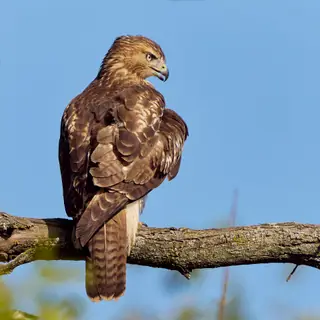 Red-tailed Hawk
-
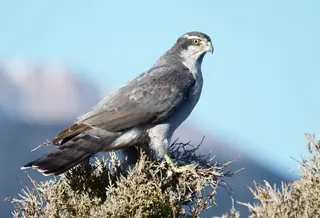 American GoshawkRare
-
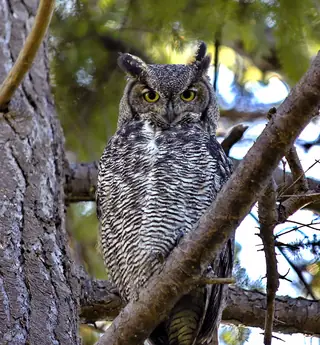 Great Horned Owl
-
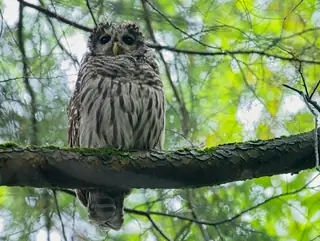 Barred Owl
-
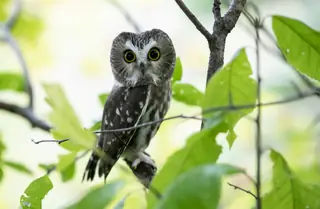 Northern Saw-whet OwlRare
Seabirds and water birds 23
-
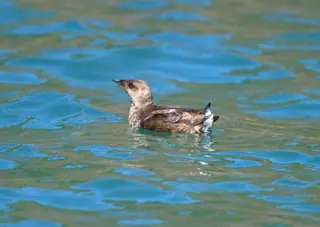 Marbled Murrelet
-
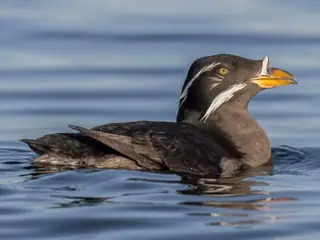 Rhinoceros Auklet
-
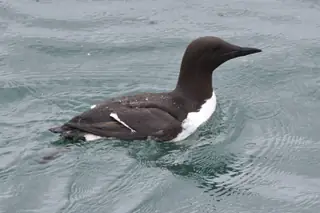 Common Murre
-
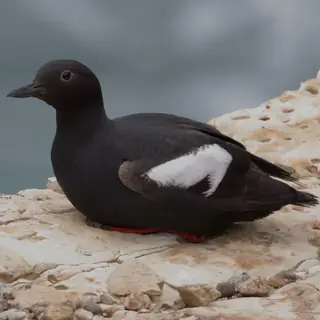 Pigeon Guillemot
-
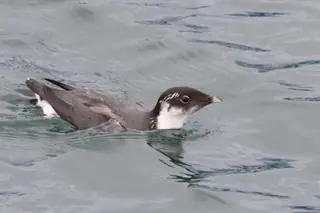 Ancient MurreletRare
-
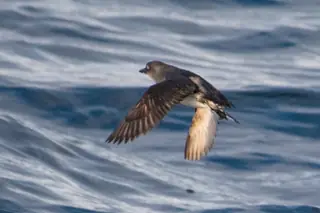 Cassin's AukletRare
-
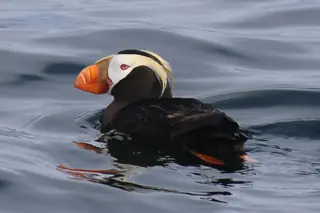 Tufted PuffinRare
-
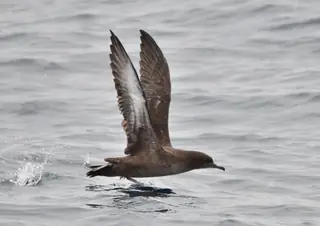 Sooty Shearwater
-
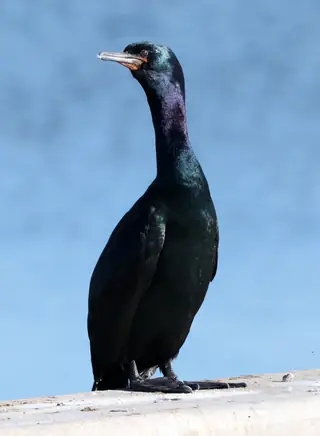 Pelagic Cormorant
-
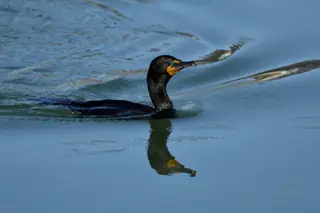 Double-crested Cormorant
-
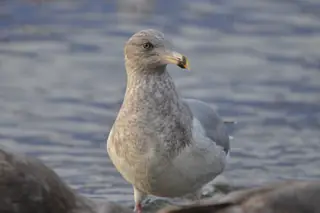 Glaucous-winged Gull
-
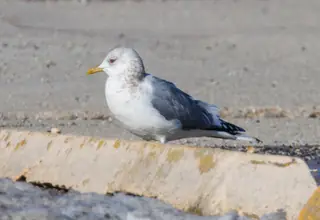 Short-billed Gull
-
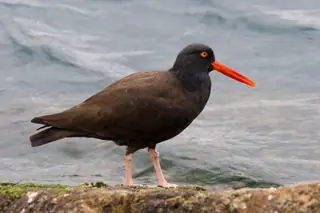 Black Oystercatcher
-
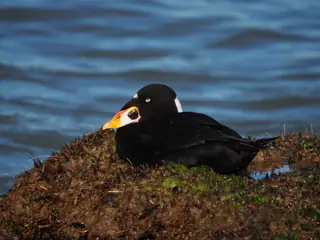 Surf Scoter
-
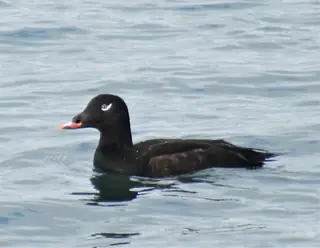 White-winged Scoter
-
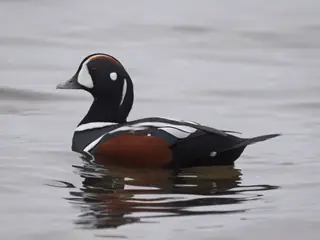 Harlequin Duck
-
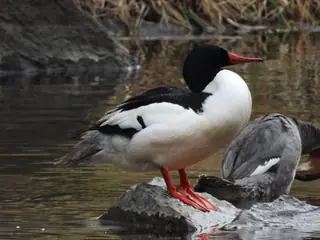 Common Merganser
-
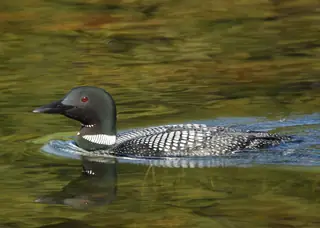 Common Loon
-
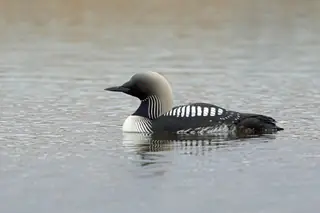 Pacific Loon
-
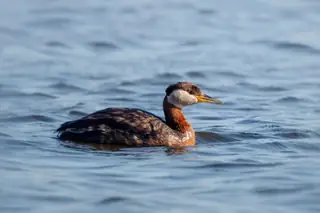 Red-necked Grebe
-
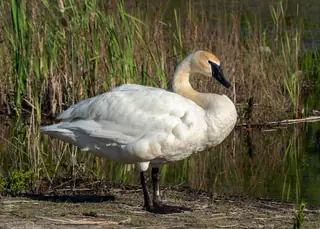 Trumpeter Swan
-
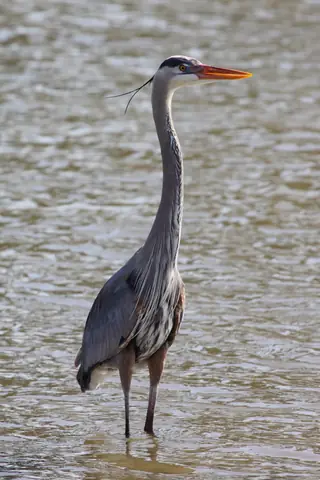 Great Blue Heron
-
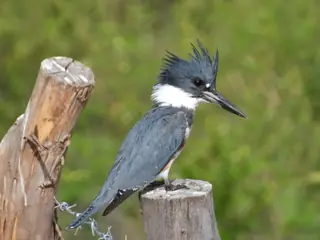 Belted Kingfisher
Forest birds 14
-
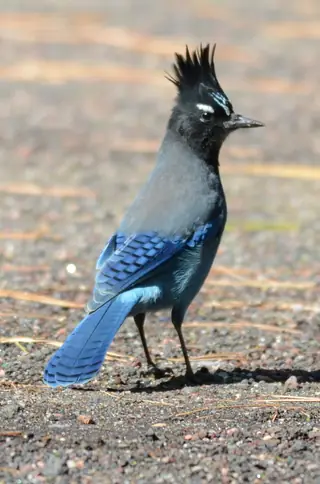 Steller's Jay
-
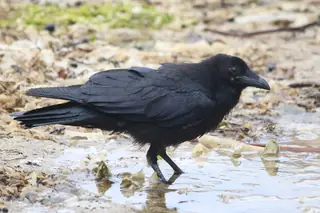 Common Raven
-
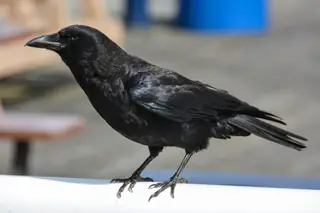 American Crow
-
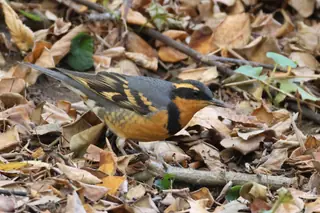 Varied Thrush
-
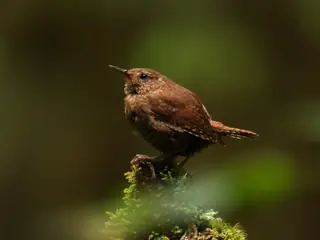 Pacific Wren
-
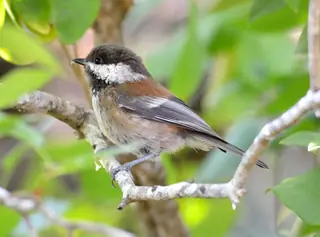 Chestnut-backed Chickadee
-
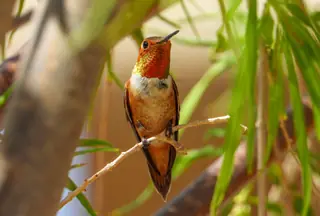 Rufous Hummingbird
-
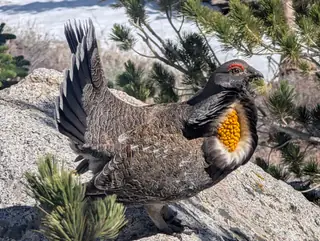 Sooty Grouse
-
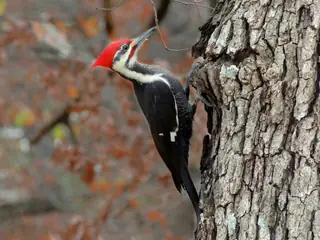 Pileated Woodpecker
-
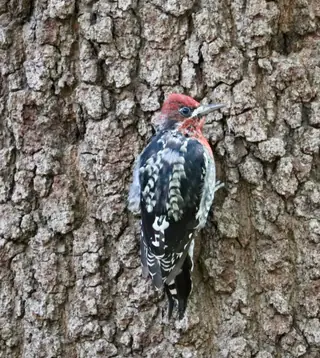 Red-breasted Sapsucker
-
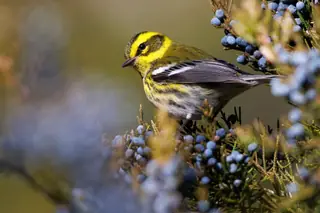 Townsend's Warbler
-
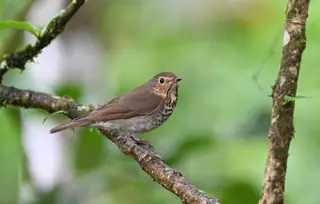 Swainson's Thrush
-
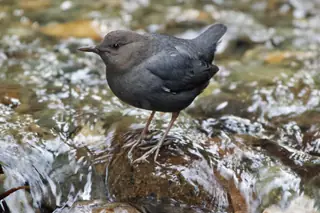 American Dipper
-
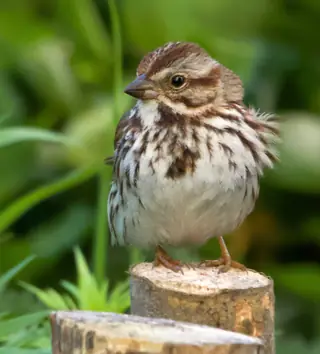 Song Sparrow
Amphibians 4
-
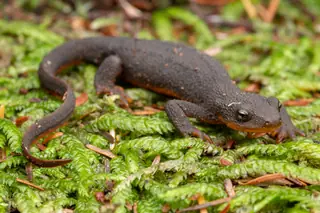 Rough-skinned Newt
-
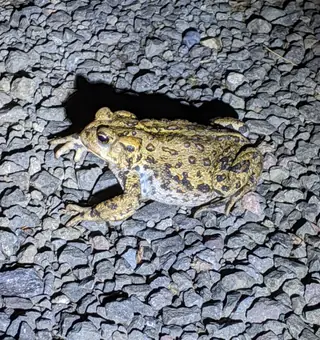 Western Toad
-
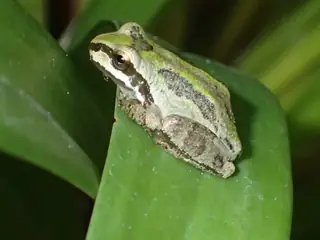 Pacific Tree Frog
-
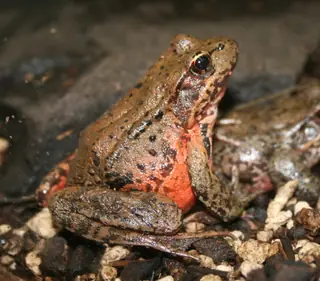 Northern Red-legged FrogRare
Fish 6
-
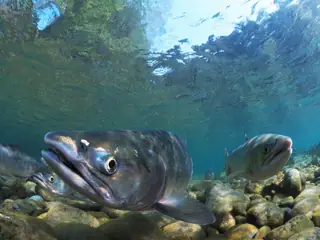 Pink Salmon
-
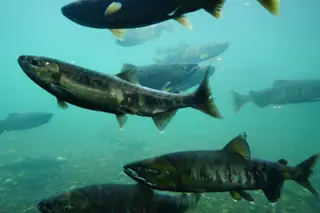 Chum Salmon
-
 Coho Salmon
-
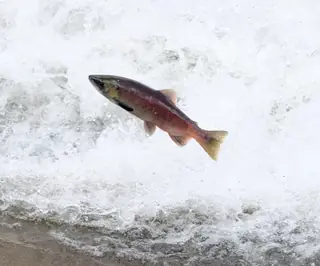 Sockeye Salmon
-
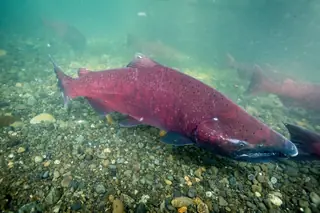 Chinook Salmon
-
 EulachonRare
Sea life 7
-
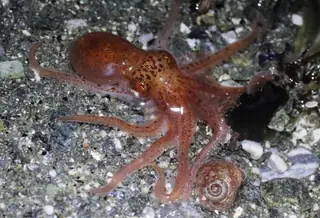 Giant Pacific OctopusRare
-
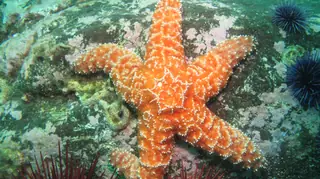 Ochre Sea Star
-
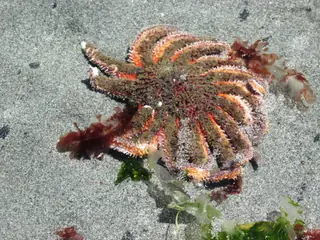 Sunflower Sea StarRare
-
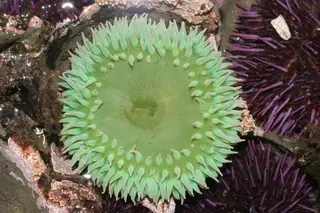 Giant Green Anemone
-
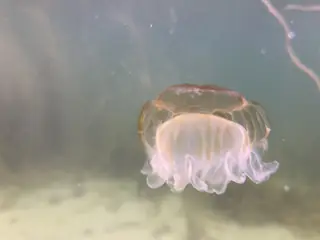 Lion's Mane Jellyfish
-
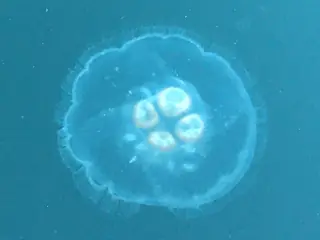 Pacific Moon Jelly
-
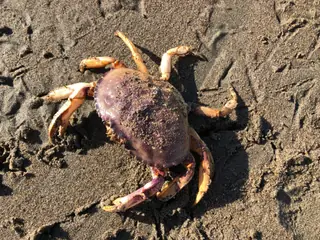 Dungeness Crab
Best time to see wildlife in the Great Bear Rainforest
Sightings by month in the Great Bear Rainforest
Most records: Jun to SeptRecords from GBIF.org, adjusted for how many people record wildlife each month. 100% is the busiest month.
The coast is wet all year, and the seasons are shaped by food. In spring bears come down to the shore to graze fresh sedges and turn over rocks for crabs and other shore life, and humpbacks start arriving to feed. Summer brings long days, calmer seas and the best whale watching, with orcas, porpoises and seabirds in the channels. From late August into October salmon return to spawn, and bears, wolves, eagles and gulls gather to feed on them. Winter brings storms and short days, but sea ducks, loons and grebes crowd the sheltered waters.
- Apr to JunBears grazing on the shore, humpbacks return
- Jul to AugWhales, porpoises and seabirds, calmer seas
- Sept to OctSalmon runs, bears and wolves feeding
- Nov to MarStorms, sea ducks and loons in sheltered water
Tips for spotting wildlife in the Great Bear Rainforest
- 01
Go with local guides
Bear viewing here is guided, and many guides are from local First Nations. They know how to watch without disturbing the bears and when to leave them alone.
- 02
Watch from the boat
Boats let you see bears, wolves and whales without stepping onto their ground. Keep still and quiet, and let the animal decide how close it comes.
- 03
Follow the distance rules
Follow the local rules on distance for bears and for whales. Slow down near feeding whales and never follow them.
- 04
Keep sightings to yourself
Bears are easily disturbed and still at risk from poaching. Don't share bear locations or post geotagged photos.
- 05
Look at low tide
Low tide uncovers sea stars, anemones and crabs, and draws bears, mink, otters and birds down to feed on the shore.

Take the Great Bear Rainforest with you
Tick off bears, wolves and whales from the deck in Wilder, even where the coast has no signal. Wilder is free to start.

Great Bear Rainforest wildlife FAQ
What is a spirit bear?
A spirit bear, or Kermode bear, is a black bear with a white or cream coat. It is not an albino: it has dark eyes and nose, and the colour comes from a recessive gene that both parents must carry. It has been British Columbia's official mammal since 2006.
What animals live in the Great Bear Rainforest?
The Great Bear Rainforest has black bears (including spirit bears), grizzlies, coastal wolves, cougars, mountain goats and black-tailed deer on land, and humpbacks, orcas, porpoises, sea otters, harbour seals and Steller sea lions at sea. Birds include Bald Eagles, Marbled Murrelets, Rhinoceros Auklets and Black Oystercatchers. This checklist covers 88 animals.
When is the best time to see bears in the Great Bear Rainforest?
Late August to October is the classic time, when bears feed on spawning salmon. May and June are also good, when bears graze sedges on the shore. Bears sleep through much of the winter.
When is the best time to see whales in the Great Bear Rainforest?
Humpbacks feed in the coastal channels from spring to autumn, with summer and early autumn usually the best. Orcas, Dall's porpoises and Pacific white-sided dolphins can turn up at any time.
How is the Great Bear Rainforest protected?
Agreements finalised in 2016 between the Government of British Columbia, First Nations, conservation groups and the forest industry protect about 85% of the forest from logging. The same agreements ended the commercial grizzly hunt in Coastal First Nations territories.
Sources
- Government of British Columbia: Great Bear Rainforest agreement (2016)
- Government of British Columbia: Commercial bear viewing strategy (draft)
- The Canadian Encyclopedia: Spirit bear
- Raincoast Conservation Foundation: Coastal wolves study
- Sightings by month: GBIF.org
Animal photos are from the Wilder catalogue; photo credits.
Similar checklists
All North America-
 Region119animals British Columbia The whole province, Canada From the Great Bear Rainforest to the Rockies: grizzlies at the salmon rivers, spirit bears, orcas in the Salish Sea and mountain goats on the cliffs. Best time May to Oct
-
 Island85animals Vancouver Island British Columbia, Canada Orcas and humpbacks in Johnstone Strait, grey whales and sea otters off Tofino, black bears on the beaches at low tide, and the Vancouver Island marmot found nowhere else on Earth. Best time Jun to Sept
-
 National park69animals Pacific Rim National Park Reserve Vancouver Island, British Columbia, Canada Surf beaches and old-growth rainforest between Tofino and Ucluelet: grey whales feeding close to shore, sea otters in Clayoquot Sound and black bears turning over rocks at low tide. Best time Mar to Oct
-
 National park97animals Katmai National Park Alaska Peninsula, Alaska, USA Brown bears fishing for sockeye, bears digging clams on the wild coast, and bald eagles, moose and wolves in a roadless volcanic wilderness. Best time Jul, Sept