Safari · Kunene, Oshana and Oshikoto · Namibia
Etosha National Park Animal Checklist

Etosha National Park in northern Namibia surrounds a vast white salt pan, and its waterholes are some of the easiest places in Africa to watch big game drink. It is famous for black rhino, elephants and lions, and holds four of the Big Five (there are no buffalo). This checklist covers 88 animals. The dry season, May to October, is best.
Tick off all 88 animals in Etosha on your phone, even offline. Launching soon. Free A4 PDF, no sign-up.
Etosha is ideal for self-drive: good gravel roads link three main rest camps, Okaukuejo, Halali and Namutoni, each with a waterhole you can watch after dark. The pan alone covers about 4,800 square kilometres.
- Animals to find
- 88
- Where
- Namibia
- Best time
- May to Oct
- Black rhino
- One of the largest populations anywhere
Popular animals in Etosha
-
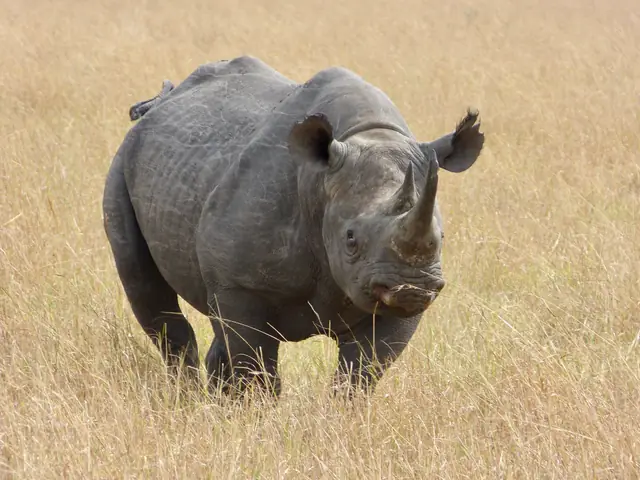
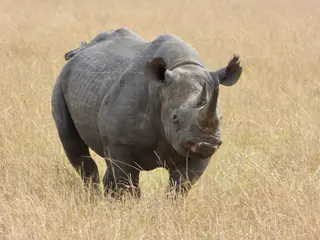
Black Rhinoceros
Diceros bicornis
Etosha is one of the best places in the world to see black rhino. Please don't share rhino locations or post geotagged photos.
-
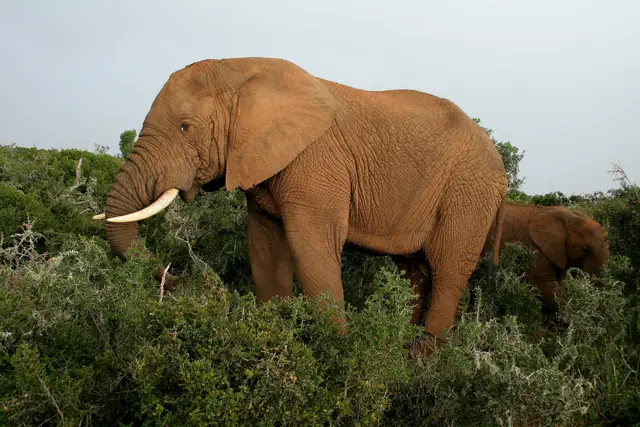
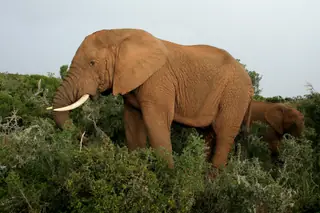
African Savanna Elephant
Loxodonta africana
Etosha's elephants are often coated white with dust from the pan. Herds come to drink at the waterholes in the heat of the day.
-
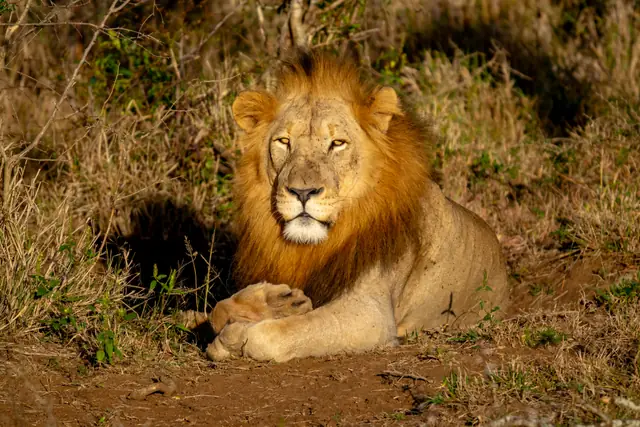
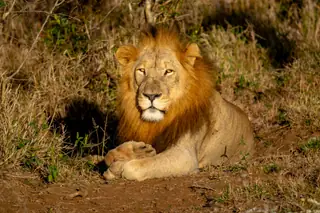
Lion
Panthera leo
Prides often wait near the waterholes for prey.
-
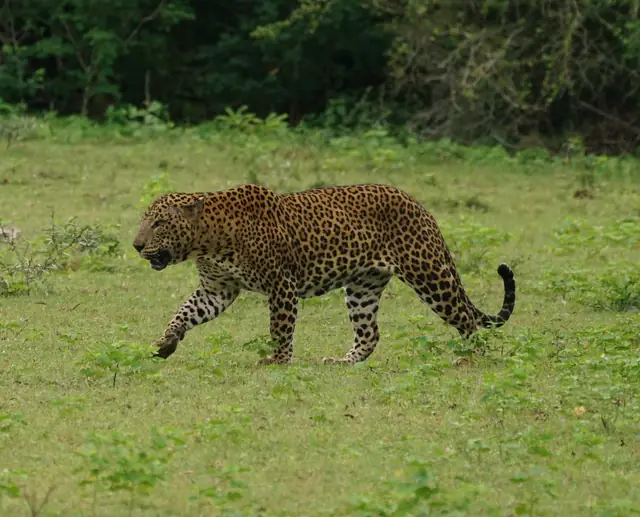
Leopard
Panthera pardus
Shy and mostly seen at dusk, in rocky, wooded hills.
-
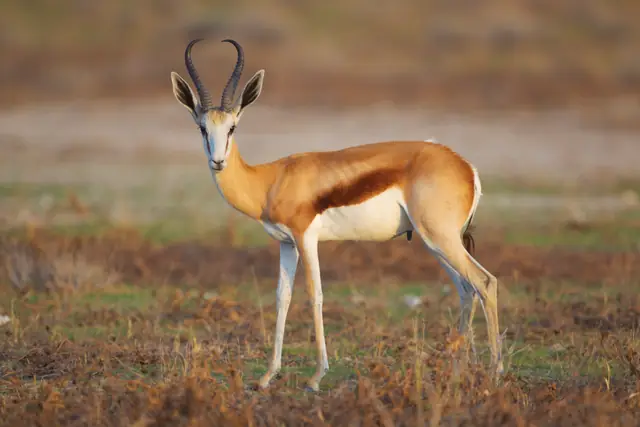
Springbok
Antidorcas marsupialis
Etosha's signature antelope, in herds of hundreds on the open plains. Watch for pronking, the stiff-legged leaps they make when alarmed or playing.
-
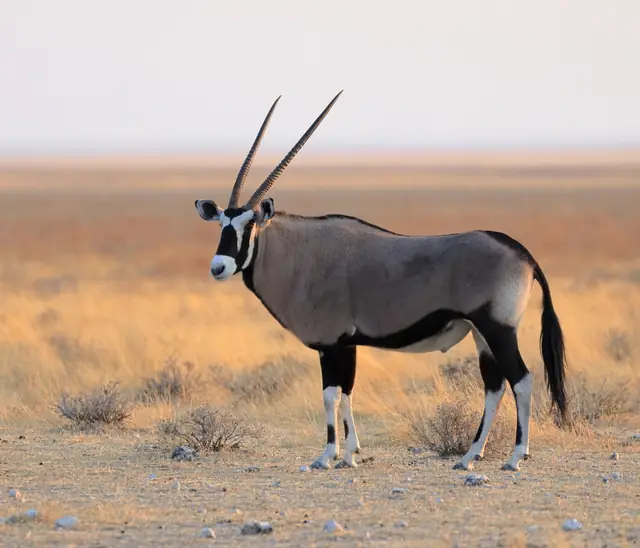
Gemsbok (Oryx)
Oryx gazella
A desert antelope with long straight horns, common on the open grassland around Okaukuejo. They can go days without drinking.
-
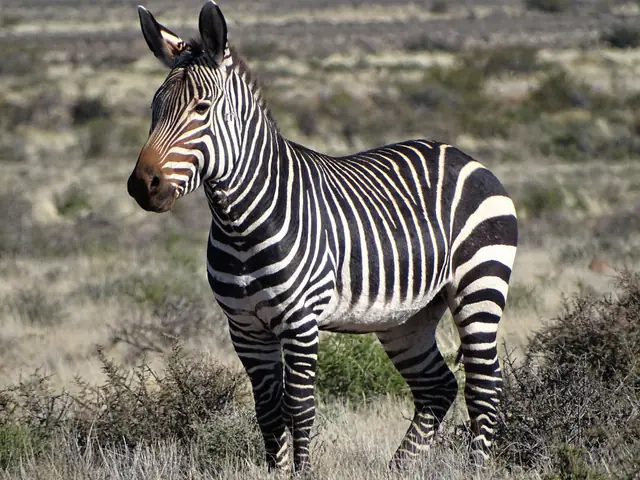
Mountain Zebra
Equus zebra
Hartmann's mountain zebra lives in the hilly west around Dolomite. Look for the dewlap on the throat and a white belly with no stripes.
-
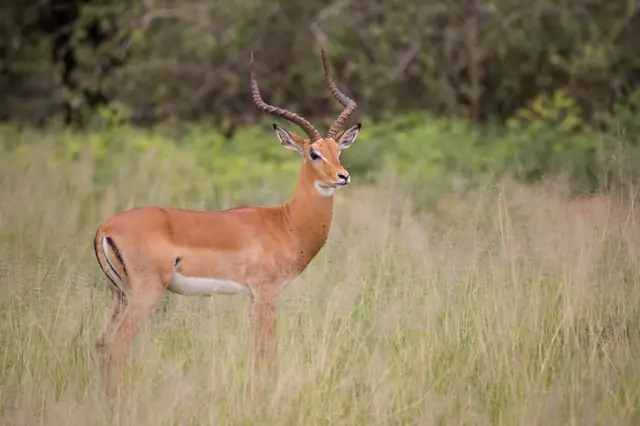
Impala
Aepyceros melampus
Etosha's impala are the black-faced kind, found only in north-west Namibia and south-west Angola. Look around Namutoni and Halali.
-
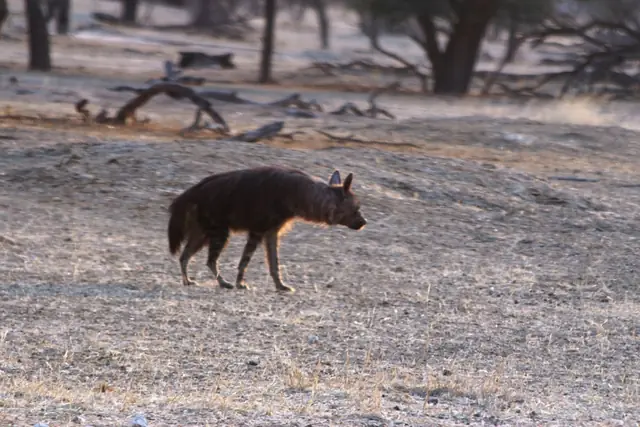
Brown Hyena
Parahyaena brunnea
Rare and nocturnal. Your best chance is a late night at the Okaukuejo waterhole.
All 88 animals in Etosha
Big game 7
-
 African Savanna Elephant
-
 Black Rhinoceros
-
 Lion
-
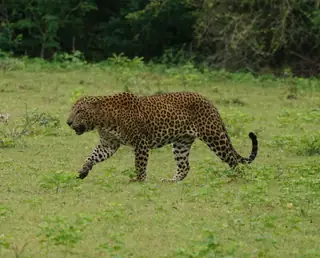 Leopard
-
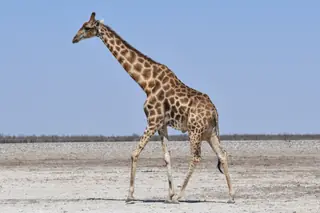 Southern Giraffe
-
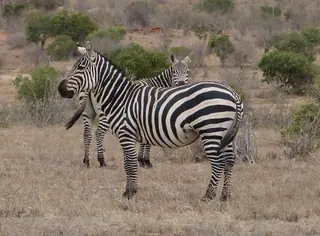 Plains Zebra
-
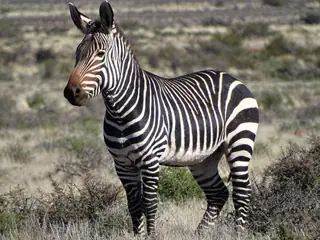 Mountain Zebra
Grazers and browsers 11
-
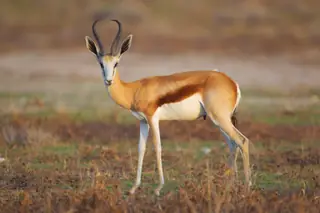 Springbok
-
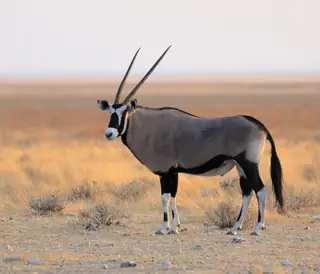 Gemsbok (Oryx)
-
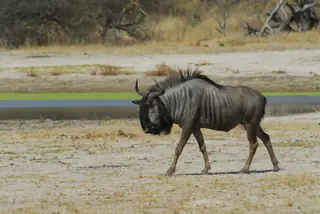 Wildebeest
-
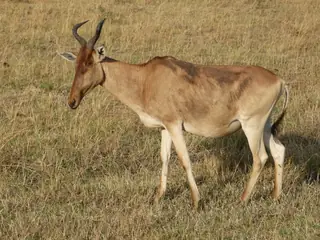 Red Hartebeest
-
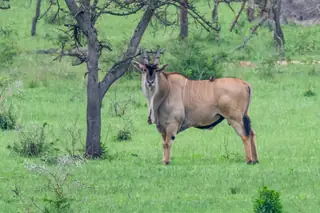 Eland
-
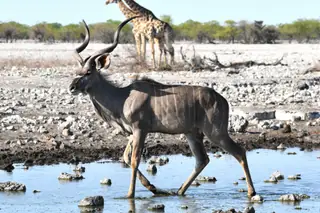 Kudu
-
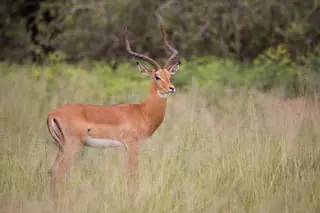 Impala
-
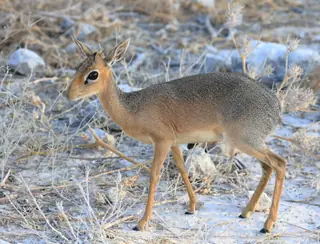 Damara Dik-dik
-
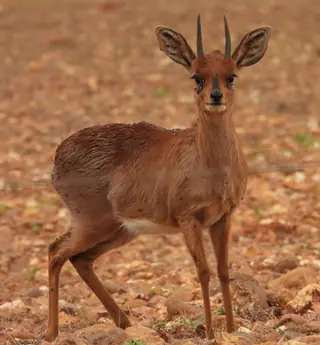 Steenbok
-
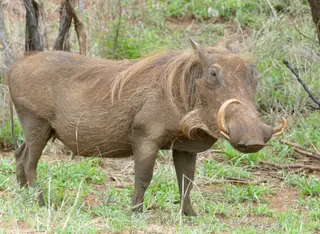 Warthog
-
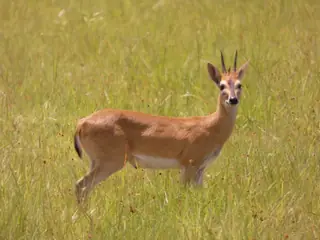 Common Duiker
Hunters 10
-
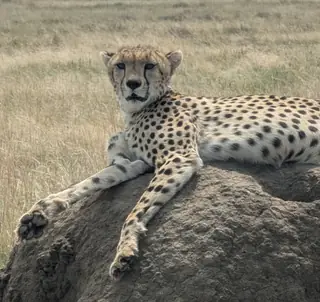 Cheetah
-
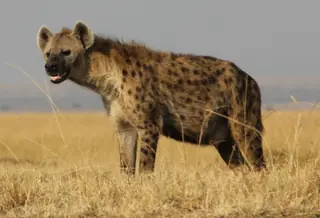 Spotted Hyena
-
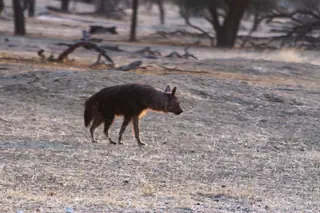 Brown HyenaRare
-
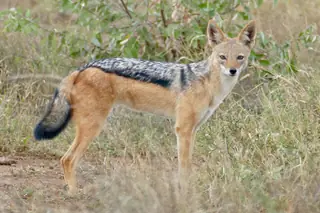 Black-backed Jackal
-
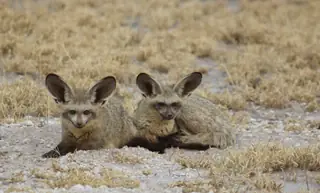 Bat-eared Fox
-
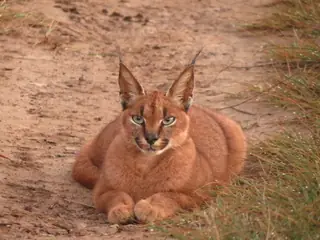 CaracalRare
-
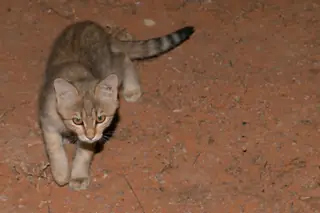 African Wildcat
-
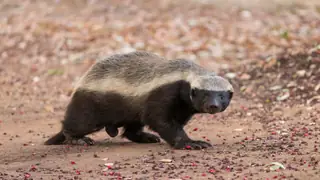 Honey BadgerRare
-
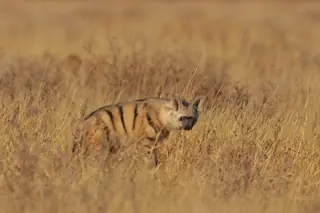 AardwolfRare
-
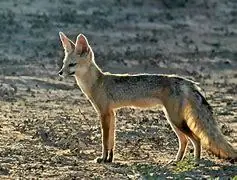 Cape Fox
Smaller mammals 11
-
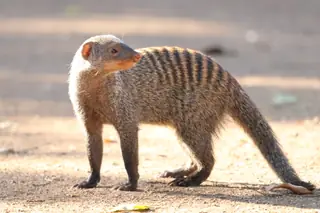 Banded Mongoose
-
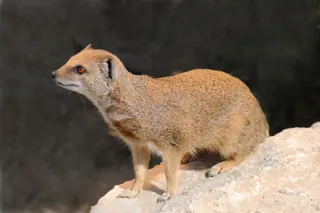 Yellow Mongoose
-
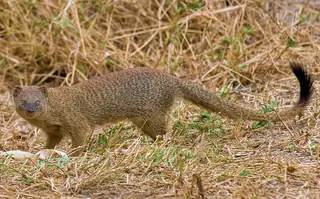 Slender Mongoose
-
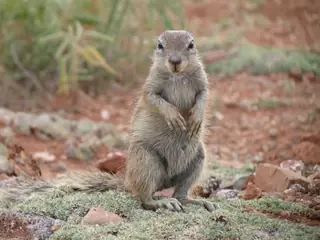 Cape Ground Squirrel
-
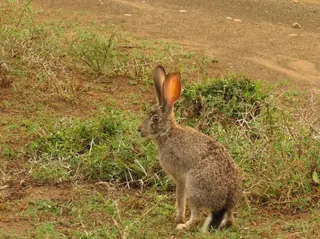 Scrub Hare
-
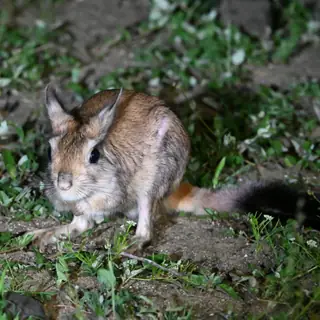 Springhare
-
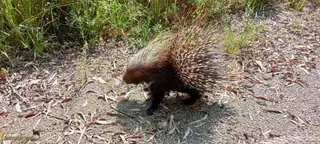 Cape PorcupineRare
-
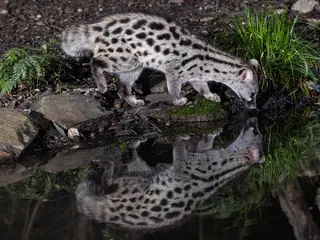 Common Genet
-
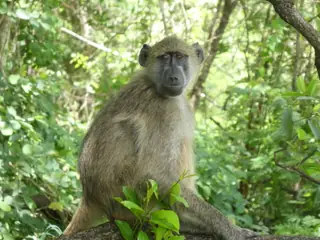 Chacma BaboonRare
-
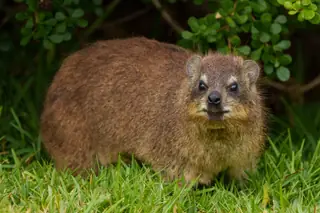 Rock Hyrax
-
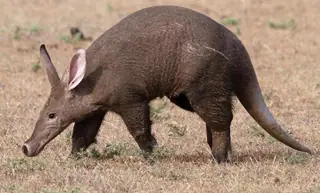 AardvarkRare
Birds of prey 10
-
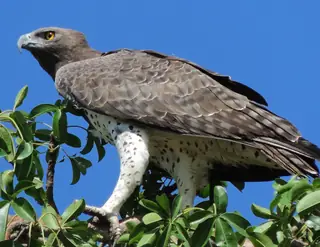 Martial Eagle
-
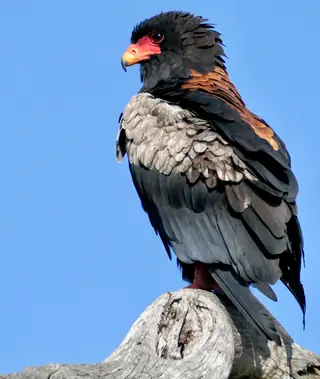 Bateleur
-
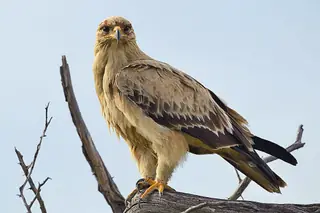 Tawny Eagle
-
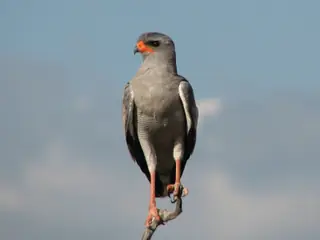 Pale Chanting Goshawk
-
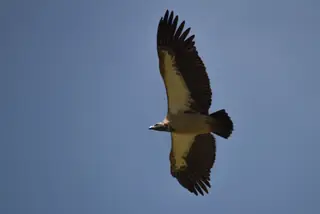 White-backed Vulture
-
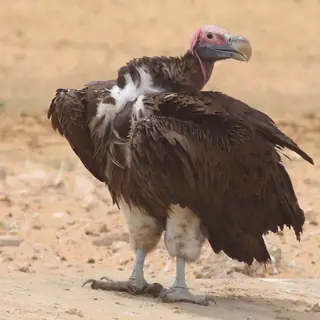 Lappet-faced Vulture
-
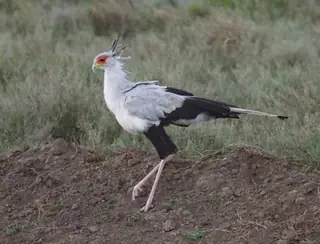 Secretary Bird
-
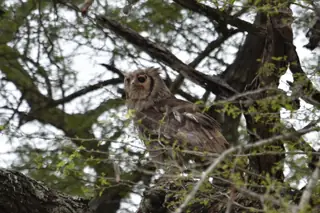 Verreaux's Eagle-Owl
-
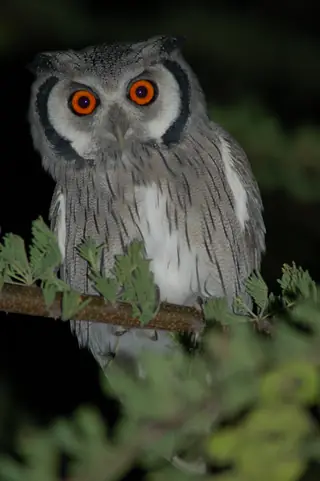 Southern White-faced Owl
-
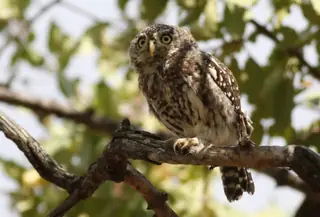 Pearl-spotted Owlet
Big birds 10
-
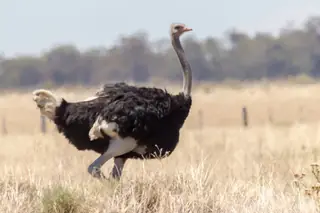 Ostrich
-
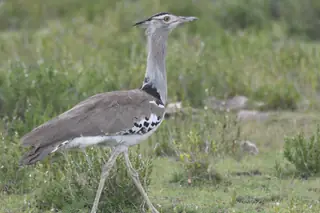 Kori Bustard
-
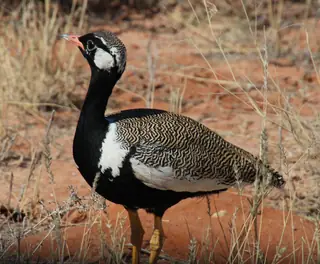 Northern Black Korhaan
-
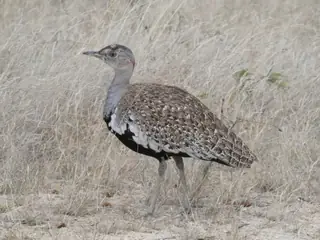 Red-crested Korhaan
-
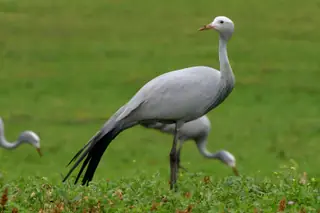 Blue CraneRare
-
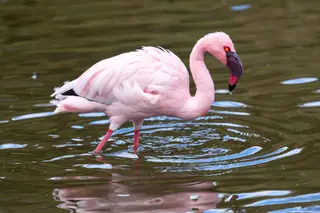 Lesser Flamingo
-
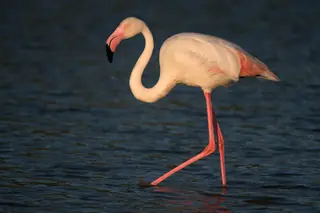 Greater Flamingo
-
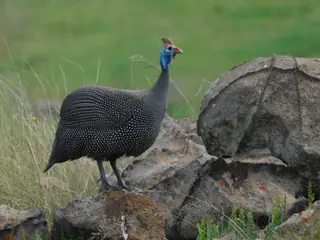 Helmeted Guineafowl
-
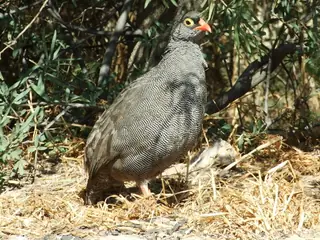 Red-billed Spurfowl
-
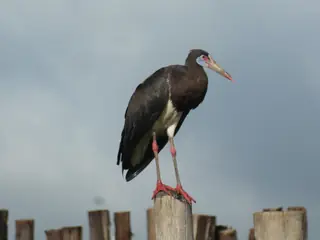 Abdim's Stork
Colourful birds 24
-
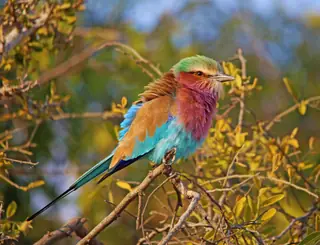 Lilac-breasted Roller
-
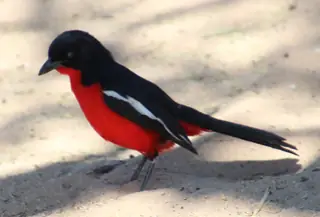 Crimson-breasted Shrike
-
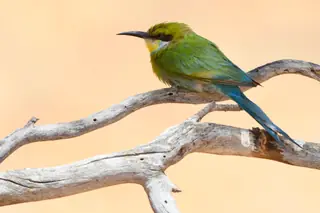 Swallow-tailed Bee-eater
-
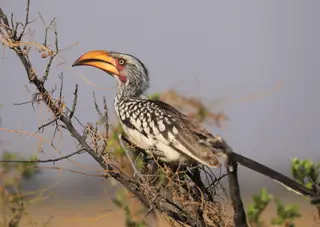 Southern Yellow-billed Hornbill
-
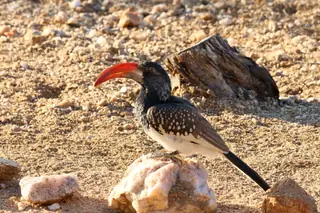 Monteiro's Hornbill
-
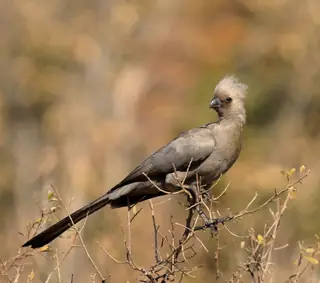 Grey Go-away-bird
-
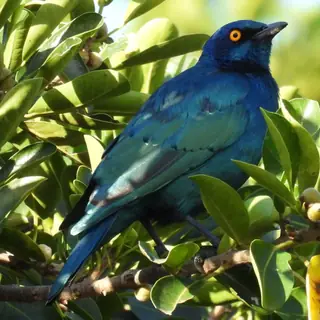 Cape Glossy Starling
-
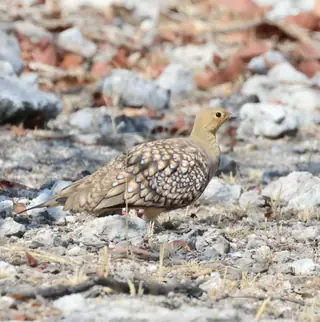 Namaqua Sandgrouse
-
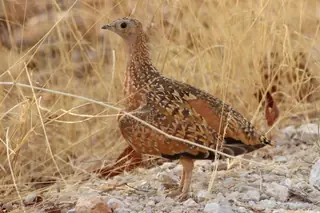 Burchell's Sandgrouse
-
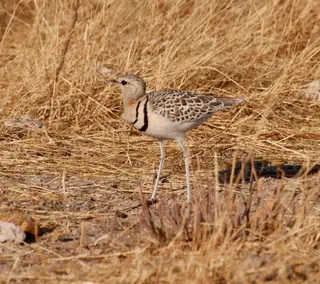 Double-banded Courser
-
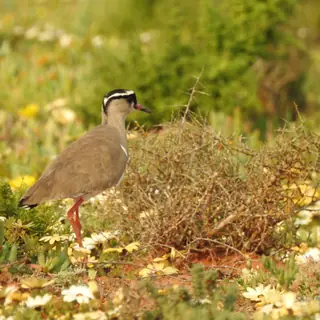 Crowned Lapwing
-
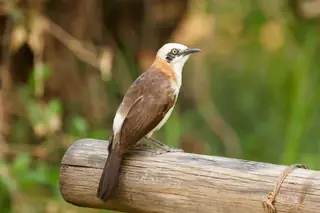 Bare-cheeked Babbler
-
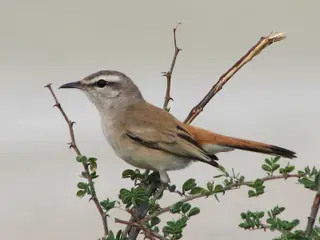 Kalahari Scrub Robin
-
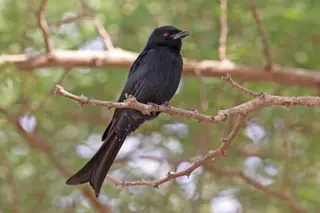 Fork-tailed Drongo
-
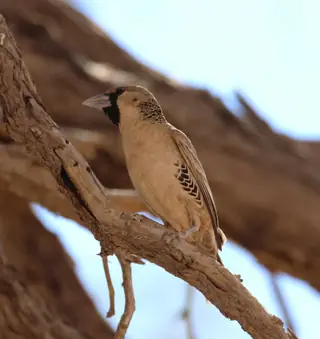 Sociable Weaver
-
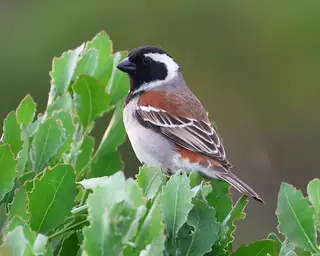 Cape Sparrow
-
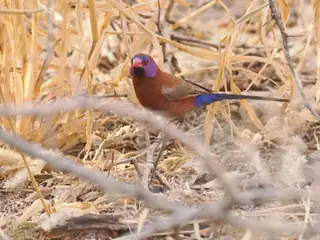 Violet-eared Waxbill
-
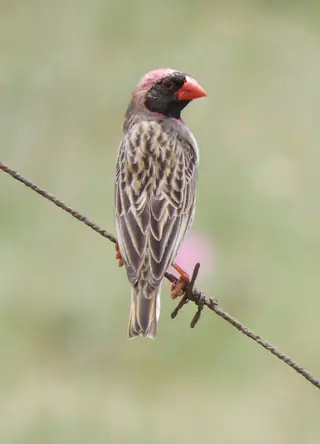 Red-billed Quelea
-
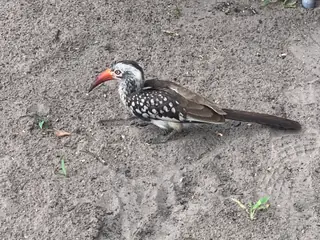 Southern Red-billed Hornbill
-
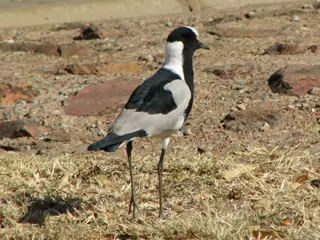 Blacksmith Lapwing
-
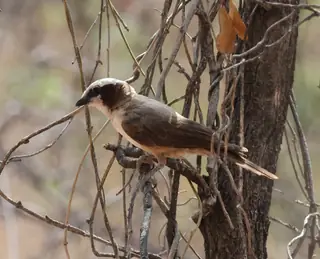 Southern White-crowned Shrike
-
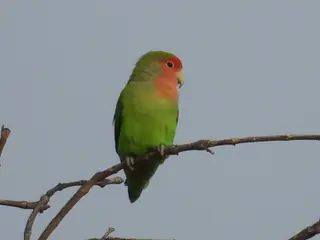 Rosy-faced Lovebird
-
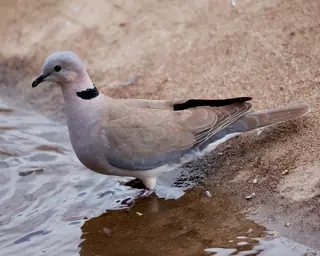 Ring-necked Dove
-
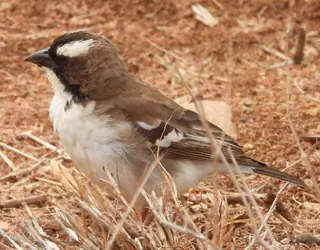 White-browed Sparrow-Weaver
Reptiles and amphibians 5
-
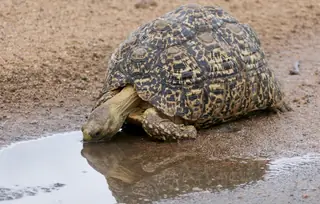 Leopard Tortoise
-
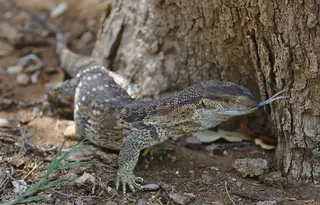 Rock Monitor
-
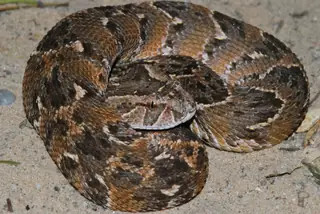 Puff AdderRare
-
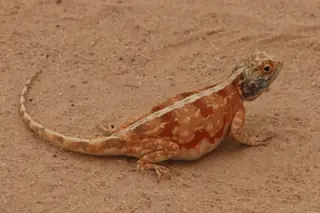 Ground Agama
-
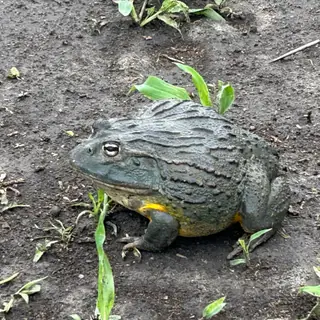 African Bullfrog
Best time to see wildlife in Etosha
Sightings by month in Etosha
Most records: Jun to Nov, AprRecords from GBIF.org, adjusted for how many people record wildlife each month. 100% is the busiest month.
The dry season, May to October, is the best time to see wildlife in Etosha. With no rain, animals depend on the waterholes, so a single spot can bring elephants, lions and huge herds of springbok in an afternoon. June to August have warm days and cold nights, sometimes near freezing at dawn. September and October are very hot, with the most animals at the water. The rains usually fall from about November or December to April. Game then spreads out across the park and is harder to find, but it is green, springbok drop their lambs, and migrant birds arrive. After good rains, water can pool on the pan and draw flamingos. Some roads may flood in the wettest months.
- Jan to AprRainy season; green, springbok lambs, flamingos after good rain
- May to JunDry season begins; animals start returning to the waterholes
- Jul to AugCool mornings, peak waterhole action, busy in school holidays
- Sep to OctHottest and driest; the most game at the water
- Nov to DecFirst storms; game begins to disperse
Tips for spotting wildlife in Etosha
- 01
Park up at a waterhole and wait
Choose one busy waterhole, such as Okaukuejo, Rietfontein, Chudob or Klein Namutoni, and give it an hour. Animals come and go in turns, often with the biggest animals arriving last.
- 02
Stay up for the floodlit waterholes
The main rest camps each have a waterhole floodlit at night. Late evening is prime time, and brown hyena are possible. Keep voices low.
- 03
Time your drive to the gates
Camp and park gates open at sunrise and close at sunset, and you must be inside a camp before dark. The speed limit is 60 km/h, and you may only leave your car inside the camps and at marked toilet stops.
- 04
Watch the sandgrouse at dawn
Namaqua sandgrouse fly in to drink in noisy flocks in the first hours of daylight. The males soak their belly feathers to carry water back to their chicks.
- 05
Visit the west for mountain zebra
The Galton Gate and Dolomite area in the west is quieter, with rocky hills where Hartmann's mountain zebra live.

Take Etosha with you
Self-driving Etosha? Take this list on your phone and tick off each animal at the waterholes, with no signal needed. Wilder is free to start.

Etosha wildlife FAQ
What animals can you see in Etosha National Park?
You can see elephants, black rhinos, lions, leopards, cheetahs, giraffes, zebras and huge herds of springbok and gemsbok in Etosha, plus rarer species such as brown hyena and black-faced impala. This checklist covers 88 animals and birds. The dry season, May to October, is best, when most animals visit the waterholes to drink.
What are the best waterholes in Etosha?
The best waterholes in Etosha include the floodlit camp waterholes at Okaukuejo and Halali (Moringa), best after dark. Rietfontein and Olifantsbad are busy by day, and Chudob and Klein Namutoni are busy near Namutoni. What is best changes year to year, so pick one and give it time rather than racing between them.
Can you see the Big Five in Etosha?
No, you can only see four of the Big Five in Etosha: elephant, black rhino, lion and leopard. There are no buffalo in the park. In return, Etosha is one of the best places anywhere for black rhino, and the waterholes make elephant and lion sightings very reliable. For all five in one trip, add a park such as Kruger.
When is the best time to visit Etosha for wildlife?
The best time to visit Etosha for wildlife is the dry season, from May to October, when animals gather at the waterholes. September and October bring the most game but temperatures can pass 35°C. The wet months, roughly November to April, are greener and good for birds and newborn springbok, but animals are more spread out.
Sources
- Namibia Wildlife Resorts: Etosha National Park
- Namibia Ministry of Environment, Forestry and Tourism
- Namibia Tourism Board
- Sightings by month: GBIF.org
Animal photos are from the Wilder catalogue; photo credits.
Similar checklists
All Africa-
 Safari111animals Okavango Delta and Moremi North-West District, Botswana A vast inland delta of lagoons, papyrus and palm islands, explored by mokoro and on foot: wild dogs, lechwe and big cats. Best time Jun to Oct
-
 Safari86animals Chobe National Park Chobe District, Botswana Home to some of the largest elephant herds in Africa, best seen drinking and swimming from a boat. Best time Jun to Oct
-
 Safari110animals Kruger National Park Limpopo and Mpumalanga, South Africa Africa's classic safari: the Big Five, wild dogs on the move, and some of the best birdwatching on the continent. Takes in the private reserves along its western edge, such as Sabi Sand and Timbavati. Best time May to Sept
-
 Safari81animals South Luangwa National Park Eastern and Muchinga provinces, Zambia The home of the walking safari, famous for leopards on night drives and a river crowded with hippos. Best time May to Oct